
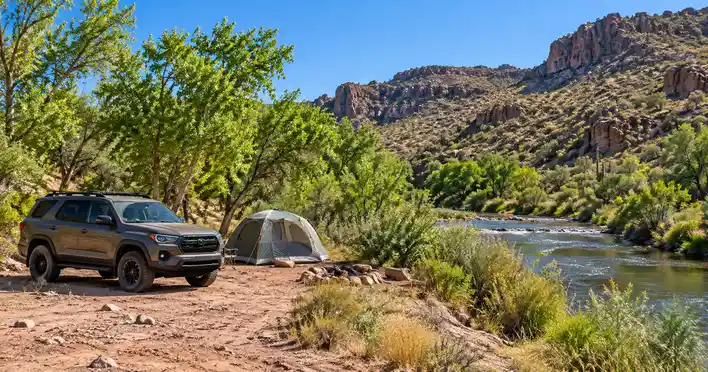
Childs Dispersed Camping Area: Access, Rules and Camping
Childs Dispersed Camping Area is a primitive riverside camping area near the former Childs Power Plant on the Verde River in central Arizona. The setting is remote, but the biggest planning issue is not finding a campsite—it is deciding whether your vehicle and current road conditions make the final approach sensible.
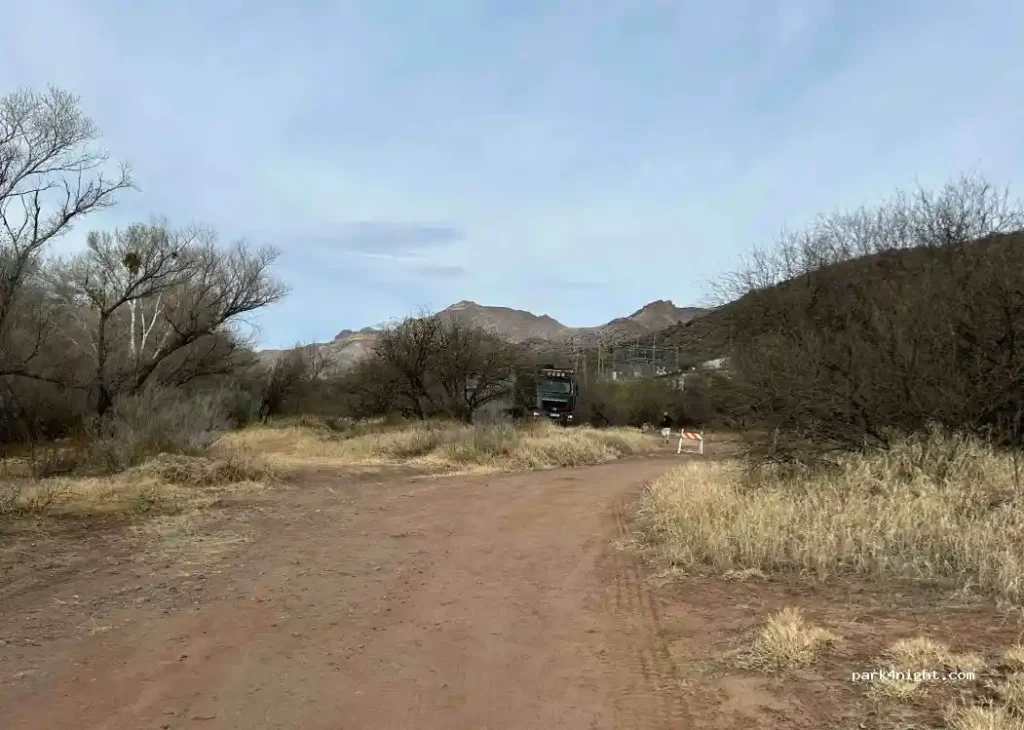
Access from Camp Verde involves roughly 15 miles on Forest Road 708 followed by about six miles on Forest Road 502, a section the managing-agency information has described as a “VERY BAD Road.” High clearance is strongly recommended, and four-wheel drive may be helpful.
If you prepare for the road, carry all necessary water and supplies, check current fire and access restrictions, and have a backup plan, Childs can provide a genuinely primitive Verde River camping experience.
Table of Contents
Childs Dispersed Camping Area at a Glance
| Planning Detail | What to Know |
|---|---|
| Managing agency | Coconino National Forest, Red Rock Ranger District |
| Location | Verde River near former Childs Power Plant |
| Approx. elevation | 2,626 ft |
| Camping type | Primitive dispersed camping |
| Fee | No camping fee currently listed; verify before travel |
| Reservations | No campsite reservation system |
| Stay limit | Childs-specific guidance lists a 5-day limit |
| Main access | Hwy 260 → FR 708 → FR 502 |
| Final road | Rough, steep, unpaved FR 502 |
| Vehicle guidance | High clearance highly recommended; 4WD may help |
| Potable water | None provided |
| Restroom | Vault toilet currently listed |
| Trash service | None |
| Showers | None |
| Picnic tables | None |
| Hookups | None |
| Camping trailers | Current manager-derived information lists them as unsuitable |
| Fire rules | Check current restrictions immediately before travel |
| Nearby activity | Verde Hot Springs, subject to river conditions |
Childs is not a developed campground. A vault toilet does not change its basic character: there are no hookups, showers, potable-water taps, campground hosts, or routine trash collection.
Plan to be self-sufficient from the moment you leave the Camp Verde area.
Where Is Childs Dispersed Camping Area?
Childs Dispersed Camping Area sits beside the Verde River below the remains of the former Childs Power Plant, about 30 miles southeast of Camp Verde.
Although some online listings associate the area with Strawberry, the practical vehicle approach to Childs is from the Camp Verde side.
That distinction matters because Forest Road 708 does not provide through vehicle access between Camp Verde and Strawberry in the way a normal map may suggest. Visitors approaching the Childs camping area should follow the current Forest Service route from State Route 260 near Camp Verde.
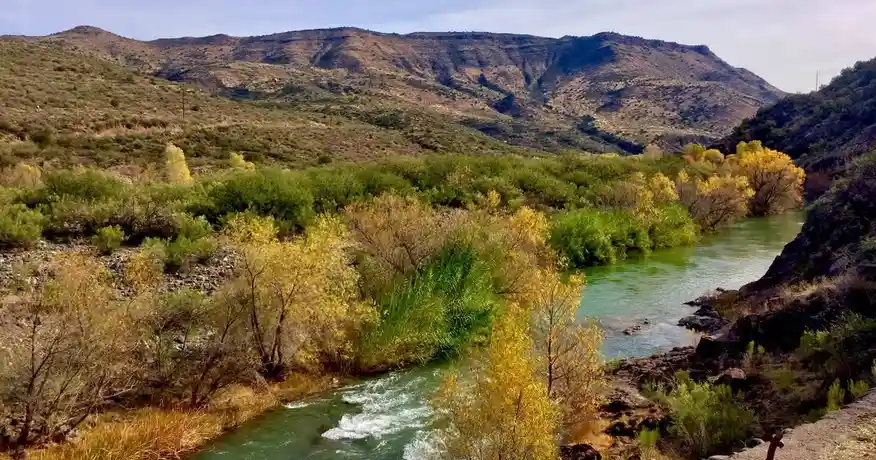
The setting is very different from the higher ponderosa-pine country around Flagstaff. At roughly 2,600 feet in elevation, Childs lies in a lower, hotter river corridor with dry hills surrounding the greener riparian vegetation along the Verde.
Map note: Camp Verde is the main gateway for the drive to Childs Dispersed Camping Area, while Verde Hot Springs lies nearby along the Verde River. Use the map for geographic orientation only and verify current Forest Service road access before driving FR 708 and FR 502.
How to Get to Childs Dispersed Camping Area
The standard access route begins near Camp Verde.
Step 1: Camp Verde to Forest Road 708
From the White Bridge area in Camp Verde, travel east on State Route 260 for approximately 6.8 miles to Forest Road 708, also known as Fossil Creek Road.
This is the best point to make sure you already have:
- Enough drinking water.
- Food and ice.
- Fuel.
- Offline maps.
- A properly inflated spare tire or other vehicle-repair plan.
- Current road and fire information.
Do not count on finding supplies after you commit to the forest-road approach.
Step 2: Follow FR 708 Toward FR 502
Turn onto FR 708 and continue for approximately 15 miles toward the junction with FR 502.
FR 708 is an unpaved and remote road. Current Fossil Creek information also warns that the road can be rough and recommends high-clearance vehicles for the recreation corridor.
Drive according to the surface you actually encounter rather than according to the speed suggested by a navigation app.
Rain can quickly change an ordinary dirt road into a muddy or rutted road, while erosion, rockfall, and maintenance can alter conditions between visits.
Step 3: Take FR 502 to Childs
At the FR 708/FR 502 junction, continue south on FR 502 for approximately six miles toward the former Childs Power Plant and Verde River.
This is the section that deserves the most attention.
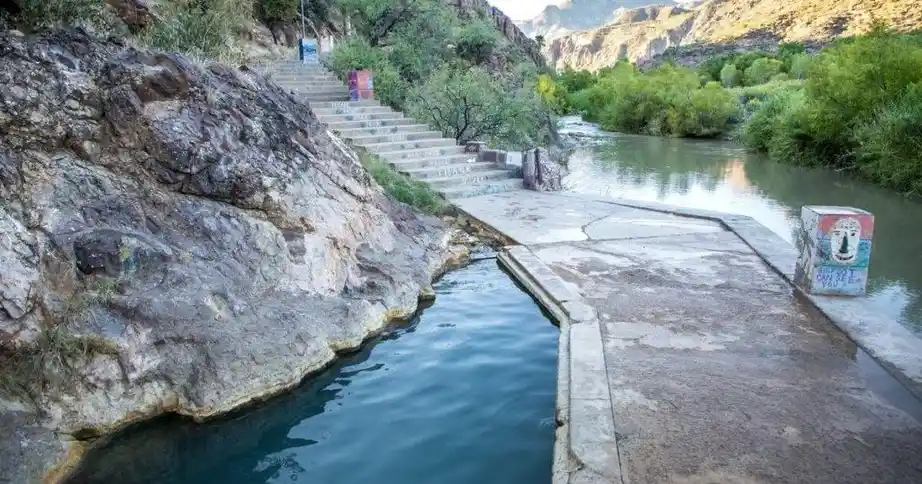
Childs access information has long described FR 502 as a very bad road, with high-clearance vehicles strongly recommended and four-wheel drive potentially helpful.
Six miles may sound short on a map, but rough-road mileage can take substantially longer than normal road mileage.
Do not make the mistake of thinking that being “only a few miles away” means you should continue regardless of conditions.
If your vehicle begins scraping, losing traction, or reaching obstacles you cannot safely reverse through, turning around is the sensible decision.
Childs Dispersed Camping Area Road Conditions
Road conditions can determine whether a Childs trip is practical.
There is no single permanent answer such as “2WD is fine” or “4WD is mandatory.” Conditions depend on weather, erosion, recent maintenance, tire condition, clearance, driver experience, and the exact condition of FR 502 on your travel date.
Do You Need a High-Clearance Vehicle?
For Childs, high clearance should be treated as a serious recommendation rather than an optional convenience.
The concern is not simply traction.
Ground clearance helps when dealing with:
- Embedded rocks.
- Deep ruts.
- Eroded sections.
- Uneven dips.
- Washouts.
- Steep transitions.
- Loose rocky surfaces.
A low-clearance passenger car may be able to drive roads that another driver previously completed without difficulty, yet still encounter a newly eroded section that creates a serious risk of underbody damage.
Previous trip reports are therefore poor substitutes for checking current conditions.
Do You Need 4WD?
Current Childs guidance says four-wheel drive may be helpful, rather than declaring it mandatory in every condition.
The difference matters.
A high-clearance two-wheel-drive vehicle in dry, stable conditions may sometimes be more capable than a low-clearance AWD vehicle. Conversely, wet mud, loose climbs, or washed-out sections can make additional traction far more important.
Four-wheel drive becomes more valuable when:
- The road is wet.
- Loose material reduces traction.
- Erosion exposes larger rocks.
- Steeper sections become slippery.
- You need controlled low-speed movement over uneven ground.
It should not be used as a reason to continue onto a road that is visibly damaged or unsafe.
Can a Passenger Car Reach Childs?
It is possible to find old reports from people who reached the area in ordinary cars.
That does not make a passenger car a reliable choice for Childs Dispersed Camping Area.
Road reports describe conditions at one point in time. Monsoon storms, runoff, traffic, grading, and erosion can change the road later.
If your vehicle has low clearance and you would not be comfortable turning around on a narrow rough road, Childs is probably not the right destination.
RVs, Vans and Trailers
Vans vary widely in length and clearance, so their suitability depends on the specific vehicle.
Large RVs and camping trailers are a much poorer match.
Current manager-derived information for Childs lists camping trailers as unsuitable. Even when a large vehicle could physically pass an obstacle, other issues remain:
- Tight turns.
- Limited passing room.
- Difficult turnaround areas.
- Steep approach angles.
- Trailer departure angles.
- Road damage after rain.
- No guarantee of a suitable parking area at the end.
Do not use a single old report of an RV reaching Childs as proof that your rig should attempt the road.
Does Childs Dispersed Camping Area Require a Fossil Creek Permit?
A common source of confusion is that the route to Childs uses Fossil Creek Road, while Fossil Creek has a seasonal permit system.
They are related geographically but are not the same reservation.
For the 2026 season, Recreation.gov requires permits from April 1 through October 1 for vehicle access to eight named Fossil Creek parking areas. The permit is tied to a specific parking lot and vehicle.
Childs is not one of those eight parking lots, and a Fossil Creek day-use permit is not a reservation for Childs Dispersed Camping Area.
There is also no camping in the Fossil Creek permit area during the April 1–October 1 permit season.
However, you still travel through the broader FR 708 corridor to reach the FR 502 junction. Seasonal checkpoints, gates, closures, or Forest Orders can affect travel in that area.
Before leaving Camp Verde, verify that your planned route to FR 502 is currently open and that no temporary order changes access.
Childs Dispersed Camping Area Rules
Dispersed camping does not mean rule-free camping.
Childs has several site-specific restrictions that are more important than generic assumptions about Coconino National Forest camping.
Five-Day Stay Limit
General dispersed camping across much of Coconino National Forest uses a longer 14-day framework.
Childs-specific manager information, however, lists a five-day stay limit.
That shorter rule should control your Childs trip unless the Forest Service publishes a newer site-specific order.
Do not assume that a general forest camping limit automatically overrides a stricter local restriction.
Use Existing Disturbed Camping Areas
Choose an already disturbed place rather than clearing vegetation for a larger campsite.
Keep vehicles on legal motorized routes and avoid widening roadside pullouts.
If a campsite does not physically fit your vehicle or tent setup, choose another existing spot rather than expanding it.
Pack Out Your Trash
There is no routine trash service at Childs.
Bring enough bags or containers to remove:
- Food scraps.
- Packaging.
- Bottles and cans.
- Used hygiene products.
- Pet waste.
- Broken camping equipment.
Do not burn rubbish in a campfire.
Public Nudity Is Prohibited
Childs-specific guidance lists public nudity as prohibited.
This deserves clarification because nearby Verde Hot Springs has a long-standing reputation in some older travel discussions for clothing-optional behavior.
That history does not override current Childs rules.
Respect Historic and Cultural Features
The former power-generation area and surrounding river corridor contain historical and cultural resources.
Do not remove artifacts, alter structures, carve surfaces, or treat ruins as material for campsite construction.
Campfires at Childs Dispersed Camping Area
Fire rules require a fresh check before every trip.
Childs-specific guidance says campfires are prohibited whenever Stage 1 or Stage 2 fire restrictions are active. Gas-operated devices with an on/off switch may be allowed under those restrictions when they meet the applicable order.
During summer 2026, Coconino National Forest and Yavapai County moved through fire restrictions before regional partners lifted those restrictions on July 21, 2026 following monsoon moisture.
That July lifting should not be treated as permission for a future campfire.
Restrictions can return, local rules can be tighter, and emergency closures can appear quickly.
Before departure:
- Check current Coconino National Forest restrictions.
- Check Yavapai County fire information.
- Read any Childs-specific posted restrictions.
- Do not assume an old fire scar makes a fire legal.
- Carry a cooking method that does not depend on a wood fire.
This approach keeps your meal plan workable even if conditions change immediately before the trip.
Water, Toilets and Facilities
The limited facilities at Childs Dispersed Camping Area are one reason it should be treated as a primitive destination.
Potable Water
There is no potable water provided.
The Verde River may be directly beside the camping area, but river water should not be confused with a developed drinking-water supply.
Bring enough water for:
- Drinking.
- Cooking.
- Basic cleanup.
- Hot-weather needs.
- Unexpected delays.
- The drive back out.
At this low elevation, warm conditions can significantly increase water needs.
Restrooms
Current Childs information lists a vault toilet.
Facilities at remote sites can become temporarily unavailable, so it is still sensible to carry sanitation supplies appropriate to dispersed camping.
Trash and Other Amenities
Do not expect:
- Trash dumpsters.
- Showers.
- Electrical hookups.
- Water hookups.
- Picnic tables.
- Grills.
- Developed campground pads.
The absence of those facilities is part of the reason Childs remains dispersed camping rather than a developed campground.
Camping Along the Verde River
The Verde River is the defining feature of Childs, but riverside camping requires additional judgment.
Choose existing disturbed sites rather than setting up directly on fragile riverbank vegetation.
Be cautious about low ground when storms are possible. Rain falling upstream can affect river conditions even when the weather immediately over your campsite appears manageable.
Summer monsoon storms can also make the access roads worse at the same time the river becomes less predictable.
Never assume that a previous trip’s river level tells you what conditions will be like today.
If weather deteriorates, think about the road out as well as the campsite itself.
A storm that makes FR 502 significantly muddier can turn departure into a much harder drive.
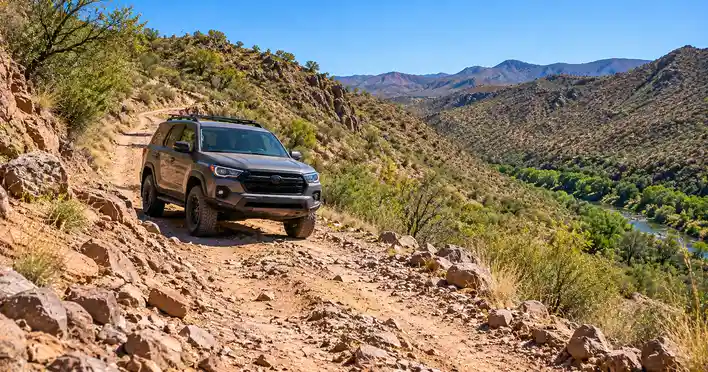
Verde Hot Springs From Childs
Verde Hot Springs is one of the main reasons travelers seek out Childs.
The springs are upstream from the camping area near the remains of an old resort. Access is commonly described as a short hike that may require wading or crossing the Verde River.
Treat the river crossing as optional.
There is no fixed river depth or flow number that guarantees a safe crossing for every person. Current, local conditions matter more than a historical recommendation from another visitor.
Skip the crossing when:
- Water is deep or fast.
- Visibility is poor.
- Thunderstorms are developing.
- You are unsure about footing.
- Anyone in the group is uncomfortable.
- Conditions would make the return crossing uncertain.
The hot springs are an optional side trip, not something you need to complete to justify camping at Childs.
When to Camp at Childs
Childs is often listed as a year-round camping area, but “year-round” does not mean road conditions are equally suitable every month.
Spring
Spring can offer milder daytime temperatures than midsummer.
River levels may be affected by seasonal runoff, and wet weather can make FR 502 harder.
If you are traveling during the Fossil Creek permit season beginning April 1, understand the separate permit-area system before using FR 708.
Summer
Summer brings several major planning issues:
- High temperatures.
- Heavy water requirements.
- Monsoon thunderstorms.
- Flash-flood potential.
- Muddy roads after storms.
- Changing fire restrictions.
A forecast that looks acceptable in the morning does not guarantee that an afternoon monsoon cell will miss the area.
Fall
Fall can provide milder temperatures, but road and fire conditions still need to be checked.
Do not assume that the end of peak summer automatically means every restriction has disappeared.
Winter
Winter nights can be cold even at this lower elevation.
Rain can create difficult mud on the unpaved access roads, and storms may make a high-clearance recommendation even more important.
Who Should Use Childs Dispersed Camping Area?
Childs is a good match for campers who:
- Have an appropriate high-clearance vehicle.
- Are comfortable driving rough unpaved roads.
- Carry all their own water.
- Do not need hookups or developed campground amenities.
- Can navigate offline.
- Are willing to turn around if FR 502 deteriorates.
- Have a backup camping location.
- Understand that the nearby hot springs are optional.
It is a poor match for travelers who:
- Have a low-clearance passenger car.
- Are towing a large trailer.
- Need reliable potable water.
- Need electrical hookups.
- Depend on a guaranteed reservation.
- Are uncomfortable with remote roads.
- Expect dependable cell coverage.
- Would continue driving simply because they have already invested time in the approach.
If the Childs road is too rough for your vehicle or camping style, you can compare another Arizona dispersed camping option around Sedona, where legal camping follows a different designated-area system and requires its own planning.
What to Check Before Driving to Childs
Treat this as the final go/no-go checklist.
Before leaving pavement, confirm:
- Childs recreation status: Check for temporary closures.
- FR 708 access: Confirm the Camp Verde-side route is open.
- FR 502 condition: This is the road most likely to decide whether you continue.
- Current MVUM: Make sure your motorized route remains legal.
- Weather: Check both heat and storm potential.
- Flash-flood risk: Consider conditions upstream, not only overhead.
- Fire restrictions: Verify current Forest Service and local rules.
- Vehicle readiness: Tires, clearance, spare or repair equipment, and fuel.
- Water: Carry enough for the full stay plus a delay margin.
- Offline navigation: Do not depend entirely on cell service.
- Backup camp: Know exactly where you will go if Childs is inaccessible.
Because road or weather conditions can make the final approach unsuitable, plan a legal backup campsite before you leave instead of searching for another remote spot after dark.
A backup is especially important at Childs because deciding to turn around may come after you have already spent significant time on unpaved roads.
Frequently Asked Questions
Is Childs Dispersed Camping Area Free?
Current manager-derived information lists Childs as no-fee dispersed camping, with no campsite reservation system. Because fees and management policies can change, check the current Coconino National Forest Childs page before departure rather than assuming an old free-camping listing will remain valid indefinitely.
Do You Need 4WD for Childs Dispersed Camping Area?
Four-wheel drive is not described as universally mandatory, but high clearance is strongly recommended and 4WD may be helpful. FR 502 is the main concern. Mud, erosion, loose rock, ruts, and storm damage can make traction as important as clearance, so base the decision on current conditions rather than older trip reports.
How Bad Is the Road to Childs Camping Area?
The final six miles on FR 502 are the roughest part of the standard Camp Verde approach and have been described in managing-agency information as a “VERY BAD Road.” Expect slow travel, uneven surfaces, rocks, ruts, and conditions that may worsen after rain. A high-clearance vehicle is strongly recommended.
Does Childs Camping Require a Fossil Creek Permit?
A Fossil Creek day-use permit is not a camping reservation for Childs. Recreation.gov’s April 1–October 1 permit system applies to eight named Fossil Creek parking lots. Childs is a separate destination reached from the FR 708/FR 502 junction, but seasonal access controls and Forest Orders can still affect your route.
Can You Camp Near Verde Hot Springs?
Childs Dispersed Camping Area is the established primitive camping option commonly used for access to Verde Hot Springs. The springs are upstream and may require wading or crossing the Verde River. River conditions vary, so do not assume the crossing will be appropriate on every trip.
Conclusion
Childs Dispersed Camping Area should be treated as a remote rough-road camping trip, not simply a free riverside campground.
The Verde River setting and proximity to Verde Hot Springs are appealing, but the final FR 502 approach, lack of potable water, limited facilities, fire rules, and changing weather make preparation essential.
Check access and restrictions immediately before departure, use an appropriate vehicle, carry everything you need, save your maps offline, and be willing to turn around.
If Childs Dispersed Camping Area is not accessible under the conditions you encounter, using your backup is the successful decision—not a failed trip.
References:
- U.S. Forest Service — Childs Dispersed Camping Area — Official managing-agency page for Childs site status, access information, facilities, vehicle guidance, restrictions, and contact information.
- Recreation.gov — Fossil Creek Wild and Scenic River — Used to verify the 2026 Fossil Creek permit season, eight designated permit parking lots, Camp Verde access via FR 708, rough-road guidance, no-camping rule within the seasonal permit area, vehicle limits for permit lots, and current permit procedures.
- U.S. Forest Service — Southwestern Region Visitor Maps and Guides — Used to verify the purpose and legal role of Motor Vehicle Use Maps when determining roads open to motorized travel.
- Join Arizona — Childs Dispersed Camping Area — Used as a current Forest Service-derived cross-check for the Camp Verde–FR 708–FR 502 directions, high-clearance recommendation, 4WD guidance, elevation, vault toilet, lack of potable water and trash service, trailer guidance, five-day stay limit, and Childs-specific fire-restriction wording.
- Yavapai County — Fire Restrictions Lifted July 21, 2026 — Used to verify that Yavapai County reported the July 21, 2026 lifting of restrictions in coordination with Coconino National Forest and other regional land managers.
- Yavapai County — Fire Alerts and News — Used to recheck more recent 2026 fire-related updates affecting the region before publication.