
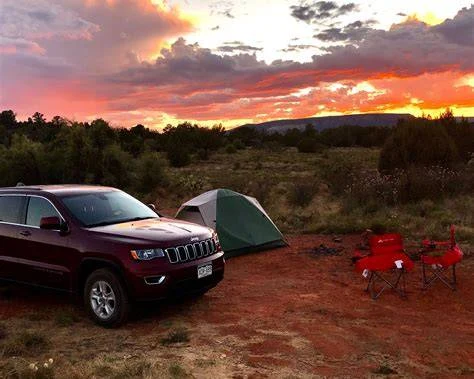
Dispersed Camping Sedona
Dispersed camping Sedona is legal in parts of the surrounding Coconino National Forest, but West Sedona is not an open “camp anywhere” landscape. Current Forest Service guidance directs overnight campers to eight designated areas west of town and says dispersed camping outside those areas is prohibited.
That distinction matters because older maps, campsite apps, and blog posts may still show roadside camping spots that are no longer part of the current West Sedona system.
The safest planning sequence is simple: identify the land manager, use the current Forest Service map, confirm the road is open, check fire rules, and save a legal backup before you drive out.
Table of Contents
Dispersed Camping Sedona at a Glance
| Planning Detail | What to Know |
|---|---|
| Main land manager | Coconino National Forest, Red Rock Ranger District |
| West Sedona camping system | Eight designated dispersed camping areas |
| Main roads | FR 525, FR 89B and FR 9570/9570A area |
| Fee | Established as no-fee dispersed camping; verify current posted status |
| Reservations | Established as first-come, first-served |
| Stay limit | Current Forest Service guidance states 14 days in a 30-day period |
| Wood campfires | Prohibited in West Sedona designated camping guidance |
| Charcoal | Prohibited |
| Propane | Liquid-propane stoves, grills and fire rings are permitted under West Sedona guidance, subject to any tighter temporary restriction |
| Services | Dispersed camping generally has little or no water, toilets, trash service or other facilities |
| Best planning tools | Current Forest Service map, MVUM and alerts |
The 2022 Forest Service decision that created the current West Sedona system established the eight areas as first-come, first-served and no-fee. Current Forest Service camping material continues to direct visitors to those same eight areas.
Because orders, closures and management policies can change, check current Forest Service alerts and posted signs before relying on an older map or article.
Is Dispersed Camping Legal Near Sedona?
Yes, but only where current land-management rules allow it.
Sedona is surrounded by a mixture of National Forest land, private property, developed recreation sites and areas with special camping restrictions. The current Coconino National Forest Travel Map also states that camping is prohibited on National Forest lands within Sedona city limits.
West of Sedona, the situation is more restrictive than general National Forest dispersed camping. Forest Service guidance currently identifies eight designated overnight camping areas and says dispersed camping outside those eight areas is prohibited.
So seeing an empty red-dirt pullout does not mean you can legally spend the night there.
Use current signs and official maps rather than asking only whether the land “looks like National Forest.”
Why West Sedona Camping Changed
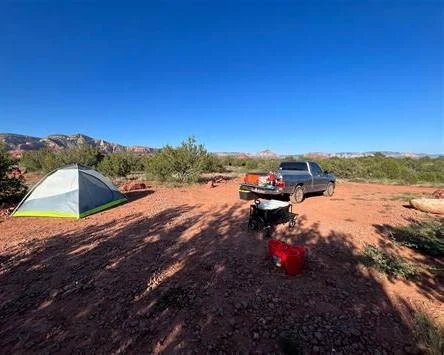
The Forest Service changed the West Sedona system after documenting growing problems around Forest Roads 525, 89B and 9570.
Its decision memo identified issues including:
- Expansion of campsites beyond previously disturbed ground.
- Off-road vehicle travel.
- Loss of vegetation.
- Litter.
- Human-waste and sanitation problems.
- Wildlife impacts.
- Conflicts with nearby landowners and permittees.
- Increased wildfire risk.
Instead of continuing broad roadside camping across the area, the Forest Service concentrated overnight use into existing disturbed locations.
That is why current planning around FR 525 is different from advice published before the designated-area system was introduced.
West Sedona Designated Dispersed Camping Areas
The Forest Service established eight designated areas:
- Nolan
- Greasy Spoon
- Cockscomb
- Windmill
- Surprise
- Javelina
- Angel Valley
- Rockview
The official project decision places Surprise, Windmill, Cockscomb, Greasy Spoon and Nolan along the FR 525 system; Javelina and Angel Valley along FR 89B; and Rockview around FR 9570.
These are better understood as legal camping zones, not eight developed campgrounds with numbered pads, utilities and guaranteed vacancies.
Do not choose among them only because one has the best photo online. First consider:
- Whether the area is currently open.
- Current road conditions.
- Your vehicle or trailer size.
- Existing available disturbed space.
- Temporary closures.
- Weather.
- Posted Forest Service instructions.
If one area is full, move to another legal option rather than expanding the camping footprint into surrounding vegetation.
Forest Road 525 Camping: What the Current System Means
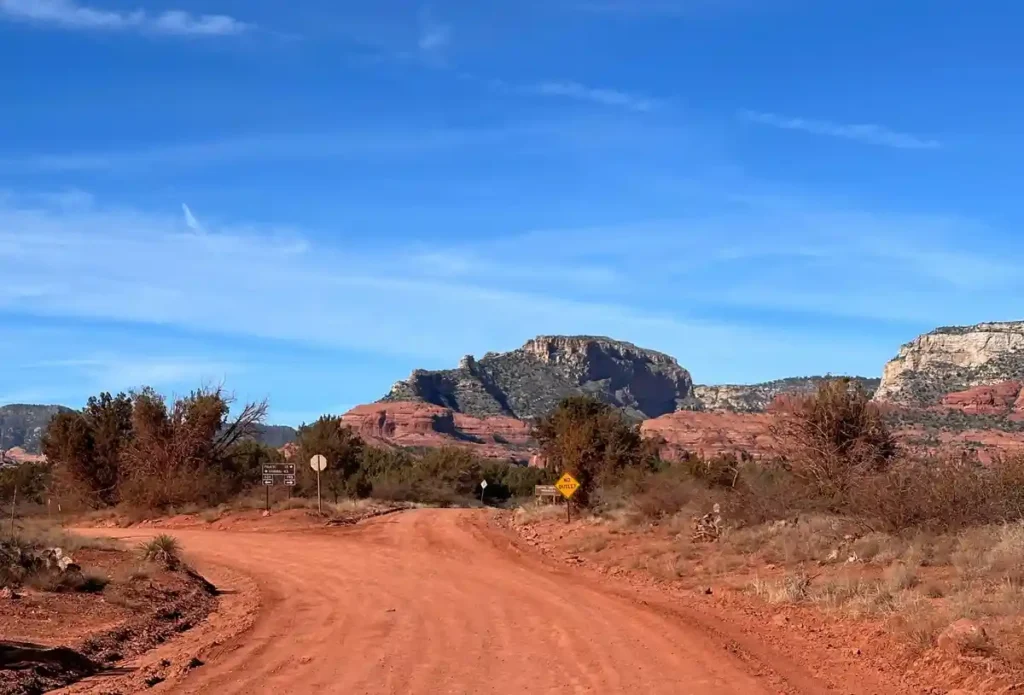
Forest Road 525 remains one of the main access routes associated with West Sedona camping, but Forest Road 525 camping does not mean camping anywhere you find an old pullout.
Before the designated-area project, broad camping corridors contributed to a large number of informal roadside sites. The Forest Service decision explicitly shifted overnight use into defined camping areas and closed surrounding land to dispersed overnight camping.
A safer FR 525 process is:
- Check the Red Rock Ranger District alerts and road information before leaving.
- Open the official designated camping map.
- Identify one of the legal camping areas.
- Follow current Forest Service signs once on the road.
- Stay on established motorized routes.
- Park and camp only within the currently designated camping footprint.
- Do not reopen a blocked, rehabilitated or closed former campsite.
The Motor Vehicle Use Map is particularly important for vehicle access. Forest Service mapping explains that the MVUM is the legal document of record for motorized route designations and that roads may still be temporarily closed because of weather, projects, emergencies or firefighting.
How to Use the Sedona Camping Map Correctly
Camping apps can be helpful for orientation, but they should not decide whether a campsite is legal.
Use this order instead.
Step 1: Confirm the Land Manager
Before evaluating a campsite, determine whether it is actually on Coconino National Forest land.
Private property, city land and other jurisdictions may have completely different rules.
The same land-manager-first process applies well beyond Arizona; our guide to finding legal dispersed camping on public land explains how agency maps, local orders and vehicle restrictions can change even where dispersed camping is generally available.
Step 2: Open the Current Forest Service Map
Use the Coconino National Forest or Red Rock Ranger District camping map to identify the designated West Sedona areas.
Do not rely solely on a screenshot saved years ago.
Step 3: Check the MVUM
The Forest Service says the Motor Vehicle Use Map is the final authority for motorized travel designations if another travel map conflicts with it.
That matters because a legal camping area does not give you permission to drive cross-country to reach whatever patch of ground you prefer.
Step 4: Check Alerts and Closures
Wildfire, flash flooding, resource damage, maintenance or another emergency can close roads or recreation areas temporarily.
Check again close to departure, not only when you begin planning weeks earlier.
Step 5: Save Maps Offline
Do not make cell service part of your legality plan.
Download the relevant map, road information and backup campground details while you still have reliable internet access.
Is Free Camping Near Sedona Really Free?
The Forest Service decision establishing the eight West Sedona areas specified that they would operate without fees and on a first-come, first-served basis.
But “free camping Sedona” should not be interpreted as:
- Unlimited camping.
- A reserved campsite.
- Guaranteed vacancy.
- Legal camping anywhere near town.
- Free water.
- Free trash collection.
- RV hookups.
- Toilets.
- A right to build a fire.
Forest Service dispersed-camping guidance describes this style of camping as having no services and little or no facilities such as toilets, tables and fire pits.
Check current signs and Forest Service notices before your trip in case fee or management policies change.
How Long Can You Camp?
Current Forest Service camping guidance for the Coconino National Forest states a 14-day stay limit in a 30-day period.
That limit should be treated as a forest rule, not as permission to remain indefinitely by moving a short distance from one West Sedona site to another.
Some locations can also carry more restrictive local rules.
If you are planning a long stay near Sedona, check the current Forest Orders page immediately before your trip because stay-limit orders have expiration dates and can be replaced by newer orders.
Campfire Rules Near Sedona
This is one of the easiest Sedona camping rules to misunderstand.
Current Forest Service West Sedona camping guidance says:
- Campfires are prohibited.
- Charcoal is prohibited.
- Stoves, grills and fire rings operating solely on liquid propane are permitted under the area guidance.
That is separate from temporary seasonal fire restrictions.
For example, Coconino National Forest and surrounding jurisdictions moved into higher fire restrictions during summer 2026. Those seasonal restrictions were later lifted. Coconino County’s current restrictions page reports that restrictions for the Coconino National Forest were lifted on July 20, 2026, and the Sedona Fire District lifted its restrictions beginning July 21, 2026.
As of September 11, 2026, that means there is no active seasonal restriction shown for the Red Rock Ranger District on the county’s current status table.
It does not mean you can build a wood fire at a West Sedona dispersed site.
The standing West Sedona guidance still says no wood campfires or charcoal.
Always check again immediately before travel because seasonal restrictions can return quickly.
Road Conditions Can Change Fast
Avoid choosing a campsite based on a permanent label such as “2WD friendly” or “RV accessible.”
Unpaved roads around Sedona can change after:
- Monsoon rain.
- Flash flooding.
- Erosion.
- Maintenance.
- High traffic.
- Mud.
- Wildfire operations.
- Winter weather.
The Forest Service specifically warns that designated roads can be closed temporarily because of weather, seasonal conditions, project work, emergencies or firefighting.
For FR 525, FR 89B and access toward Rockview, check current road status before towing a trailer or committing a large RV.
If conditions look worse than expected, turn around before reaching a point where reversing or finding a turnaround becomes difficult.
Never create a bypass across vegetation simply because a section of the road is muddy or rough.
Tent Camping, Vans and RV Boondocking
Different camping setups have different problems in a designated dispersed area.
Tent Camping
Tent campers should think about:
- Wind exposure.
- Rocky ground.
- Limited natural shade.
- Water.
- Human-waste management.
- Keeping the tent within an already disturbed camping footprint.
Do not clear plants or enlarge a site to make the tent fit.
Vans and Small Campers
Prioritize:
- Legal parking position.
- Level ground.
- Turning space.
- Road condition.
- Ability to leave if rain changes the road.
A compact vehicle does not give you permission to drive outside the designated motorized route.
RVs and Trailers
Before towing farther onto an unpaved road, consider:
- Road width.
- Ruts and washboard.
- Turning radius.
- Available turnaround points.
- Ground clearance.
- Trailer length.
- Weather forecast.
Do not assume every one of the eight areas accommodates every RV.
The Forest Service does not publish one universal RV-length limit for the entire West Sedona system, so assess your exact route and site rather than relying on a generic “big-rig friendly” description.
Water, Toilets and Trash
Plan for dispersed camping as a self-contained trip.
Current Forest Service guidance describes dispersed camping as offering no services such as trash removal and little or no infrastructure such as toilets, tables and fire pits.
Do not arrive expecting:
- Potable water.
- Electrical hookups.
- RV sewer connections.
- Showers.
- Guaranteed toilets.
- Trash pickup.
Bring enough water for your stay or have a verified resupply plan.
Pack out all garbage, including small food scraps and items that might appear biodegradable.
For human waste, follow the current Forest Service rule for the exact area and use an appropriate portable containment system when required or when local conditions make packing waste out the responsible option.
Do not dump RV wastewater, dishwater or other waste onto the desert surface.
Weather and Seasonal Planning
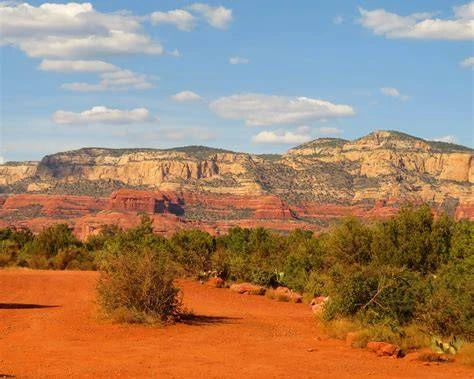
Sedona can look mild on a forecast while unpaved-road conditions tell a different story.
Spring
Spring can offer comfortable daytime conditions, but popular camping areas may be busy and fire restrictions can begin as fuels dry.
Summer
Expect heat and the possibility of monsoon storms.
Heavy rain can turn an unpaved road into mud or create dangerous drainage conditions even if it was easy to drive earlier that day.
Lightning and flash flooding are reasons to change plans rather than reasons to push farther down a road.
Fall
Fall can provide comfortable camping temperatures, but fire rules and road status still need to be checked.
Winter
Camping options north and east of Sedona can face winter road closures. Forest Service dispersed-camping material specifically identifies some northern Sedona routes as seasonally closed.
Do not assume every Sedona boondocking option is accessible year-round.
What to Do When the Designated Areas Are Full
A full camping area does not create permission to make a new one.
If your first choice has no legal space:
- Do not squeeze into vegetation.
- Do not reopen an old closed campsite.
- Do not camp beside a “No Camping” sign.
- Check another one of the current designated areas.
- Confirm another legal dispersed-camping option on the current Forest Service map.
- Move to a developed campground if necessary.
This is why a backup should be selected before arriving in Sedona.
Our road trip camping planning guide explains how to save backup overnight stops and campground information offline so a full, closed or inaccessible dispersed area does not force a last-minute illegal campsite.
Developed Camping Alternatives Near Sedona
A developed campground can be the better choice when:
- West Sedona areas are full.
- Rain makes dirt-road access questionable.
- You need toilets or potable water.
- You are uncomfortable navigating dispersed areas after dark.
- Your RV is not well suited to the road.
Cave Spring in Oak Creek Canyon is one developed Forest Service alternative worth checking. Recreation.gov currently lists 84 campsites, drinking water, vault restrooms and other campground facilities, with tent, trailer and RV accommodation depending on the site. It also currently carries a Pocket Fire-related notice for Oak Creek Canyon, so check conditions and availability for your exact dates rather than assuming normal access.
The Forest Service also lists other developed campgrounds in the Red Rock Ranger District, but operating status can change seasonally or because of wildfire, flooding or maintenance.
Use the current Forest Service or Recreation.gov listing as your backup source, not an old campground roundup.
Leave No Trace in a High-Use Desert Camping Area
The West Sedona restrictions exist partly because dispersed camping was expanding beyond established sites.
The most useful practices here are specific:
- Stay within the designated camping footprint.
- Do not create a second vehicle track.
- Do not crush vegetation to make more room.
- Do not move closure rocks or barriers.
- Pack out trash.
- Manage human waste properly.
- Do not build a new fire ring.
- Do not burn wood or charcoal in the West Sedona designated areas.
- Keep vehicles on legal routes.
- Leave rehabilitated former campsites alone.
The Forest Service’s decision memo specifically links the designated-area system to reducing campsite expansion, sanitation problems, vegetation loss and wildfire risk.
Common Sedona Dispersed Camping Mistakes
Using an Old GPS Pin as Proof of Legality
A campsite can exist in an app long after its legal status changes.
Start with the current Forest Service map.
Camping Inside Sedona City Limits
The current Forest Service Travel Map states that dispersed camping on Forest Service land within Sedona city limits is prohibited.
Treating All Forest Land as Open Camping
West Sedona has special restrictions.
Land ownership alone does not answer the camping question.
Pulling Into an Old FR 525 Site
Some former roadside camping areas were closed as overnight use was concentrated into the eight designated areas.
Do not reopen them.
Assuming No Seasonal Fire Restriction Means Campfires Are Allowed
West Sedona guidance independently prohibits wood campfires and charcoal.
Arriving After Dark With No Backup
Finding boundaries, reading signs and judging an unpaved road is harder at night.
Have a legal alternative saved first.
Assuming Every Site Is RV Friendly
Roads, turning areas and individual campsites vary.
Match the route to your actual vehicle.
Driving Into Mud
Do not let a campsite reservation-free mindset become a reason to damage roads or vegetation.
Wait, turn around or use a developed campground when necessary.
Depending Entirely on Cell Service
Download maps and backup information before leaving pavement.
Expecting Water or Toilets
Dispersed camping is not a developed campground.
Carry what you need.
Dispersed Camping Sedona Planning Checklist
Before departure:
- Confirm the site is on the correct public land.
- Download the current Forest Service camping map.
- Check the current MVUM.
- Choose one of the legal West Sedona designated areas when camping west of town.
- Check Forest Service alerts and closure orders.
- Verify FR 525, FR 89B or other access-road conditions.
- Check temporary fire restrictions.
- Remember that West Sedona wood and charcoal fires are prohibited.
- Verify current propane rules.
- Bring enough water.
- Prepare for no campground services.
- Have a legal sanitation plan.
- Pack out all trash.
- Check the weather and monsoon risk.
- Save maps offline.
- Choose a second legal dispersed area.
- Save a developed campground backup.
- Confirm the current stay limit immediately before the trip.
Frequently Asked Questions
Is dispersed camping legal in Sedona?
Legal dispersed camping is available on appropriate Coconino National Forest land around Sedona, but it is not permitted everywhere. Current Forest Service guidance limits West Sedona overnight dispersed camping to eight designated areas and prohibits camping on National Forest land within Sedona city limits. Always confirm the current map, Forest Orders and posted signs before staying overnight.
Where can you camp for free near Sedona?
The Forest Service decision establishing the West Sedona designated camping system created eight no-fee, first-come areas: Nolan, Greasy Spoon, Cockscomb, Windmill, Surprise, Javelina, Angel Valley and Rockview. Current Forest Service guidance continues to identify these eight camping areas. Check current alerts and signage before travel in case rules or fees change.
Can you camp anywhere along Forest Road 525?
No. Forest Road 525 is associated with several West Sedona designated camping areas, but old roadside pullouts are not automatically legal campsites. Use the current Forest Service designated-camping map, current signs and the MVUM instead of selecting an old GPS pin simply because it lies beside FR 525.
Can you have a campfire while dispersed camping near Sedona?
Current West Sedona Forest Service guidance prohibits wood campfires and charcoal in the designated dispersed camping areas. It allows stoves, grills and fire rings operating solely on liquid propane under the standing area guidance, but temporary fire restrictions can impose tighter limits. Check current restrictions immediately before every trip.
How long can you dispersed camp near Sedona?
For dispersed camping Sedona trips on Coconino National Forest land, current Forest Service camping guidance states a maximum of 14 days in a 30-day period. Local areas can have tighter restrictions, and Forest Orders can be replaced or renewed, so verify the current rule before any extended stay.
Conclusion
Successful dispersed camping Sedona planning starts with the current Forest Service map, not a campsite app or an old FR 525 GPS pin.
West Sedona’s designated-area system gives campers legal no-fee options close to Red Rock Country, but it also places clear limits on where overnight camping belongs. Before you drive out, confirm the designated area, check the MVUM and road status, verify current fire restrictions, bring enough water and save a developed campground as a backup.
References:
- U.S. Forest Service — West Sedona Designated Dispersed Camping and Day-Use Areas
Official Forest Service project page - U.S. Forest Service — Decision Memo: West Sedona Designated Dispersed Camping and Day-Use Areas
Official Forest Service decision memo - U.S. Forest Service — Camping on the Coconino, Red Rock Ranger District
Official Red Rock Ranger District camping guide - U.S. Forest Service — Coconino National Forest Travel Map
Official Coconino travel map - U.S. Forest Service — Motor Vehicle Use Map, Coconino National Forest
Official MVUM information - Coconino County — Fire Restriction Information
Current Coconino County fire status - Sedona Fire District — Fire Restrictions
Sedona Fire District fire information - Recreation.gov — Cave Spring, Coconino National Forest Recreation
Cave Spring campground information