
Good Camping Food Snacks: 30 Easy Ideas for Every Trip
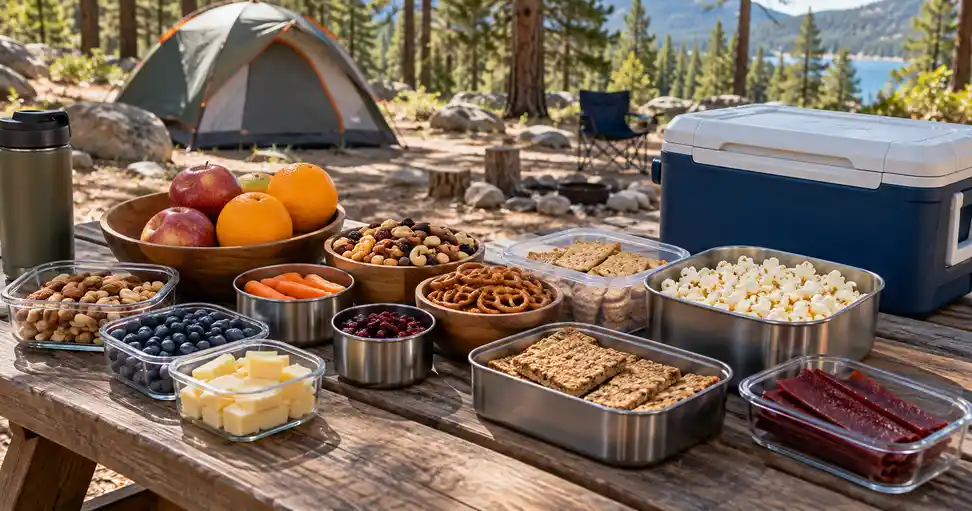
Good camping food snacks should be easy to pack, simple to eat, and appropriate for the type of trip you are taking. A family staying beside the car can use a cooler full of chilled options, while hikers and campers with limited cold storage need more shelf-stable choices.
The 30 ideas below include no-refrigeration snacks, cooler foods, kid-friendly options, higher-protein choices, hiking snacks, and foods you can prepare at home. You do not need to pack all 30. Choose a small mix that fits your group, trip length, cooler space, and planned activities.
Table of Contents
Good Camping Food Snacks: Quick Picks by Trip Type
| Snack type | Good choices | Storage |
|---|---|---|
| No refrigeration | Trail mix, nuts, dried fruit, pretzels | Shelf-stable |
| Hiking | Trail mix, fruit leather, bars, dried fruit | Shelf-stable |
| Kids | Dry cereal, applesauce pouches, mini muffins | Usually shelf-stable |
| Higher protein | Jerky, nuts, roasted edamame, eggs | Depends on item |
| Cooler snacks | Yogurt, hummus, cheese, eggs | Keep at 40°F (4.4°C) or below |
| Make-ahead | Energy bites, muffins, homemade bars | Recipe-dependent |
A snack can be easy to eat without being safe at room temperature. Yogurt, hummus, hard-boiled eggs, cheese, cottage cheese, and many prepared foods still require proper cold storage.
Check individual package instructions as well. A product that is shelf-stable while unopened may need refrigeration after opening.
15 Good Camping Food Snacks That Need No Refrigeration
Shelf-stable options are useful because they save cooler space and are easy to keep available for hikes, road trips, and quick campsite snacks.
Always check the package when buying prepared food. Storage requirements can vary between products.
1. Trail Mix
Trail mix is one of the easiest good camping food snacks because it travels well and requires no preparation at camp.
Combine ingredients such as:
- Nuts.
- Seeds.
- Raisins.
- Dried cranberries.
- Dried banana.
- Pretzel pieces.
- A small amount of chocolate or another sweet ingredient if temperatures allow.
For nut-free trips, build the mix around seeds, cereal, pretzels, and dried fruit instead.
Portioning trail mix at home can also stop the entire group from repeatedly opening one large bag.
2. Mixed Nuts and Seeds
Almonds, cashews, peanuts, pistachios, pumpkin seeds, and sunflower seeds are easy to divide into small containers.
They work well at the campsite or in a daypack because they take up little space and create almost no preparation or cleanup.
Check ingredient labels carefully when someone in the group has food allergies.
3. Dried Fruit
Raisins, dates, apricots, mango, cranberries, and other dried fruits are compact and less vulnerable to bruising than many fresh fruits.
Choose varieties that fit your preferences rather than assuming that every dried fruit is nutritionally identical.
Resealable portions are especially useful on hikes.
4. Freeze-Dried Fruit
Freeze-dried strawberries, apples, bananas, and similar fruits are lightweight and easy to store.
Their crisp texture can also provide some variety when most of your other snacks are crackers, bars, or trail mix.
Keep the package tightly closed because freeze-dried food can lose its crispness when exposed to moisture.
5. Shelf-Stable Jerky
Jerky can be a convenient savory and higher-protein snack.
Beef, turkey, and other varieties are available, but do not assume every meat snack can remain unrefrigerated indefinitely. Use products specifically labeled for shelf-stable storage and follow the package instructions after opening.
6. Nut or Seed Butter Packets With Crackers
Individual nut or seed butter packets eliminate the need to carry a large jar.
Pair them with crackers or rice cakes for a quick snack that requires very little cleanup.
Seed butter can provide an alternative when nuts are not appropriate for your group, though individual allergy requirements always take priority over general suggestions.
7. Granola or Oat Bars
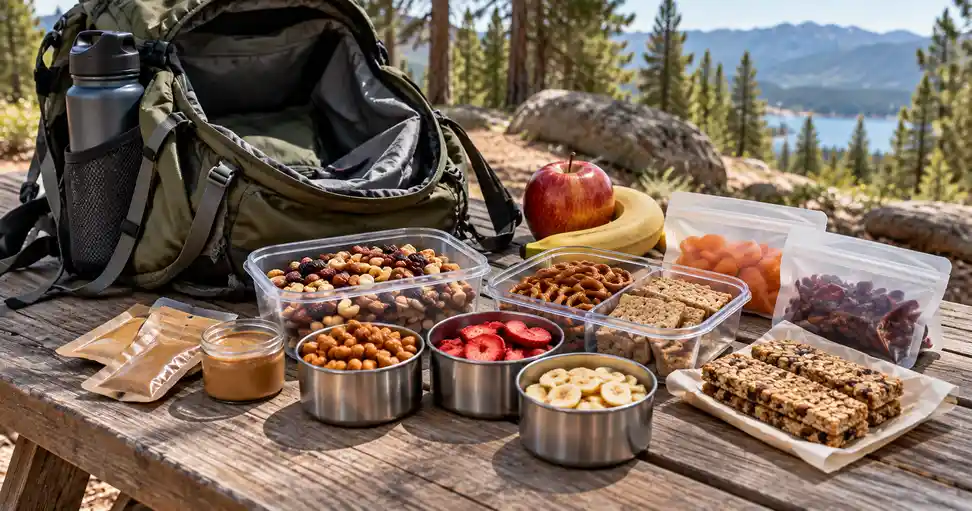
Bars are useful good camping food snacks for driving days, short hikes, or moments when setting up another snack feels inconvenient.
Choose bars that tolerate the temperatures you expect. Chocolate-coated products can become messy in a hot car or daypack.
Avoid crushing them under heavy camping equipment.
8. Roasted Chickpeas
Roasted chickpeas provide a crunchy savory option when you want something other than nuts, crackers, or chips.
Store them in a tightly sealed container to help maintain texture.
Check the label on packaged versions for allergens and storage instructions.
9. Roasted Edamame or Broad Beans
Dry-roasted edamame and broad beans are compact snacks that can provide more protein than many traditional crunchy snack foods.
They work particularly well in a hiking snack bag because they are small and require no utensils.
Again, verify allergens and individual package instructions.
10. Popcorn
Prepare popcorn at home and transfer it to a sealed bag or container.
It is inexpensive, shareable, and easy to portion for a family.
Use a rigid container if it will be packed beneath heavier equipment because popcorn crushes easily.
11. Pretzels
Pretzels are simple good camping food snacks when you want something savory and low-prep.
They are easy to divide into individual portions and can be combined with dried fruit or other shelf-stable snacks.
A hard container can prevent them from becoming crumbs in a packed food bin.
12. Rice Cakes
Rice cakes are light and easy to pair with nut butter, seed butter, or another suitable shelf-stable spread.
Their biggest weakness is fragility, so store them where heavy food containers cannot crush them.
13. Dry Cereal
Many children and adults are happy to eat familiar cereal dry as a snack.
Portion it before the trip into small reusable containers or resealable bags.
Choose cereal your group already enjoys instead of buying a camping-specific option simply because you are traveling.
14. Whole Apples or Oranges
Whole apples and oranges generally handle transportation better than softer fruits such as ripe berries or peaches.
Keep them protected from crushing and extreme heat.
If you cut fruit before eating it, treat the prepared food appropriately rather than assuming cut produce has the same storage characteristics as intact fruit.
15. Shelf-Stable Fruit or Applesauce Pouches
Single-serve fruit and applesauce pouches can be convenient for children, road trips, and hikes.
Use products labeled for room-temperature storage while unopened, and follow the manufacturer’s instructions after opening.
Discard damaged, leaking, or swollen packaging.
8 Good Camping Food Snacks to Keep in the Cooler
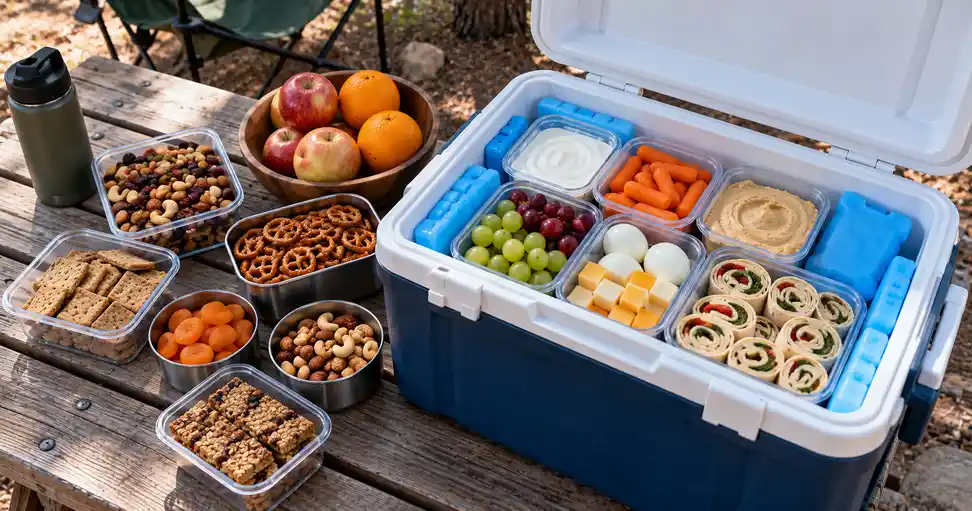
Some of the most appealing good camping food snacks are perishable. They are still practical for car camping as long as you maintain safe cooler temperatures.
Cold perishable food should stay at 40°F (4.4°C) or below. A cooler thermometer is more reliable than judging temperature by whether some ice remains.
16. Cheese and Crackers
Cheese and crackers are easy to assemble at a picnic table and work well for adults and children.
Keep cheese properly chilled and remove only the amount you expect to eat.
Return the remaining cheese to the cooler promptly instead of leaving the entire package on the table throughout the afternoon.
17. Yogurt With Granola
Keep yogurt cold and pack the granola separately until you are ready to eat.
That prevents the granola from becoming soggy and avoids unnecessary preparation.
Single portions can also reduce the number of times a larger container is opened.
18. Hummus With Baby Carrots
Hummus and baby carrots require almost no campsite preparation.
Keep the hummus refrigerated in the cooler and take out only the portion you need.
Other vegetables can work too, but sliced or prepared produce needs appropriate cold storage.
19. Hard-Boiled Eggs
Prepare hard-boiled eggs at home, chill them thoroughly, and transport them cold.
They can be a convenient higher-protein snack, but they are not a no-refrigeration camping food.
Keep them at safe temperatures and avoid leaving them sitting on the picnic table for extended periods.
20. Grapes With Cheese Cubes
Grapes and cheese are easy to divide into small containers before departure.
Pre-portioned servings reduce handling at camp and make it easier to take out only what you plan to eat.
Keep prepared portions properly chilled.
21. Cottage Cheese With Crackers
Cottage cheese is another cooler-only option.
Use individual containers or transfer a portion to a clean bowl rather than leaving the main container outside during a long snack session.
Pair it with crackers or another food that fits your preferences.
22. Chilled Tortilla Pinwheels
Prepare tortilla pinwheels at home using fillings appropriate for your group.
Recipes containing dairy, deli ingredients, cooked meat, or other perishables need reliable cold storage.
Pack pinwheels in a sealed container so they do not become crushed or exposed to melted cooler water.
23. Guacamole With Tortilla Chips
Chilled guacamole and tortilla chips make a simple campsite snack.
Treat refrigerated guacamole as perishable unless the specific unopened product is labeled shelf-stable.
Once opened, follow its storage instructions and keep it appropriately chilled.
Make-Ahead and Filling Campsite Snack Ideas
A little preparation at home can make good camping food snacks easier to serve when everyone is hungry.
24. Homemade Energy Bites
Energy bites can combine ingredients such as oats, nut or seed butter, dried fruit, seeds, or other ingredients that fit your group.
Storage requirements depend on the recipe. Do not automatically classify homemade energy bites as shelf-stable simply because they are commonly taken camping.
If reducing campsite preparation is a priority, you can also prepare more of your camping food at home and leave only simple assembly or reheating for the trip.
25. Mini Muffins
Bake mini muffins before departure and portion them into small containers.
They are easier to share than full-size muffins and can work particularly well with children.
Storage life varies according to the recipe and ingredients, so refrigerate recipes that require it.
26. Homemade Granola Bars
Homemade bars let you choose the ingredients and portion size yourself.
Wrap or separate them before the trip so they do not stick together.
Recipes containing ingredients that require refrigeration should remain chilled.
27. Savory Snack Mix
Build a simple mix using shelf-stable ingredients such as pretzels, crackers, dry cereal, roasted chickpeas, or seeds.
This is an easy way to create variety without packing several open bags.
Store it in a sealed container and adjust ingredients around allergies.
28. Banana Bread Slices
Bake banana bread at home and cut it into individual portions.
Pack slices carefully so they do not get crushed.
Storage needs depend on the recipe, especially when toppings, fillings, or other perishable ingredients are included.
29. Shelf-Stable Tuna or Chicken Pouch With Crackers
An unopened tuna or chicken pouch specifically labeled as shelf-stable can be convenient when you want something more substantial.
Open it only when you are ready to eat and follow package instructions for leftovers.
Do not assume opened meat products remain safely shelf-stable.
30. Fruit Leather
Fruit leather is compact, lightweight, and resistant to crushing.
It works particularly well for hikes, children’s snack bags, and trips where cooler space is limited.
Check individual labels for ingredients and storage instructions.
How to Choose Good Camping Food Snacks for Your Trip
The right snack mix depends more on your trip than on any universal ranking.
For Car Camping
Car camping gives you the most flexibility because you can usually carry a cooler and larger food containers.
Combine shelf-stable choices with several properly chilled snacks instead of filling the cooler entirely with snack foods.
For Hiking
Good hiking snacks should be easy to reach, reasonably durable, and simple to eat without spreading food across the trail.
Trail mix, dried fruit, jerky, bars, roasted beans, nut or seed butter packets, and fruit leather can work well.
Pack out every wrapper, pouch, and food scrap.
For Families With Kids
Familiarity can matter more than novelty.
Choose several foods your children already eat and pack them in manageable portions. Combining familiar snacks with one or two new options is usually more practical than filling the food bin with unfamiliar “camping foods.”
Watch for choking hazards appropriate to a child’s age and follow any allergy requirements specific to your family.
When Cooler Space Is Limited
Start with no refrigeration camping snacks and reserve the coldest space for foods that truly require it.
This reduces repeated cooler opening and gives you more flexibility if ice becomes difficult to replace.
For Longer Trips
Shelf-stable food becomes more useful as trip length increases.
Do not assume that a cooler loaded on day one will remain below 40°F for the entire trip without monitoring, enough ice or cold packs, and appropriate handling.
Are High-Protein Camping Snacks Better?
Not automatically.
Different people need different foods, and a snack does not become the right choice simply because it contains more protein.
If you want higher-protein camping snacks, options can include:
- Nuts and seeds.
- Shelf-stable jerky.
- Roasted edamame.
- Nut or seed butter.
- Cheese.
- Yogurt.
- Hard-boiled eggs.
- Cottage cheese.
- Shelf-stable tuna or chicken pouches.
Several of these require refrigeration, so storage should be part of the decision.
For most recreational camping trips, the more practical goal is to bring snacks you will actually eat and can store safely.
Camping Snack Food Safety
Choosing good camping food snacks also means knowing which foods need temperature control.
Keep Perishable Snacks Cold
Cold perishable foods should remain at 40°F (4.4°C) or below.
Pack the cooler with adequate ice or cold packs, keep it shaded when practical, and limit unnecessary opening.
If cold storage cannot be maintained reliably, choose shelf-stable snacks instead.
Follow the Two-Hour Rule
Perishable food should generally not remain between 40°F and 140°F for more than two hours.
When the outdoor temperature is above 90°F (32°C), that limit drops to one hour.
If a perishable snack has been left out beyond those limits, throwing it away is safer than trying to rescue it by putting it back in the cooler.
Keep the Cooler Shaded and Closed
Every unnecessary opening introduces warmer air.
Consider keeping frequently used drinks separate from food if your setup allows it, especially when people will open the drink cooler repeatedly throughout the day.
Separate Raw Food From Ready-to-Eat Snacks
If meat, poultry, or seafood shares a cooler with snack foods, keep raw products securely sealed and separated so their juices cannot contaminate ready-to-eat items.
Using separate containers or coolers can simplify the system.
Check Packaging Instructions
“Unopened shelf-stable” and “safe after opening without refrigeration” are not the same thing.
Read the storage information on jerky, meat pouches, fruit products, spreads, sauces, and similar packaged foods.
How Many Camping Snacks Should You Pack?
There is no single number that fits every group.
A practical approach is:
- Count the number of campers.
- Count travel and camping days.
- Identify when snacks are realistically needed.
- Add extra portions for hikes or other active outings.
- Pick several different snacks rather than dozens of products.
- Add a modest shelf-stable backup.
- Avoid packing so much that food is likely to be wasted.
Your snack plan should also fit the meals you are already bringing.
For a short campground trip, build snacks into your complete camping menu so the quantities match the breakfasts, lunches, dinners, and grocery list you already plan to pack.
This is usually more effective than buying a large collection of snack foods first and planning meals afterward.
How to Pack Good Camping Food Snacks Without a Mess
A little organization makes snack access faster and can help keep food cleaner.
Try these steps:
- Portion frequently used snacks before departure.
- Put crackers and other crushable foods in rigid containers.
- Keep cooler snacks together.
- Separate day-hike portions before you leave camp.
- Use resealable containers for opened dry foods.
- Carry bags for wrappers and other trash.
- Store food according to local wildlife regulations.
- Avoid keeping food in sleeping areas where regulations or wildlife concerns make that inappropriate.
If you are planning the rest of your cooking and food-storage setup, use the camp kitchen checklist to organize your cooler and camp kitchen around the meals and snacks you actually intend to eat.
Frequently Asked Questions
What Are Some Good Camping Food Snacks That Do Not Need Refrigeration?
Good camping food snacks without refrigeration can include trail mix, nuts and seeds, dried fruit, freeze-dried fruit, shelf-stable jerky, crackers with nut or seed butter packets, granola bars, roasted chickpeas, pretzels, dry cereal, whole apples or oranges, and fruit leather. Always check individual package storage instructions.
What Are Good Camping Snacks for Kids?
Familiar foods are often easiest. Dry cereal, whole fruit, applesauce pouches, pretzels, mini muffins, crackers, and appropriate trail-mix ingredients can work well. Use portions suitable for the child’s age, consider choking risks, and check ingredient labels carefully when food allergies are relevant.
What Are Some High-Protein Camping Snacks?
Options that can contribute more protein include nuts, seeds, roasted edamame, jerky, nut or seed butter, cheese, yogurt, hard-boiled eggs, cottage cheese, and shelf-stable tuna or chicken pouches. Remember that several of these are perishable and need to remain properly chilled.
What Snacks Should I Take Hiking While Camping?
Choose foods that are compact, durable, easy to open, and appropriate for the weather. Trail mix, dried fruit, jerky, granola bars, roasted chickpeas, nut or seed butter packets, and fruit leather are practical options. Carry all packaging and food scraps back with you.
How Do You Keep Camping Snacks Cold?
Use an insulated cooler with enough ice or cold packs to keep perishable foods at 40°F (4.4°C) or below. Keep the cooler shaded when possible, open it only when necessary, and consider using a thermometer. Follow the two-hour rule for perishables, reduced to one hour above 90°F.
Conclusion
Good camping food snacks should make a trip easier, not create another complicated food system.
Start with several shelf-stable options, add cooler snacks only when you can reliably keep them cold, and choose foods that match your campers, activities, and trip length.
You do not need all 30 ideas. A smaller mix of sweet, savory, filling, kid-friendly, and portable snacks is usually more practical—and easier to pack, store, and actually finish before the trip ends.
References:
- U.S. Food and Drug Administration — Handling Food Safely While Eating Outdoors — Used to verify the 40°F cold-storage recommendation, the 40–140°F danger zone, the two-hour rule, the one-hour rule above 90°F, cooler handling, and cross-contamination guidance.
- USDA Food Safety and Inspection Service — What Is the Danger Zone? — Used to verify the 40–140°F food-safety danger zone and the recommendation to keep cold food at or below 40°F.
- USDA Food Safety and Inspection Service — What Is the 2-Hour Rule With Leaving Food Out? — Used to verify the two-hour limit for perishable food and the one-hour limit when outdoor temperatures exceed 90°F.