
Make Ahead Camping Food: 25 Easy Meals to Prep at Home
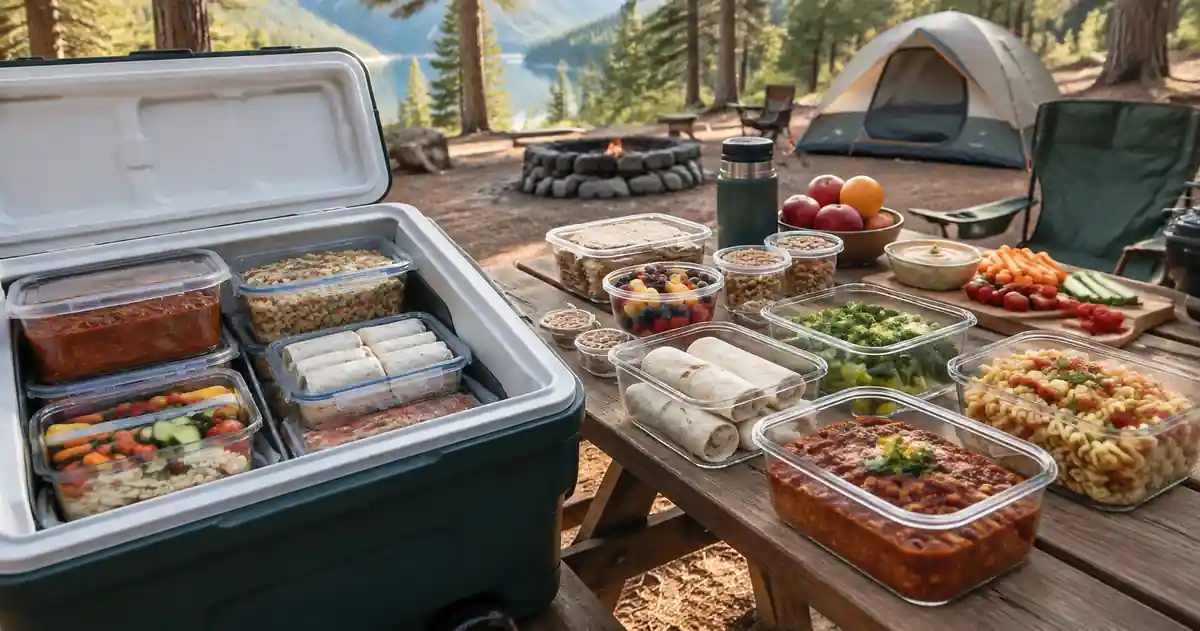
Make ahead camping food is one of the easiest ways to spend less time chopping, washing, and cooking at the campsite. The best options move most of the work into your home kitchen, then leave only eating, simple assembly, reheating, or one short finishing step at camp.
This guide gives you exactly 25 breakfasts, lunches, and dinners to choose from. For each idea, you will see what to prep at home and what remains to do at camp. You do not need to make all 25. Pick the meals that fit your trip length, cooler space, group size, and cooking setup.
Table of Contents
Make Ahead Camping Food: Prep Safely Before You Pack
Good meal prep is only useful if the food stays safe from your kitchen to the campsite. USDA guidance says cold perishable food should be kept at 40°F (4.4°C) or below. Food should not remain in the 40°F to 140°F danger zone for more than two hours, or more than one hour when the outside temperature is above 90°F (32.2°C).
Cool cooked food promptly before packing. USDA recommends dividing leftovers into shallow containers so they cool faster, then refrigerating or freezing them. Refrigerated cooked leftovers should generally be used within three to four days; freeze them if you are preparing farther ahead.
When you reheat cooked leftovers at camp, heat them to 165°F (73.9°C). A food thermometer is more reliable than judging by appearance or steam alone.
Freezing make ahead camping food can help with prep timing and cooler management, but it does not make thawed food shelf stable. Once thawed, perishable food still needs safe cold storage.
If you carry any raw meat or poultry, keep it securely separated from ready-to-eat meals so juices cannot contaminate prepared food. USDA also recommends packing outdoor food with a reliable cold source rather than depending on a cooler alone.
Make Ahead Camping Food: 6 Breakfasts to Prep at Home
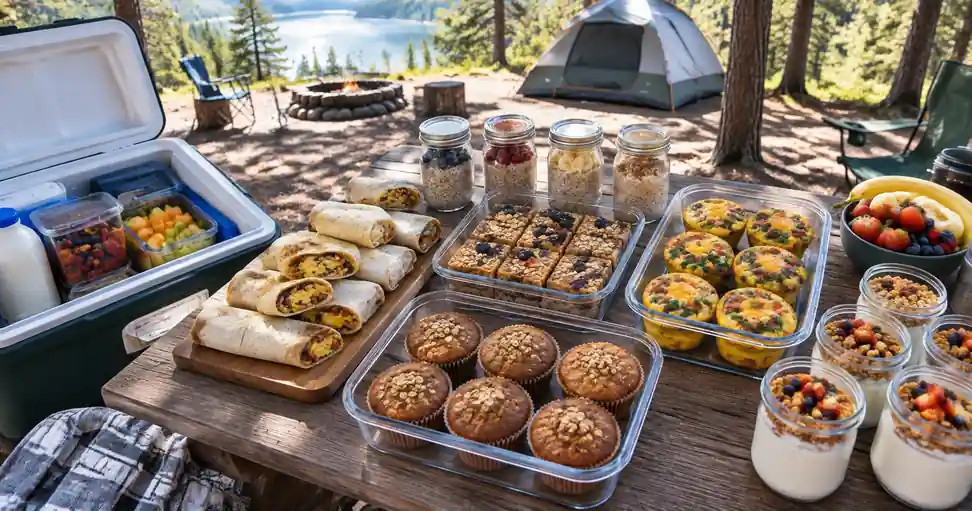
1. Breakfast Burritos
Prep at home: Cook the eggs and any meat or vegetables completely. Let the filling cool, assemble the burritos, then refrigerate or freeze them in individual portions.
At camp: Reheat only the number you need until the filling reaches 165°F.
Breakfast burritos work especially well on a departure morning because everyone gets a hot meal without creating a pile of dishes.
2. Baked Oatmeal Squares
Prep at home: Bake oatmeal with your preferred fruit, nuts, seeds, or spices, cool it, and cut it into portions.
At camp: Eat a square cold or warm it briefly in a covered pan.
This make ahead camping food option gives you the comfort of oatmeal without cooking a pot from scratch.
3. Overnight Oats
Prep at home: Portion oats, milk or another liquid, and toppings into sealed containers. Keep crunchy toppings separate if you want them to stay crisp.
At camp: Take one container from the cooler and eat.
Overnight oats are no-cook at camp, but versions containing dairy or other perishables still need to stay properly chilled.
4. Egg and Vegetable Muffins
Prep at home: Bake eggs with chopped vegetables in a muffin tin, cool promptly, and store them cold.
At camp: Reheat in a covered pan or eat cold only if they have stayed safely refrigerated.
These are easy to portion for a group and require almost no campsite preparation.
5. Banana-Oat Muffins With Nut or Seed Butter
Prep at home: Bake muffins, cool them completely, and portion nut or seed butter into small containers if needed.
At camp: Serve with whole fruit and the spread.
This is one of the simplest make ahead camping meals because it creates almost no campsite cleanup.
6. Yogurt, Granola, and Fruit Jars
Prep at home: Portion yogurt and fruit into sealed containers. Keep the granola separate.
At camp: Add granola immediately before eating.
Keep yogurt and cut fruit properly chilled.
Make Ahead Camping Food: 6 Easy Lunches
7. Hummus and Vegetable Wraps
Prep at home: Wash and cut vegetables, portion hummus, and pack tortillas separately.
At camp: Spread, fill, roll, and eat.
Hummus and cut produce still need proper cold storage even though the meal requires no cooking.
8. Chickpea Couscous Salad
Prep at home: Cook the couscous, mix it with chickpeas, chopped vegetables, herbs, and dressing, then chill it promptly.
At camp: Serve directly from the cooler.
This is an easy vegetarian lunch that needs no stove at the campsite.
9. Pasta Salad With Vegetables and White Beans
Prep at home: Cook pasta, cool it, then combine it with white beans, vegetables, and dressing.
At camp: Serve cold.
Because the meal is already complete, it works well for a hiking day when you do not want to cook lunch.
10. Chicken Pesto Wraps
Prep at home: Cook the chicken fully, cool it promptly, and portion it with pesto and other chilled ingredients.
At camp: Assemble the wraps.
Using fully cooked chicken means you avoid handling raw poultry at the campsite.
11. Black Bean and Corn Salad Bowls
Prep at home: Mix black beans, corn, vegetables, and dressing. Pack any crunchy toppings separately.
At camp: Serve in bowls or spoon into tortillas.
Choose storage based on the ingredients you add; cheese, cooked grains, and some prepared toppings may require refrigeration.
12. Peanut-Sesame Noodle Salad
Prep at home: Cook noodles, cool them, and mix with sauce and vegetables. Use an appropriate seed-butter variation if that better fits your group’s allergy needs.
At camp: Serve chilled.
This is another make ahead camping food option that avoids lunchtime cooking.
13 Make Ahead Camping Dinners and Easy Camp-Finish Meals
13. Classic Chili
Prep at home: Cook the chili completely, cool it in shallow containers, then refrigerate or freeze.
At camp: Reheat to 165°F and serve.
Chili is one of the most practical arrival-night easy camping dinners because campsite work is limited to reheating.
14. Black Bean Taco Filling
Prep at home: Cook black beans with vegetables and taco seasoning, cool, and portion.
At camp: Reheat and serve with tortillas and simple toppings.
This vegetarian filling works well for make ahead camping food because the same tortillas can also be used for lunches or breakfast burritos.
15. Sloppy Joe Filling
Prep at home: Cook the filling fully, cool it promptly, and pack it in a leak-resistant container.
At camp: Reheat to 165°F and spoon it into buns.
Serve with a simple side that does not require another pan.
16. Lentil Curry
Prep at home: Cook the curry completely and portion it into shallow containers for cooling.
At camp: Reheat and serve with precooked rice, flatbread, or a quick-cooking grain.
Lentil curry is freezer-friendly and gives you a meatless dinner that still feels substantial.
17. Bean-and-Cheese Burritos
Prep at home: Assemble the burritos after any cooked filling has cooled, wrap them individually, then refrigerate or freeze.
At camp: Reheat in a covered pan until hot throughout.
They can work for dinner or as a backup breakfast.
18. Chicken Fajita Filling
Prep at home: Cook the chicken and vegetables fully, cool promptly, and pack the filling cold.
At camp: Reheat to 165°F and serve in tortillas.
Pre-cooking the chicken keeps the campsite step short and reduces raw-meat handling.
19. Sausage and Pepper Skillet Filling
Prep at home: Cook the sausage and peppers completely, cool, and portion.
At camp: Reheat in one skillet and serve with rolls, tortillas, or rice.
This is a good choice when you want a hot dinner without chopping vegetables at camp.
20. Make-Ahead Pasta Sauce
Prep at home: Cook a tomato sauce with vegetables, beans, or cooked meat, then cool and refrigerate or freeze it.
At camp: Reheat the sauce while cooking one pot of pasta.
This meal deliberately leaves one simple task for camp while moving the slower sauce preparation into your home kitchen.
21. Pulled Chicken Sandwich Filling
Prep at home: Cook and shred the chicken, mix it with sauce, cool promptly, and pack cold.
At camp: Reheat to 165°F and serve on buns.
Pack refrigerated sides only if your cooler has enough capacity to hold them safely.
22. White Bean and Tomato Stew
Prep at home: Cook white beans with tomatoes, vegetables, and seasonings, then cool and portion.
At camp: Reheat in one pot.
This is a simple vegetarian freezer camping meal that requires almost no campsite prep.
23. Baked Ziti Portions
Prep at home: Bake the ziti, cool it, and divide it into camp-sized portions.
At camp: Reheat using a covered pan or another method your campsite cooking setup can handle safely.
Choose this meal only when your equipment makes reheating a dense pasta dish practical.
24. Bean-and-Corn Quesadilla Filling
Prep at home: Prepare the bean-and-corn filling and portion shredded cheese separately.
At camp: Fill tortillas and toast them briefly in a skillet.
The campsite work is fast, but the meal still feels freshly cooked.
25. Couscous and Chickpea Meal Jar
Prep at home: Measure dry couscous, seasonings, and other shelf-stable dry ingredients into a sealed container. Pack unopened shelf-stable chickpeas separately when the product allows room-temperature storage before opening.
At camp: Add the required hot water to the couscous, mix in the chickpeas, and serve.
This option reduces cooler demand and gives you a useful backup when ice space is limited.
How to Choose Which of the 25 Meals to Take
Do not build your trip around all 25 ideas. Choose make ahead camping food according to your schedule.
Arrival night: Use chili, taco filling, lentil curry, pulled chicken, or another fully cooked meal that only needs reheating.
Full camp days: Use meals with a short finishing step, such as quesadillas, pasta with prepared sauce, or fajitas.
Departure morning: Breakfast burritos, baked oatmeal, muffins, and overnight oats keep cleanup low.
Limited cooler space: Choose fewer chilled prepared meals and rely more on whole fruit, unopened shelf-stable foods, dry couscous, canned or pouched proteins, tortillas, and other stable ingredients.
If you would rather start with one complete menu instead of mixing and matching recipes, our simple 3-day camping meal plan organizes breakfasts, lunches, dinners, snacks, and a grocery list for a short frontcountry trip.
Keep One Shelf-Stable Backup Meal
Even a well-planned cooler can become inconvenient if you arrive late, lose stove access, or discover that one prepared meal no longer fits the schedule.
Pack one simple shelf-stable backup such as instant couscous with unopened beans, tortillas with an appropriate shelf-stable protein, or another meal whose package can remain safely at room temperature before opening.
Reuse Ingredients Across Meals
Choose a few ingredients that work in several places.
Tortillas can handle breakfast burritos, taco filling, and quesadillas. Beans can appear in salads, tacos, stews, and couscous. Whole fruit can cover breakfast sides and snacks without taking cooler space.
This reduces shopping, packing, and leftover ingredients without forcing every meal to taste the same.
Make Ahead Camping Food: How to Pack the Cooler
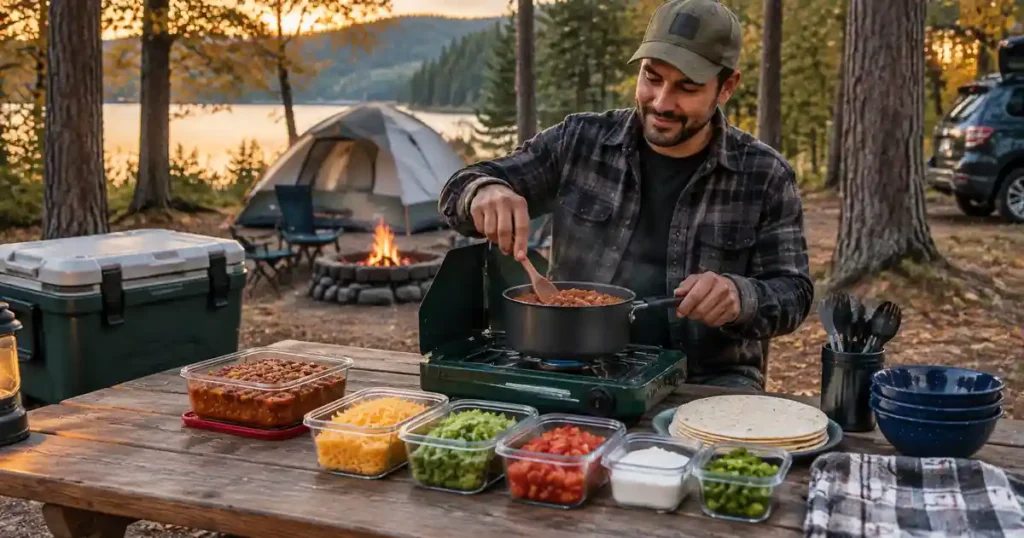
For make ahead camping food, a cooler should maintain cold food, not act as the main tool for cooling a large batch of hot food. Chill or freeze prepared meals before departure.
Use ice, frozen gel packs, or another reliable cold source, and keep perishable food at 40°F or below. For larger groups, a separate drink cooler can reduce how often the food cooler is opened.
Pack meals you will use later deeper in the cooler and place early meals where you can reach them without digging. A cooler thermometer can help you verify the actual temperature instead of guessing.
If the cooler loses safe temperature control beyond USDA time limits, do not rely on smell or appearance to decide whether food is safe.
Freezer Camping Meals: What Freezing Changes
Freezer camping meals are useful when you want to prep several days before departure.
Good candidates from this list include:
- Chili.
- Taco filling.
- Lentil curry.
- Sloppy joe filling.
- Breakfast burritos.
- Bean-and-cheese burritos.
- Pasta sauce.
- Pulled chicken.
- White bean stew.
Freeze foods after cooling them appropriately. Thaw them under safe refrigeration when possible, then keep them properly chilled.
USDA says cooked leftovers thawed in the refrigerator can generally be used within three to four days.
Frozen meals can also contribute to the cooler’s cold mass, but once thawed, they still require normal temperature control.
Camping Meal Prep: Label and Portion Before Leaving
Good camping meal prep reduces food handling at the campsite.
Label each container with:
- Meal name.
- Trip day.
- Simple reheating or assembly note when useful.
Portioning helps you open only what you need, reduces repeated cooler searching, and makes it easier to see whether you packed enough meals for the group.
For make ahead camping food, smaller meal-sized containers are often more useful than one giant batch because they can cool faster at home and are easier to organize in a cooler.
Common Make Ahead Camping Food Mistakes
Avoid these planning mistakes:
- Preparing more chilled meals than your cooler can safely hold.
- Choosing recipes that still require major chopping and cooking at camp.
- Packing a large batch while it is still hot.
- Preparing refrigerated leftovers too far in advance instead of freezing them.
- Assuming frozen food no longer needs cold storage after thawing.
- Forgetting which meal belongs to which day.
- Packing raw meat where it can leak onto ready-to-eat food.
- Depending on a campfire for essential reheating.
- Bringing no shelf-stable backup meal.
- Judging mishandled food by smell instead of temperature and time.
- Packing a meal without the pot, pan, fuel, or utensil needed to finish it.
The point of make ahead camping food is to reduce work and uncertainty at camp, not move the same complexity into a different container.
Make Ahead Camping Food: Quick Prep Timeline Before Your Trip
Several Days Ahead
- Choose the meals.
- Shop for ingredients.
- Cook anything that will be frozen.
- Freeze meal-sized portions after safe cooling.
- Check that the cooler, stove, and food containers fit the plan.
One to Two Days Before
- Prepare refrigerated meals that fit within safe storage timing.
- Wash and cut produce needed early in the trip.
- Portion sauces, toppings, and dry ingredients.
- Label containers.
- Chill drinks and cooler foods.
Departure Day
- Pack chilled or frozen food directly into the prepared cooler.
- Add enough reliable cold sources.
- Keep raw food separated if you are carrying any.
- Put later meals deeper in the cooler.
- Confirm that you have one shelf-stable backup meal.
Frequently Asked Questions
What Make Ahead Camping Food Is Easiest for Beginners?
The easiest make ahead camping food requires almost no campsite preparation. Good beginner options include chili, breakfast burritos, baked oatmeal, pasta salad, black bean taco filling, overnight oats, and pulled chicken. Choose meals that only need reheating, simple assembly, or one short finishing step.
How Far Ahead Can I Prepare Camping Meals?
USDA says refrigerated cooked leftovers should generally be used within three to four days. If you want to prepare cooked meals earlier than that, cool them properly and freeze them. Your exact timing also depends on the recipe, ingredients, and whether safe refrigeration is maintained.
What Camping Meals Can I Freeze Before a Trip?
Chili, taco filling, lentil curry, sloppy joe filling, breakfast burritos, bean-and-cheese burritos, pasta sauce, pulled chicken, and bean stews are practical freezer camping meals. Freezing helps with advance preparation, but thawed perishable food still needs safe cold storage.
How Do I Keep Make Ahead Camping Meals Cold?
Chill or freeze food before departure, use a cooler with reliable cold sources, minimize unnecessary opening, and keep perishable food at 40°F or below. A cooler thermometer can help verify the temperature rather than relying on how cold the container feels.
What Should I Prepare for the First Night of Camping?
Choose a fully cooked dinner that needs only reheating. Chili, lentil curry, black bean taco filling, sloppy joe filling, pulled chicken, or sausage and peppers all work well. Arrival night is usually the wrong time for a recipe that requires lots of chopping, several pans, or a campfire.
Conclusion
Make ahead camping food works best when most of the labor happens before the vehicle leaves home.
Choose a few meals from this list that match your schedule, group size, cooler space, and cooking setup. Prepare them safely, label and portion them, then leave only eating, reheating, assembly, or one short cooking step for camp.
A good make ahead camping food plan means less cleanup, fewer forgotten ingredients, and more time for the reason you went camping in the first place.
References:
- U.S. Department of Agriculture, Food Safety and Inspection Service — How Can I Keep Food Safe While Engaging in Outdoor Activities?
- U.S. Department of Agriculture, Food Safety and Inspection Service — How Do I Handle Leftovers Safely?
- U.S. Department of Agriculture, Food Safety and Inspection Service — What Is the Danger Zone?
- U.S. Department of Agriculture, Food Safety and Inspection Service — How Do You Thaw Leftovers Safely?
- U.S. Department of Agriculture, Food Safety and Inspection Service — Can You Reheat Leftovers in a Slow Cooker?