
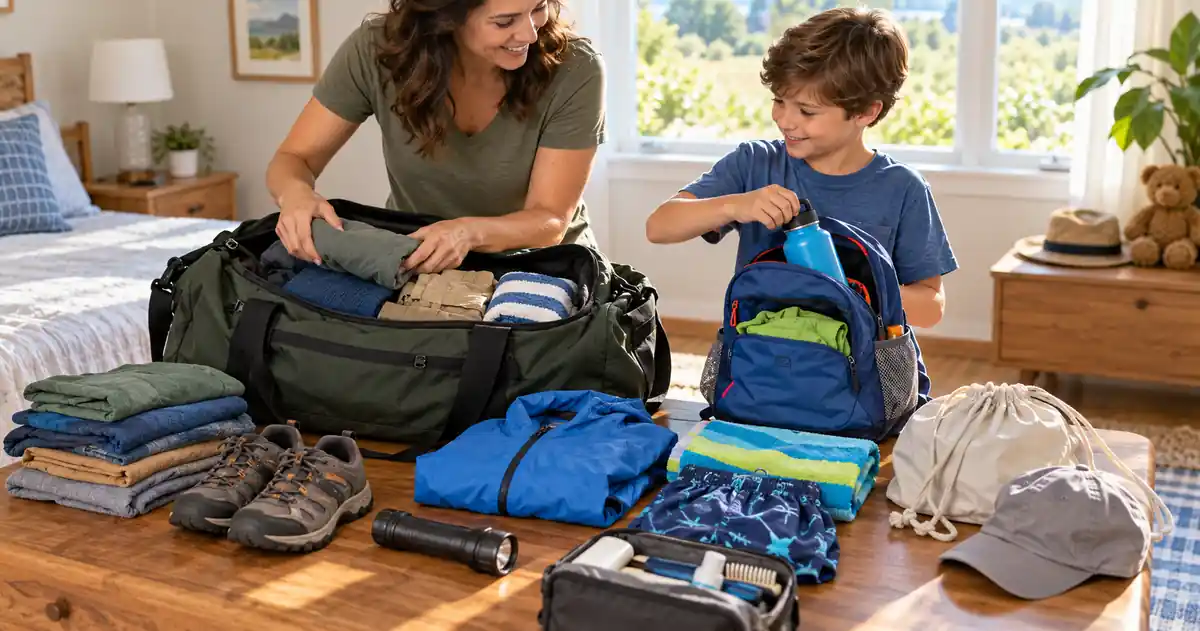
Summer Camp Packing Checklist: What to Bring for Day and Overnight Camp
A useful summer camp packing checklist starts with the camp’s own instructions. Then adjust your packing for the camper’s age, session length, activities, weather, and laundry schedule. Day campers usually need a manageable backpack for one day, while overnight campers also need clothing, bedding, toiletries, nighttime items, and a simple system for wet and dirty gear.
The goal is not to pack everything your child might possibly use. It is to send the things they actually need in a way they can manage without you standing beside the duffel bag.
Table of Contents
Summer Camp Packing Checklist: Check the Camp’s Rules First
Before buying new gear or filling a suitcase, open the official camp packing list.
The American Camp Association recommends considering the camp’s activities and climate, clearly labeling belongings, and contacting the camp when requirements are unclear. ACA also provides specific guidance for sending medication to camp.
Your summer camp packing checklist should begin by confirming:
- Session dates and length.
- Day camp or overnight camp.
- Laundry schedule.
- Bedding requirements.
- Swimming schedule.
- Lunch and snack policy.
- Medication check-in procedures.
- Food-allergy rules.
- Electronics policy.
- Spending-money rules.
- Specialty-program equipment.
- Prohibited items.
- Luggage size or quantity limits.
Individual camps can differ significantly. For example, one current camp list requires athletic clothing and a small daily bag for day campers but adds bedding, toiletries, extra clothing, towels, a flashlight, and laundry storage for overnight campers.
Match Clothing to Laundry, Not Just Session Length
Avoid treating a generic online quantity as a universal rule.
Instead, use:
Days until the next laundry opportunity + activity needs + a small practical backup
A camper attending seven nights without laundry needs a different clothing plan from a camper attending two weeks with laundry midway through the session.
If the camp publishes exact quantities, use those.
Let Your Camper Help Pack
For overnight camp especially, involve the child before you close the bag.
They should know:
- Where the rain jacket is.
- Which bag holds toiletries.
- Where dirty clothes go.
- Which towel belongs to them.
- Where their flashlight is stored.
- How clean clothing is organized.
ACA’s packing advice also emphasizes labeling and organization to help campers manage their belongings away from home.
Summer Camp Packing Checklist for Day Camp
A summer camp packing checklist for day camp should usually stay simple enough for the camper to carry and manage.
The exact contents depend on the program, but a practical daily bag may include:
- Comfortable backpack.
- Refillable water bottle.
- Lunch if the camp requires families to provide it.
- Approved snacks if needed.
- Sun hat.
- Sunscreen according to camp policy.
- Insect repellent if permitted.
- Lightweight rain layer when the forecast calls for it.
- Spare clothing when useful.
- Any activity-specific equipment requested by the camp.
A current Camp Canaan day-camp list, for example, includes a backpack, food for the day, water bottle, swimming equipment, sunscreen, and optional bug protection, while also specifying clothing and footwear expectations.
The important lesson is not to copy that exact list. It is to check what your camp expects each morning.
For Swim or Water-Activity Days
The camp may request:
- Swimsuit.
- Towel.
- Water shoes.
- Goggles if allowed.
- Dry change of clothes.
- Separate bag for wet items.
If swimming is not part of the day’s program, avoid filling the backpack with unnecessary gear.
Pack a Clothing Backup When It Makes Sense
A spare outfit is especially useful when the program includes:
- Water play.
- Mud.
- Paint.
- Outdoor adventure activities.
- Younger campers who may need a change during the day.
Some camps specifically recommend a change of clothes for younger day campers rather than every age group.
What Should Stay Out of the Day Camp Backpack?
Check the camp’s rules before sending:
- Phones.
- Smartwatches.
- Tablets or gaming devices.
- Toys.
- Trading cards.
- Cash.
- Unapproved food.
- Pocket knives or tools.
- Expensive belongings.
Camp Canaan, for example, currently prohibits several electronics, smartwatches, cash, toys, and weapons from its regular day-camp programs. That is a camp-specific policy, not proof that every camp uses the same restrictions.
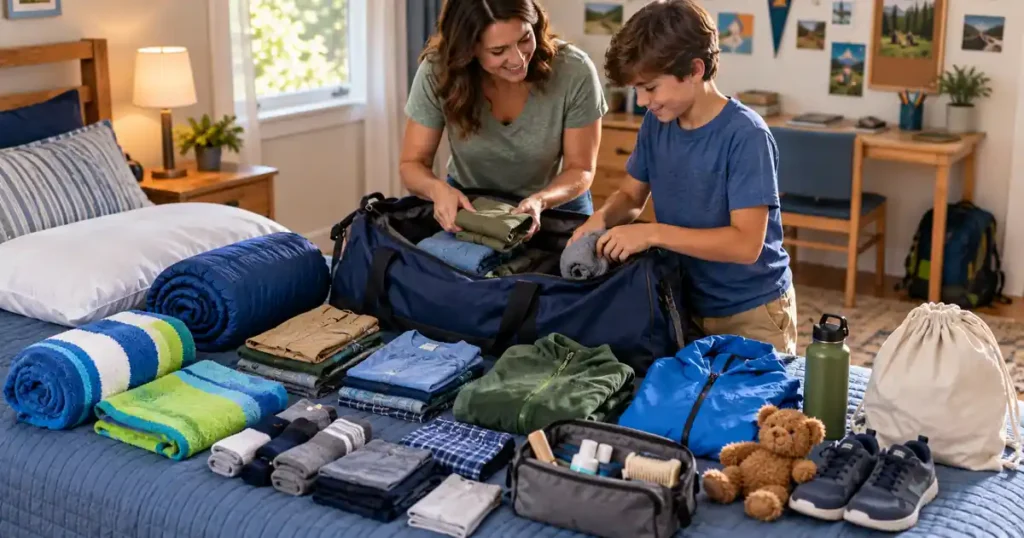
Summer Camp Packing Checklist for Overnight Camp
An overnight summer camp packing checklist adds the things a camper needs to live away from home rather than simply attend activities for the day.
The biggest additions are clothing for several days, sleep gear, bathing supplies, nighttime items, and a system for managing dirty and wet belongings.
Clothing
Build the wardrobe around the camp’s session and laundry plan.
Common categories include:
- T-shirts.
- Shorts.
- Long pants.
- Underwear.
- Socks.
- Pajamas.
- Warm sweatshirt, fleece, or similar layer.
- Rain jacket.
- Swimsuits.
- Activity-specific clothing.
A current YMCA overnight-camp handbook provides a one-week packing example with shirts, shorts, pajamas, long pants, socks, underwear, rain protection, swimwear, and layers. It also advises families not to send campers with brand-new clothing or shoes.
Use the camp’s quantities when supplied rather than automatically copying another program’s one-week list.
Footwear
Possible categories include:
- Comfortable broken-in closed-toe shoes.
- Water shoes if requested.
- Shower shoes when appropriate.
- Hiking shoes only when the program needs them.
Avoid sending a child to active camp in shoes they have never worn before. The YMCA’s current guidance specifically recommends avoiding new shoes for overnight camp.
Bedding
Verify the sleeping arrangement before packing.
The camp may request:
- Sleeping bag.
- Sheets and blanket.
- Pillow and pillowcase.
- Extra blanket.
Do not assume every bunk uses the same mattress size.
Some camps accept either a sleeping bag or twin bedding, but the correct setup depends on the facility.
Towels
Depending on the camp, your child may need separate:
- Bath towel.
- Swim towel.
Quantity should reflect session length and laundry availability.
Toiletries
Common personal-care items include:
- Toothbrush.
- Toothpaste.
- Soap or body wash.
- Shampoo.
- Hairbrush or comb.
- Deodorant if used.
- Menstrual products when applicable.
- Other ordinary personal-care items permitted by the camp.
Keep toiletries together in a bag the camper can recognize easily.
Nighttime Items
Depending on camp policy, useful items may include:
- Flashlight or headlamp.
- Required batteries.
- Book.
- Journal.
- Pen or pencil.
- Small approved comfort item.
Both ACA guidance and current camp lists commonly include flashlights or similar nighttime equipment for overnight programs.
Separate Dirty and Wet Gear
Include:
- Laundry bag for dry dirty clothes.
- Separate wet bag for swimsuits, towels, or damp clothing.
This simple system keeps wet items from being buried among clean clothes and bedding.
How Much Clothing Should Go on the Summer Camp Packing Checklist?
The right summer camp packing checklist should not prescribe one clothing quantity for every child.
A better formula is:
Time until laundry + expected clothing changes + small backup
For example, a session with daily water activities may need more dry changes than an arts-focused program. A longer camp with scheduled laundry may require fewer total clothes than a shorter camp with no laundry.
Avoid excessive backups. Too much clothing makes the bag harder for the camper to manage and makes it easier to lose track of belongings.
ACA also recommends leaving expensive clothing and jewelry at home.
Choose clothes that can handle:
- Dirt.
- Grass.
- Paint.
- Sweat.
- Camp laundry.
- Outdoor activities.
Label the Summer Camp Packing Checklist Items You Want Back
Clothing can look surprisingly similar when an entire cabin has unpacked.
ACA advises families to clearly mark belongings, and its packing guidance recommends using labels to make camp organization easier.
Consider labeling:
- Shirts.
- Jackets.
- Towels.
- Water bottle.
- Backpack.
- Toiletry bag.
- Flashlight.
- Shoes.
- Swim gear.
- Bedding.
- Laundry bag.
Use the camper’s name or the identification method requested by the camp.
Keep the Organization Simple
An elaborate color-coded packing system is useless if the camper does not understand it.
Useful options include:
- One bag for underwear and socks.
- One toiletry bag.
- One swim bag.
- One laundry bag.
- Outfit bundles for younger campers who need them.
Older campers may prefer managing clothing by category.
The best system is the one your child can use independently.
Medication, Health Forms, and Allergies
Health information should be handled separately from ordinary packing.
Follow the Camp’s Medication Procedure
Do not hide medication among clothes or toiletries.
ACA advises sending medications in original bottles with dosage instructions to the camp’s nurse or healthcare facility and listing medications on the camper’s medical documentation. Its health-history materials also tell parents to review the camp’s requirements for medication packaging and containers.
Individual camps may have additional rules. Camp Canaan, for example, currently requires medications to be registered, stored, and administered through its camp nurse and requires original prescription packaging.
Your process should therefore be:
- Complete required health forms.
- Disclose current medications.
- Keep medication in the required original packaging when instructed.
- Follow the camp’s arrival/check-in procedure.
- Ask how inhalers, epinephrine, or other emergency medication should be managed.
- Follow your healthcare provider’s instructions.
Do not assume a camper may keep medication in their cabin, backpack, or pocket simply because that is convenient.
Food Allergies and Dietary Requirements
Before camp, tell the program about relevant:
- Food allergies.
- Dietary restrictions.
- Medical dietary requirements.
Also confirm whether families are allowed to send outside food.
Some camps prohibit food in camper luggage, so sending a stash of snacks can create a problem instead of solving one. ACA’s general preparation guidance lists food among items families may be told not to pack.
Summer Camp Packing Checklist for Kids vs. Teens
A summer camp packing checklist for kids and one for teenagers do not need completely different foundations. Both need appropriate clothing, weather protection, water, toiletries, and activity gear.
What changes most is how the items are organized.
Younger Campers
Keep things easy to recognize.
Consider:
- Familiar clothing.
- Simple categories.
- Outfit bundles when helpful.
- Easy-to-use toiletry containers.
- Familiar broken-in footwear.
- Clearly labeled belongings.
- One approved comfort item for overnight camp.
Avoid packing so many containers that the camper needs an instruction manual to get dressed.
Teen Campers
Teens can usually manage their own categories but may need:
- Additional personal-care products.
- Menstrual supplies when applicable.
- Specialty activity gear.
- Journal or stationery.
- More independent clothing choices.
The camp packing list for teens still needs to follow the program’s rules on electronics, clothing, personal products, and valuables.
What Not to Pack for Summer Camp
A useful checklist also tells you what should stay home.
Depending on the camp, restricted items may include:
- Cell phones.
- Smartwatches.
- Tablets.
- Gaming devices.
- Expensive cameras.
- Valuable jewelry.
- Large amounts of cash.
- Unapproved food.
- Pocket knives.
- Weapons.
- Fireworks.
- Irreplaceable sentimental objects.
ACA’s general preparation guidance advises against items including cell phones, portable electronics, food, hunting knives, fireworks, and expensive clothing or jewelry.
Modern policies can go further. Camp Canaan specifically lists smartwatches and tablets among prohibited electronics for several programs.
The takeaway is simple:
Use the current prohibited-items list from your child’s actual camp.
Adjust the Checklist for Specialty Camps
A standard summer camp packing checklist may need a few additions when the program centers on a particular activity.
Sports Camp
Confirm whether the program requires:
- Sport-specific shoes.
- Protective equipment.
- Uniform.
- Water bottle.
- Personal equipment or camp-provided equipment.
Do not buy specialty gear before checking what is provided.
Arts Camp
Consider:
- Clothing that can get stained.
- Required instrument or art equipment.
- Safe storage for personal equipment.
Outdoor or Adventure Camp
The camp may request:
- Broken-in hiking footwear.
- Daypack.
- Rain layer.
- Extra warm layer.
- Water shoes.
- Other program-specific outdoor gear.
Do not send knives, fire-starting equipment, climbing equipment, or other technical gear unless the camp specifically requires and permits it.
If summer camp is part of a broader effort to get your kids comfortable outdoors, our family camping trip in Santa Cruz guide shows how campsite facilities, beach access, redwoods, and children’s needs can shape a family camping plan.
Pack So the Camper Can Actually Use the Bag
Packing efficiently is not only about fitting everything inside.
It is about creating a bag that works after the parent leaves.
Put Frequently Used Items Within Reach
Depending on camp rules, this may include:
- Water bottle.
- Rain layer.
- Hat.
- Swim equipment.
- Approved sunscreen.
Do not bury tomorrow’s most-used item at the bottom of an enormous duffel.
Keep Clean, Dirty, and Wet Items Separate
Think in three categories:
Clean: unused clothes and bedding.
Dirty: dry worn clothing.
Wet: swimsuits, towels, rain-soaked clothing.
That prevents one damp towel from turning the whole bag into a wet-clothing pile.
Do Not Create Too Many Tiny Categories
Organization can become clutter.
Use enough bags or pouches to make the system obvious, then stop.
Pack Together
Before departure, ask the camper to show you where:
- Socks are.
- Toiletries are.
- Rain gear is.
- Dirty clothes go.
- Swim gear belongs.
If they cannot find those things at home, simplify the system.
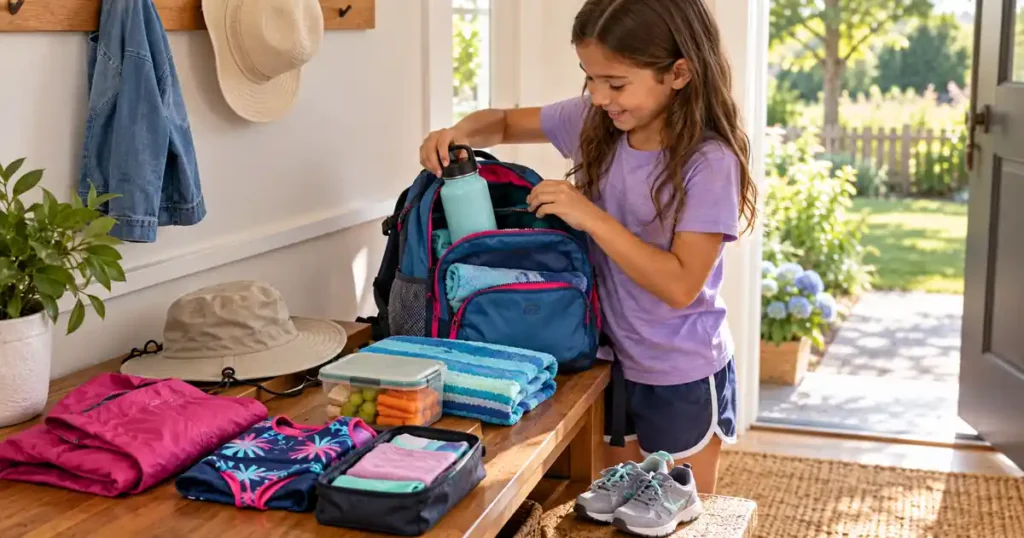
Final Summer Camp Packing Checklist Before You Leave
Use this summer camp packing checklist as a last review after following the camp’s official list.
Camp Information
- Official camp packing list reviewed.
- Session dates confirmed.
- Current weather checked.
- Laundry schedule checked.
- Bedding requirements confirmed.
- Swim requirements confirmed.
- Specialty-program gear confirmed.
Health
- Health forms completed.
- Medication disclosed and packed according to camp instructions.
- Medication check-in procedure confirmed.
- Allergy and dietary information submitted.
Day or Overnight Gear
- Clothing matches the session and laundry schedule.
- Footwear is broken in.
- Weather layer packed.
- Swim gear packed if required.
- Bedding confirmed for overnight camp.
- Toiletries packed for overnight camp.
- Laundry bag included.
- Wet-item bag included if useful.
- Water bottle packed.
Identification and Camp Rules
- Important belongings labeled.
- Electronics policy checked.
- Prohibited items removed.
- Outside-food policy checked.
- Cash/spending-money policy checked.
- Valuable or irreplaceable items left home.
A final check should make the luggage simpler, not larger.
Frequently Asked Questions
What Should Be on a Summer Camp Packing Checklist?
A summer camp packing checklist should cover clothing, suitable footwear, water, weather protection, swim gear when needed, toiletries and bedding for overnight camp, dirty-clothes storage, and camp-specific activity gear. Parents should also separately confirm health forms, medication procedures, food restrictions, electronics rules, and prohibited items with the camp.
What Does a Child Need for Day Camp?
A typical day-camp bag may include a water bottle, lunch or snack when required, sun protection, suitable clothing, weather protection, swim gear on water-activity days, and a spare outfit when useful. The camp’s own daily list should determine exactly what comes each morning.
What Should a Child Pack for Overnight Summer Camp?
An overnight camper generally needs clothing for the period between laundry days, sleepwear, bedding specified by the camp, toiletries, towels, swim gear when relevant, weather layers, footwear, a flashlight or headlamp if requested, and bags for laundry and wet items. The camp’s official list should determine quantities.
How Many Clothes Should You Pack for Summer Camp?
Base clothing on the number of days until the camper can do laundry, the activities planned, and a modest backup. Do not automatically pack one outfit for every day of a long session if the camp provides laundry. When the camp publishes exact quantities, use those instructions.
What Should Kids Not Bring to Summer Camp?
Do not send anything specifically prohibited by the camp. Commonly restricted categories include phones, smartwatches, gaming devices, expensive valuables, unapproved food, fireworks, weapons, and certain tools. Rules vary between programs, so review the camp’s current prohibited-items policy before closing the bag.
Conclusion
The best summer camp packing checklist helps the camper manage camp life without carrying unnecessary belongings.
Start with the camp’s official instructions, adjust clothing to the session and laundry schedule, label important items, organize clean, dirty, and wet gear simply, and handle medication and health information through the camp’s required process.
Then let the camper help with the final pack. If they know where everything is before leaving home, they are much more likely to manage it independently at camp.
References:
- American Camp Association — Preparing for Camp
ACA preparation and packing guidance - American Camp Association — 5 Summer Camp Packing Hacks
ACA packing and labeling guidance - American Camp Association — Camper Health History Form
ACA camper health and medication form - YMCA of Metropolitan Washington — Summer Camp Parent Handbook, Updated January 2026
YMCA overnight camp packing guidance - Camp Canaan — Pack Lists for Day & Overnight Camps
Camp Canaan current packing lists