
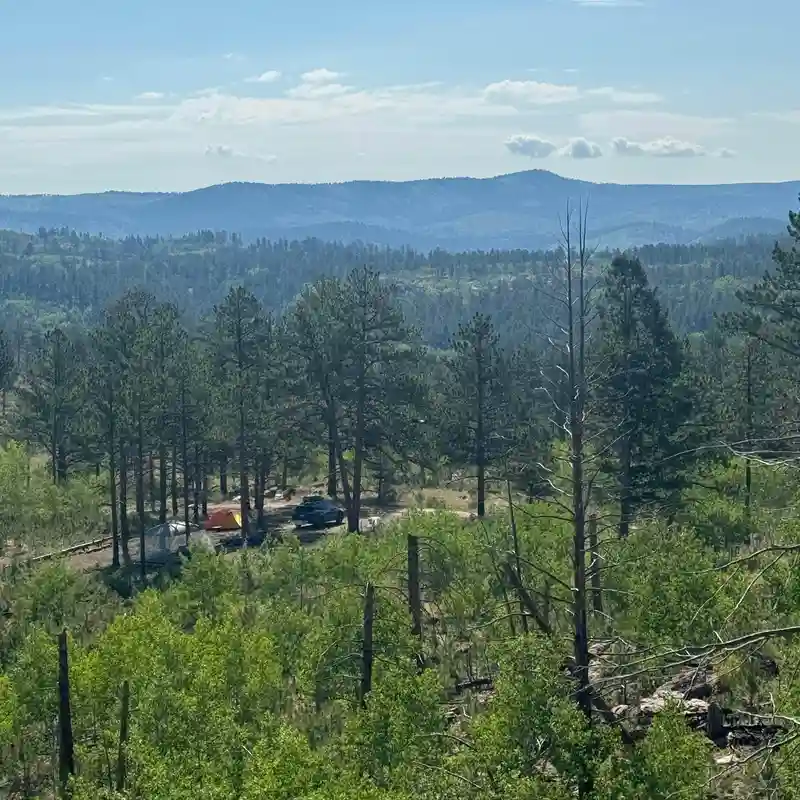
Dispersed Camping Colorado: Free Sites, Rules and Planning
Planning Dispersed Camping Colorado starts with identifying who manages the land—not with choosing a campsite pin from an app. Many legal dispersed camping areas on Colorado’s BLM and National Forest lands are free and do not require reservations, but local closures, designated-site rules, road restrictions, stay limits, and fire orders can change what is actually allowed.
The safest planning method is simple: identify the land manager, confirm camping rules for that exact area, check legal vehicle access, review current fire restrictions, and keep a backup camping area in case your first choice is full or inaccessible.
Table of Contents
Dispersed Camping Colorado at a Glance
| Planning question | What to expect |
|---|---|
| Is dispersed camping usually free? | Often, but not universally |
| Reservations | Usually not required where ordinary dispersed camping is allowed |
| Main federal land managers | U.S. Forest Service and Bureau of Land Management |
| Campsite availability | Usually first-come where camping is legal |
| Potable water | Usually unavailable |
| Toilets | Usually unavailable |
| Trash service | Usually unavailable |
| RV hookups | No |
| Stay limit | Depends on land manager and local rules |
| Campfires | Depend on current local fire restrictions |
| Main planning tools | Official land maps, local orders, MVUMs, road information |
Do not assume that “public land” automatically means free camping. Some recreation sites charge fees, some corridors require campers to use designated sites, and some public lands prohibit overnight camping altogether. BLM’s national guidance specifically notes that dispersed camping is allowed on most BLM lands unless an area is closed or has additional restrictions.
What Counts as Legal Dispersed Camping in Colorado?
Dispersed camping generally means camping outside a developed campground.
Instead of receiving a numbered reservable campsite with services, you may stay in an existing primitive site along an open public-land road or in another area where the managing agency permits overnight camping.
That does not mean you can set up camp anywhere that looks empty.
Before using a site, identify whether the land is:
- Bureau of Land Management land
- National Forest land
- State or county property
- Private land
- National Park Service land
- Another specially managed area
Public-land boundaries can contain private parcels and other ownership types. An old campsite, fire ring, or online map pin does not prove that you are legally allowed to camp there today.
National parks also operate under their own rules. A National Forest dispersed site outside a park boundary should not be confused with backcountry camping inside the national park.
The practical rule is: verify the exact parcel and managing agency before occupying a site.
Dispersed Camping Colorado Rules: BLM vs. National Forest Land
There is no single stay limit or campsite rule that applies to every dispersed camping area in Colorado.
BLM Colorado Rules
BLM Colorado currently states that campers may not remain at one location longer than 14 days in any 30-day period.
After reaching that limit, the camper must move at least 30 air miles away from the previous location. BLM also prohibits using public land as a permanent residence and requires campers to remove property and refuse when they leave.
BLM rules can become stricter in individual recreation areas or field offices.
Before camping, check whether the exact area:
- Permits overnight camping
- Has designated camping zones
- Charges a fee
- Has local vehicle restrictions
- Has temporary wildfire closures
- Requires additional permits for another activity
For example, the fact that land is managed by BLM does not guarantee free or unrestricted camping.
National Forest Rules
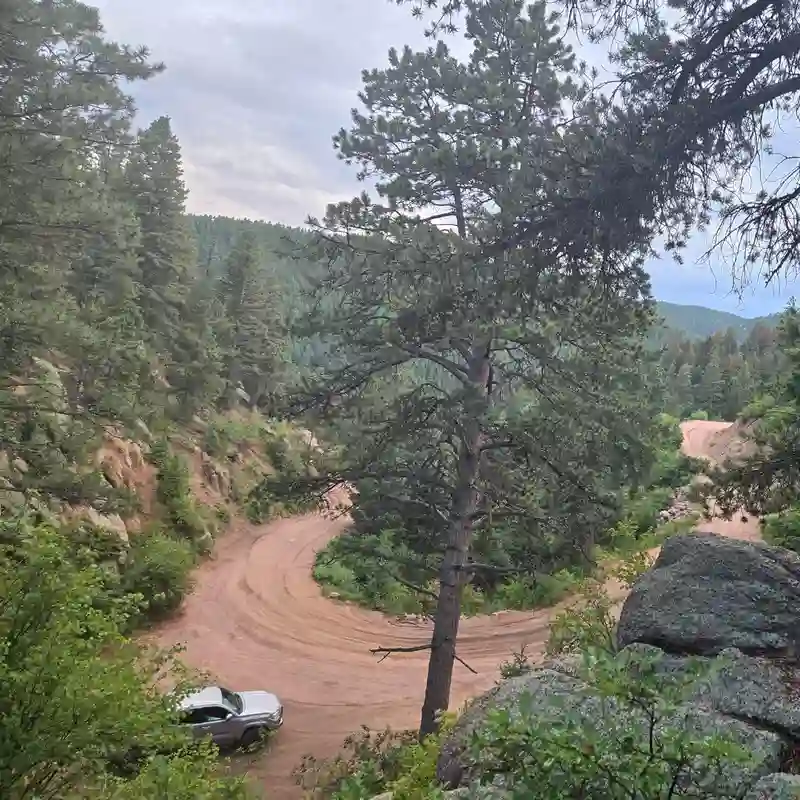
National Forest camping rules need to be checked at the forest and ranger-district level.
One forest may allow vehicle-accessed camping near many open roads, while another heavily used corridor may require numbered campsites only.
Local rules can control:
- Maximum stay
- How far you must relocate after reaching the stay limit
- Which roads can be used
- How far vehicles may travel from a road
- Campsite setbacks from water
- Designated-site requirements
- Seasonal road closures
- Food-storage rules
- Campfires
For example, some Arapaho and Roosevelt National Forest travel maps permit motorized access for dispersed camping within specified distances of designated roads, while other sections are subject to designated-site restrictions.
Do not take a Forest Service rule from one Colorado ranger district and apply it statewide.
Two Free Dispersed Camping Areas to Start Your Research
These are examples, not a ranking of Colorado’s best campsites. Availability is not guaranteed.
West Magnolia Near Nederland
West Magnolia is managed by the Boulder Ranger District of Arapaho and Roosevelt National Forests.
Current Forest Service information says:
- Camping is permitted only in designated campsites
- No camping fee is charged
- Sites are first-come, first-served
- Forest roads in the area are seasonal
- Restrooms are not available at the site
- The trailhead elevation is approximately 8,900 feet
West Magnolia is especially useful as an example for anyone researching dispersed camping near Denver because it demonstrates an important point: a site can be called dispersed camping while still requiring you to use marked campsites.
You cannot simply find another clearing nearby and create your own campsite because all numbered sites are occupied.
Penrose Commons
Penrose Commons is managed by the BLM Royal Gorge Field Office east of Cañon City.
The current BLM recreation page lists camping as an available activity and currently shows no camping fee. It also notes that OHV registration or permits are required for applicable off-highway vehicle use.
That distinction matters.
Camping may be free while another recreational activity on the same land requires a permit or registration.
If visiting Penrose Commons, verify current fire restrictions and motorized-access conditions before departure. The area’s value here is as another example of why you should check the official page for the exact location rather than assuming every BLM area operates identically.
How to Find Dispersed Camping in Colorado Legally
Use this process instead of starting with a random campsite coordinate.
1. Choose a General Region
First decide where in Colorado you want to camp.
Examples might include:
- Front Range
- Central mountains
- Western Colorado
- San Luis Valley
- Southwest Colorado
A broad region is enough to begin.
2. Identify the Land Manager
Use an official BLM, Forest Service, or other public-land map to determine who actually controls the land.
Do not rely solely on a campsite app’s map layer.
3. Confirm That Overnight Camping Is Allowed
Open the land manager’s current recreation page, alerts, orders, or district information.
Look specifically for:
- Dispersed camping
- Camping closures
- Occupancy rules
- Designated-site restrictions
If the rule is unclear, contact the responsible ranger district or BLM field office.
4. Determine Whether Sites Are Open-Dispersed or Designated
This is increasingly important around heavily used Colorado camping areas.
Some land allows campers to choose suitable existing sites under local rules. Other corridors permit camping only at numbered or designated locations.
West Magnolia is one current example of designated-only dispersed camping.
5. Check Legal Vehicle Access
For National Forest vehicle camping, consult the current Motor Vehicle Use Map when applicable.
For BLM land, use the agency’s current route and recreation information.
6. Check Seasonal Road Status
A road shown on a map may not be open year-round.
Snow, spring mud, gates, wildfire damage, or seasonal wildlife restrictions can change access.
7. Check Fire Restrictions
Do this close to departure—not months in advance.
8. Check Weather
Look at the forecast for the actual elevation and region where you plan to camp.
9. Save Information Offline
Download:
- Land-management map
- MVUM where applicable
- Road information
- Camping rules
- Backup area information
Do this before losing cell service.
10. Plan a Second Legal Area
A free site cannot be reserved simply because you found it on a map.
Someone else may already be using it.
How to Use a Forest Service MVUM for Dispersed Camping
A Motor Vehicle Use Map, or MVUM, identifies routes where Forest Service regulations permit motorized travel.
It is especially important when you plan to reach a dispersed campsite by:
- Car
- Pickup
- SUV
- Camper van
- Motorhome
- Tow vehicle and trailer
On some maps, symbols or tables also identify routes where limited motorized travel away from the road is allowed specifically to reach dispersed campsites.
For example, official Arapaho and Roosevelt mapping has shown motorized access for dispersed camping up to 300 feet from certain eligible designated roads, subject to the route’s season and other restrictions.
That is an area-specific example, not a statewide 300-foot rule.
An MVUM also does not tell you that a road is comfortable to drive.
A route can be legally open and still contain:
- Deep ruts
- Loose rock
- Mud
- Narrow sections
- Steep grades
- Limited turnaround space
Use the MVUM to answer “May I drive here?” Then separately research “Can my vehicle reasonably handle this road?”
RV Dispersed Camping in Colorado
RV dispersed camping requires more planning than simply confirming that motor vehicles are legal.
Before driving a trailer or motorhome into an unfamiliar area, consider:
- Road width
- Ground clearance
- Grade
- Low branches
- Turning radius
- Trailer length
- Soft shoulders
- Mud
- Snow
- Roadside obstacles
- Turnaround options
A narrow forest road can become a serious problem when there is nowhere to turn a 25-foot trailer around.
Scout uncertain roads with a smaller vehicle when practical rather than towing deep into terrain you have never seen.
Also remember that dispersed campsites normally have no hookups.
Plan for:
- Fresh water
- Battery capacity
- Wastewater storage
- Toilet needs
- Propane or cooking fuel
- Trash storage
Do not widen an existing campsite or drive onto vegetation merely because your RV does not fit the available disturbed surface.
Water, Toilets and Human Waste
Primitive camping usually means you need to be self-sufficient.
Unless the official site description says otherwise, plan as though there will be:
- No potable water
- No toilet
- No trash collection
- No sink
- No dump station
Carry enough drinking, cooking, and cleaning water for the trip plus a reasonable reserve.
BLM rules prohibit dumping sewage, vehicle waste, trash, and pollutants on public land or contaminating water sources.
For places where local rules allow catholes, Leave No Trace recommends digging them 6–8 inches deep and at least 200 feet from water, camp, and trails. However, some fragile, high-use, desert, river-corridor, or locally regulated areas require human waste to be packed out instead.
Always follow the land manager’s rule when it is stricter than general Leave No Trace guidance.
A portable toilet or waste-pack-out system can also simplify sanitation for vehicle-based camps.
Campfires and Colorado Fire Restrictions
Never assume that an existing stone fire ring makes a campfire legal.
Fire restrictions can change by:
- BLM field office
- National Forest
- Ranger district
- County
- Emergency closure area
As of September 5, 2026, BLM restrictions demonstrate how different the rules can be across Colorado.
Royal Gorge and San Luis Valley field offices are under Stage 1 restrictions, while the Uncompahgre, Gunnison, and Tres Rios field offices also currently list Stage 1 restrictions unless later rescinded. The Colorado River Valley and Grand Junction field offices currently remain under Stage 2 restrictions until amended or rescinded.
Under BLM Stage 1 restrictions in these districts, wood and charcoal fires are not permitted in ordinary dispersed sites; campfires are limited to agency-provided grates in developed recreation sites. Stage 2 is more restrictive. Pressurized liquid or gas devices can receive different treatment under individual orders, so read the actual restriction notice before relying on one.
These September 2026 conditions are not permanent rules.
Before every trip:
- Identify the land manager.
- Open its current fire-restriction page.
- Read the actual order.
- Check again immediately before departure.
BLM also prohibits fireworks on its Colorado public lands under its year-round wildfire-prevention rules.
A camping meal plan should therefore never depend entirely on an open fire.
Wildlife and Food Storage
Colorado public lands include black-bear habitat as well as many smaller animals interested in food, trash, and scented items.
Do not feed wildlife.
Store:
- Food
- Trash
- Pet food
- Cooking supplies
- Other scented items
in a manner that complies with the exact land-management area’s rules.
Some National Forest areas have formal food-storage orders that are stricter than generic campsite advice. Arapaho and Roosevelt National Forests, for example, publishes food-storage orders covering specified developed and dispersed areas.
Check the specific forest or BLM unit rather than assuming that the same container is legal everywhere in Colorado.
Weather, Elevation and Seasonal Access
Colorado dispersed camping can range from lower dry BLM landscapes to high-elevation forest roads.
That creates very different trip conditions.
Mountain areas can experience:
- Cold nights even when lower elevations are warm
- Thunderstorms and lightning
- Strong gusty winds
- Heavy rainfall
- Early or late-season snow
- Rapid temperature changes
Recent National Weather Service forecasts for Colorado mountain areas have repeatedly highlighted mountain thunderstorms capable of lightning, gusty winds, and locally heavy rain.
Roads can also change quickly after precipitation.
A dirt road that is straightforward while dry may become slippery, muddy, rutted, or temporarily closed after rain or snow.
Before traveling, check:
- National Weather Service forecast
- Forest Service or BLM alerts
- Seasonal gate status
- Current road information
- Wildfire closures
Do not rely only on the weather shown for the nearest low-elevation town.
What to Do When the First Area Is Full
Dispersed camping does not guarantee an empty campsite.
If the first area is occupied:
Do not create a new site by driving onto vegetation.
Instead:
- Continue only on roads that are legally open.
- Look for another established legal campsite.
- Move to your second researched area.
- Use a developed campground if necessary.
This is why it helps to build a legal backup camping option before departure.
Try to reach unfamiliar dispersed areas with daylight remaining. Evaluating road surfaces, campsite boundaries, trees, slopes, and turnaround space is much harder after dark.
If you want another example of why “dispersed” does not always mean “camp anywhere,” you can also see how designated dispersed camping works in practice at Shadow Mountain in Wyoming, where campers must use numbered designated sites.
Colorado Dispersed Camping Checklist
Before leaving home, confirm:
- Land manager identified
- Public/private boundary verified
- Overnight camping allowed
- Designated-site requirement checked
- Stay limit verified
- Current MVUM downloaded where applicable
- Legal vehicle-access route confirmed
- Seasonal road status checked
- Fire restrictions checked
- Emergency wildfire closures checked
- Weather forecast checked
- Drinking water packed
- Human-waste plan prepared
- Trash-storage plan prepared
- Food-storage rule checked
- Vehicle suitability considered
- Maps available offline
- Backup legal camping area selected
A third-party campsite app can still be useful for discovering possible areas. Just treat it as the beginning of the research process rather than final proof that a campsite is legal.
Frequently Asked Questions
Is dispersed camping free in Colorado?
Many BLM and National Forest dispersed camping areas are free, but not all public-land camping is free. Developed campgrounds, special recreation areas, designated managed sites, or other locations may charge fees. Always verify the current official page for the exact area before assuming a campsite costs nothing.
Can you dispersed camp anywhere in Colorado National Forests?
No. National Forest land can include designated-site-only corridors, wilderness restrictions, seasonal closures, private inholdings, motor-vehicle restrictions, and other local orders. Check the specific National Forest and ranger district, then use the current MVUM when you plan to access a campsite by vehicle.
How long can you stay on BLM land while dispersed camping in Colorado?
For Dispersed Camping Colorado on BLM-managed land, the current statewide BLM occupancy rule generally limits camping at one location to 14 days in any 30-day period. After reaching 14 days, you must move at least 30 air miles from that location. Local restrictions can still be stricter.
Where can you find dispersed camping near Denver?
One verified starting point is West Magnolia near Nederland in Arapaho and Roosevelt National Forests. Camping there is currently free and first-come, but it is allowed only in designated campsites. Roads are seasonal, so check current access before traveling.
Can you take an RV to dispersed camping sites in Colorado?
Yes, some dispersed camping areas can accommodate vans, trailers, or RVs, but legal vehicle access does not guarantee that a road is physically suitable. Check road width, grades, clearance, turnaround space, mud or snow conditions, and the size of existing campsites before committing a large vehicle.
Conclusion
For Dispersed Camping Colorado, the most reliable plan starts with the land manager rather than a campsite pin. Confirm that camping is legal, determine whether designated sites are required, check the correct vehicle map, review current road and fire restrictions, and use an already established site.
Download the official maps before losing service, carry the water and sanitation supplies you need, and keep at least one legal backup area ready in case conditions or availability change.
References:
- Bureau of Land Management — Colorado Camping and Occupancy Regulations
BLM Colorado Camping and Occupancy Regulations - Bureau of Land Management — Camping on Public Lands
BLM Camping on Public Lands - Bureau of Land Management — Colorado Fire Information
BLM Colorado Fire Information - Bureau of Land Management — Rocky Mountain District Fire Restrictions
Rocky Mountain District Fire Restrictions - Bureau of Land Management — Southwest District Fire Restrictions
Southwest District Fire Restrictions - Bureau of Land Management — Upper Colorado River District Fire Restrictions
Upper Colorado River District Fire Restrictions - Bureau of Land Management — Penrose Commons Recreation Site
Penrose Commons Recreation Site - U.S. Forest Service — West Magnolia Trailhead
West Magnolia Trailhead - U.S. Forest Service — Arapaho and Roosevelt National Forests Motor Vehicle Use Map
Arapaho and Roosevelt National Forests MVUM - Leave No Trace — Dispose of Waste Properly
Leave No Trace Waste Guidance