
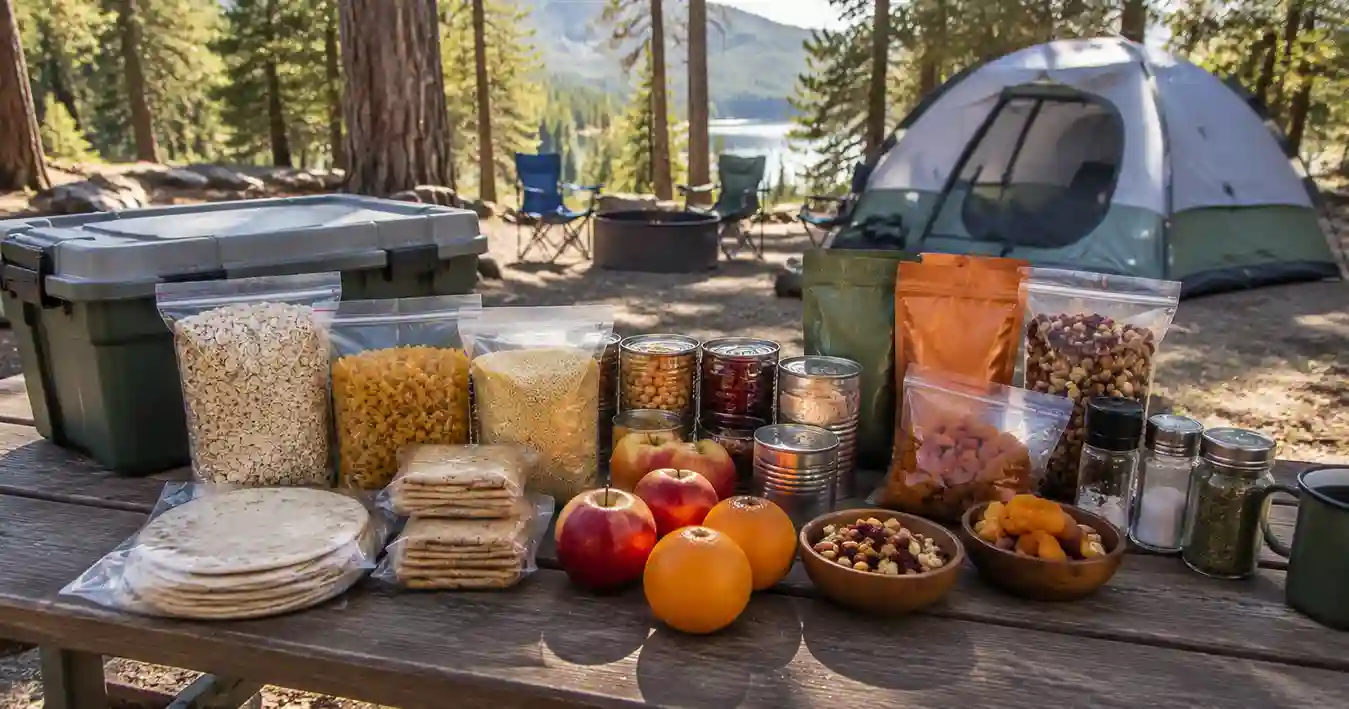
Non Perishable Food for Camping
Choosing non perishable food for camping is less about finding foods that last forever and more about building meals from products that can safely stay at room temperature before opening. That distinction matters when you have limited cooler space, no refrigerator, or several travel days between grocery stops.
A practical camp pantry combines shelf-stable carbohydrates, protein, fruit or vegetables, snacks, and a few flavor additions. You also need to consider what happens after a package is opened, how much water and fuel a meal needs, and how your campground requires food to be stored around wildlife.
This guide helps you build simple breakfasts, lunches, dinners, and snacks without relying heavily on refrigeration.
Table of Contents
What Counts as Non Perishable Camping Food?
For camping purposes, non-perishable or shelf-stable food is food that can safely remain at room temperature before opening when the manufacturer labels it for that type of storage. USDA examples include rice, pasta, dried noodles, jerky, nuts, dried fruit, peanut butter, dehydrated foods, certain canned products, and foods processed in shelf-stable retort or aseptic packaging.
The important part is before opening.
A product that can sit safely in your camping pantry unopened may need refrigeration once you open it.
Always Read the Storage Label
Do not judge a food only by its package.
USDA notes that not every canned product is shelf stable. Some canned meats and seafood are sold refrigerated and carry a “Keep Refrigerated” instruction.
Before packing a food for a no-fridge trip, check:
- Does the unopened package require refrigeration?
- Does the label say to refrigerate after opening?
- Can your group finish the package at one meal?
- Is the container damaged?
- Does the product require cooking or just opening?
When refrigeration is unavailable, smaller packages can often be easier to manage because you do not have to store leftovers safely.
The Simplest No-Fridge Camping Meal Formula
Instead of buying dozens of unrelated foods, build each meal from four roles:
Base + protein + produce + flavor
For example:
- Oats + nut butter + dried fruit + cinnamon.
- Tortilla + tuna pouch + whole fruit + shelf-stable condiment.
- Couscous + chickpeas + dried vegetables + seasoning.
- Pasta + canned beans + shelf-stable tomato sauce + herbs.
- Crackers + shelf-stable protein + apple + condiment packet.
Not every meal needs all four components. The formula is simply a quick way to make sure you are packing real meals instead of surviving on snack bars for three days.
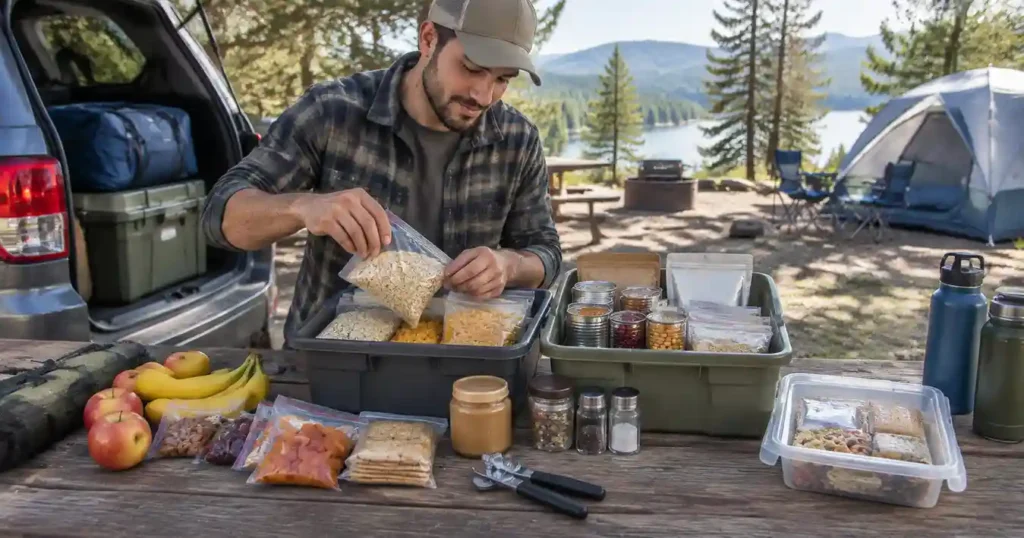
Non Perishable Food for Camping: Breakfast Staples
Breakfast is one of the easiest meals to build without a cooler.
Oats
Dry oats are compact, shelf stable, inexpensive, and easy to portion at home.
They work with:
- Dried fruit.
- Nut or seed butter.
- Cinnamon.
- Nuts.
- Shelf-stable milk when the specific package is labeled for room-temperature storage before opening.
Traditional oatmeal requires water and heat, so account for stove fuel and potable water.
Shelf-Stable Cereal
Dry cereal can make a fast breakfast when you do not want to cook.
Pair it with:
- Shelf-stable milk in a package you can finish after opening.
- Dried fruit.
- Nuts or seeds.
Do not assume every milk substitute is shelf stable. Refrigerated cartons still need cold storage.
Nut or Seed Butter
Nut and seed butters are useful because they can work in several meals.
Try them with:
- Tortillas.
- Crackers.
- Oatmeal.
- Bread.
- Whole fruit.
If someone in your group has food allergies, check the ingredient and cross-contact information on every product rather than assuming a substitute is safe.
Dried Fruit
Raisins, dried cranberries, apricots, dates, and similar foods can add fruit to breakfasts and snacks without cooler space.
Choose packaging that can be closed again or portion what you need before the trip.
Whole Fruit
Apples, oranges, bananas, and other intact fruit can be practical for short camping trips.
Durability varies significantly by fruit, heat, handling, and ripeness, so avoid relying on a universal “lasts X days” rule.
Pack delicate fruit where it will not be crushed.
Shelf-Stable Breakfast Bars
Bars are convenient for early departures, hiking days, and backup breakfasts.
Check:
- Storage instructions.
- Ingredients.
- Allergy information.
- Whether the product is actually filling enough for the activity you have planned.
Shelf-Stable Proteins for Camping
Protein choices are where good no-fridge planning makes meals much easier.
Tuna, Chicken, and Other Retort Pouches
Commercial retort pouches are heat-processed packages that USDA identifies as shelf stable at room temperature before opening.
Depending on the product, options may include:
- Tuna.
- Chicken.
- Beans.
- Lentils.
- Prepared rice-and-protein mixtures.
A pouch sized for one meal is especially practical when you cannot refrigerate leftovers.
Follow the individual label after opening.
Canned Beans
Canned beans can work in:
- Tortilla meals.
- Couscous bowls.
- Rice dishes.
- Pasta.
- Simple bean-and-cracker meals.
Choose a can size your group can finish.
Remember the can opener unless the package has a pull tab.
Canned Meat or Fish
Commercial canned meat and seafood can be useful, but read the label carefully.
USDA specifically warns that not all canned foods are shelf stable. Some products must remain refrigerated.
Commercial Jerky
USDA includes jerky among shelf-stable foods commonly suitable for hiking and camping.
It can work as:
- A snack.
- A trail lunch component.
- Part of a cracker-and-fruit meal.
You do not need to treat it as the main protein for every meal.
Nut and Seed Butter
Peanut butter and similar shelf-stable spreads are useful because they require no cooking.
They pair well with carbohydrate-heavy camping foods such as tortillas, crackers, bread, and oats.
Nuts and Seeds
Nuts and seeds are easy additions to:
- Trail mix.
- Oatmeal.
- Snack bags.
- Crackers.
- Dried fruit.
Pre-portioning them at home can reduce the number of packages you need at camp.
Grains and Starches That Work Without Refrigeration
Dry grains and starches are easy to store, but their cooking requirements vary.
Tortillas
Tortillas are useful for meals such as:
- Tuna wraps.
- Nut-butter wraps.
- Bean wraps.
- Breakfast wraps made from shelf-stable ingredients.
Check the package storage instructions because products differ.
Crackers
Crackers make an easy base when you do not want to cook.
Combine them with shelf-stable protein, fruit, or a spread.
Rice
Dry rice is shelf stable, but many types require significant water and cooking time.
That may be fine for car camping with plenty of fuel and potable water, but it can be inefficient on a trip where both are limited.
Quick-cooking rice may simplify camp preparation.
Pasta
Dry pasta is another shelf-stable staple recognized by USDA.
Its drawback is the water and fuel required for cooking.
If those resources are limited, compare pasta with faster-cooking alternatives before planning several pasta dinners.
Couscous
Couscous can be convenient because many varieties require less cooking than standard pasta or rice.
Add beans, seasoning, dried vegetables, or another shelf-stable protein for a more complete meal.
Follow the package directions for the specific product you buy.
Dried Noodles and Soup Mixes
USDA includes dried noodles and soups among practical camping foods.
These can make useful backup meals because they are compact and easy to store.
They still depend on safe water and, in most cases, cooking fuel.
Fruits and Vegetables for a No-Cooler Trip
A no-fridge menu does not have to eliminate fruit and vegetables.
Whole Fresh Produce
Some intact produce can travel well for short trips.
Possible choices include:
- Apples.
- Oranges.
- Firm bananas.
- Other whole produce suited to your trip conditions.
Do not wash, cut, or prepare more than you can store safely.
Cut produce may have different refrigeration requirements than the intact fruit or vegetable.
Dried Fruit
Dried fruit is simple, compact, and useful in:
- Breakfast.
- Trail mix.
- Snacks.
- Couscous dishes.
Canned Fruit and Vegetables
Commercially canned fruit and vegetables can provide variety when the specific product is labeled for shelf storage.
Use portions your group can finish after opening if you do not have reliable refrigeration.
Shelf-Stable Pouches
Shelf-stable fruit, vegetable, bean, and meal pouches can reduce the need for heavy cans.
Again, use the label—not the appearance of the package—to determine storage requirements.
Easy No-Fridge Camping Meals
A useful pantry should turn into actual meals.
Breakfast Ideas
Oatmeal + nut butter + dried fruit
Good when you have safe water and a stove.
Cereal + shelf-stable milk
Choose a milk container your group can finish once opened.
Tortilla + nut or seed butter + whole fruit
Requires almost no cleanup or cooking.
Lunch Ideas
Tuna pouch + tortilla + condiment
Add whole fruit or crackers.
Crackers + shelf-stable protein + fruit
Useful for travel days.
Nut or seed butter wrap + dried fruit
Simple when stove use is unavailable.
Dinner Ideas
Couscous + canned chickpeas + seasoning
Quick preparation and flexible flavors.
Pasta + canned beans + shelf-stable tomato sauce
Works well for car camping when water and stove fuel are readily available.
Instant noodles + shelf-stable additions
Add a shelf-stable protein or dehydrated vegetables.
Commercial dehydrated meal
Convenient when its package is appropriate for your storage conditions, but it still requires enough safe water and usually heat.
Camping Snacks
Practical options can include:
- Trail mix.
- Nuts and seeds.
- Dried fruit.
- Crackers.
- Shelf-stable snack bars.
- Whole fruit.
- Commercial jerky.
If you want these food ideas organized into complete days instead, our simple 3-day camping meal plan combines shelf-stable staples with properly chilled foods for breakfast, lunch, dinner, and snacks.
No-Cook and No-Fridge Are Not the Same
This distinction prevents a lot of bad meal planning.
| Food | Can Be Shelf Stable Before Opening? | Cooking Required? |
|---|---|---|
| Dry pasta | Yes | Yes |
| Shelf-stable tuna pouch | Yes, when labeled accordingly | No |
| Dry oats | Yes | Depends on preparation |
| Refrigerated hummus | No | No |
| Commercial dehydrated meal | Check package | Usually hot water |
| Crackers | Usually | No |
A food can require no cooking and still require refrigeration.
Likewise, a shelf-stable food can require significant cooking.
Examples:
- Refrigerated hummus is no-cook but needs cold storage.
- Dry rice is shelf stable but needs water and heat.
- A shelf-stable tuna pouch may need neither refrigeration before opening nor cooking.
Always follow the actual package instructions.
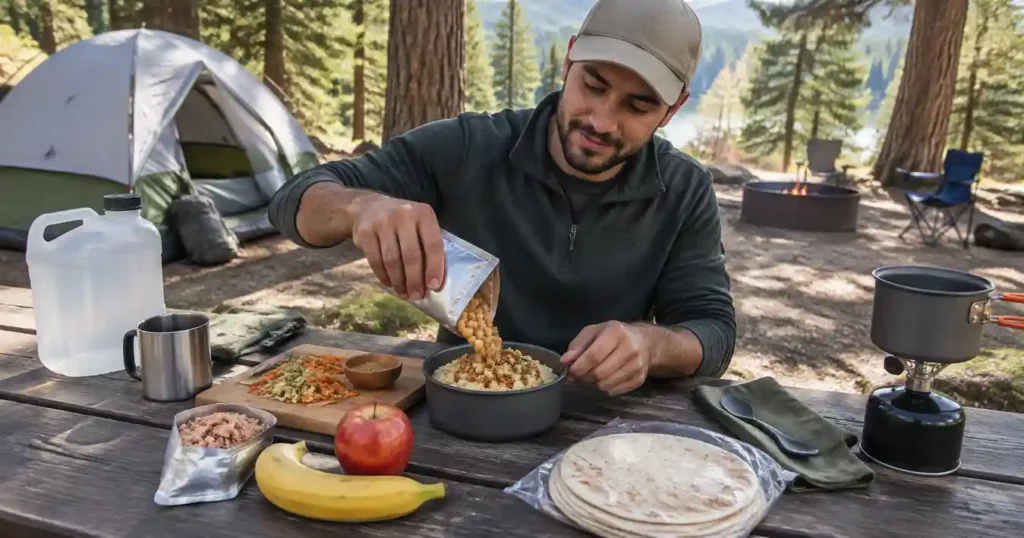
Build a Camping Food Packing List by Meal
Shopping is easier when you plan meals first.
Breakfast
Choose from:
- Oats.
- Cereal.
- Nut or seed butter.
- Dried fruit.
- Whole fruit.
- Shelf-stable milk.
- Breakfast bars.
Lunch
Possible components:
- Tortillas.
- Crackers.
- Tuna or other shelf-stable protein pouches.
- Nut or seed butter.
- Whole fruit.
- Dried fruit.
Dinner
Possible staples:
- Pasta.
- Couscous.
- Rice.
- Dried noodles.
- Canned beans.
- Shelf-stable sauce.
- Dehydrated meals.
- Seasoning.
Snacks
Consider:
- Trail mix.
- Nuts.
- Dried fruit.
- Whole fruit.
- Crackers.
- Jerky.
- Shelf-stable bars.
Flavor and Condiments
Small amounts can make basic meals much easier to eat for several days.
Depending on the individual product, options may include:
- Salt.
- Pepper.
- Dry seasoning blends.
- Hot-sauce packets.
- Mustard packets.
- Olive oil.
- Other shelf-stable condiments.
Check storage instructions, especially after opening.
Pack One Backup Meal
A complete shelf-stable backup meal can help if:
- You arrive later than expected.
- The stove fails.
- Fire restrictions affect your cooking plan.
- Bad weather changes the schedule.
- You cannot reach the planned grocery stop.
A simple backup could be crackers, an unopened shelf-stable protein, whole fruit, and another ready-to-eat component.
It does not need to be exciting. It needs to work when the original plan does not.
Choose Package Sizes You Can Finish
Large containers can look economical at the grocery store but become awkward at camp.
Suppose you open a large can or carton and only use half. If the remaining food requires refrigeration and you do not have a reliable cooler, you now have either a food-safety problem or unnecessary waste.
For no-fridge trips, consider:
- Smaller cans.
- Single-meal pouches.
- Small condiment packets.
- Dry ingredients portioned at home.
- Smaller shelf-stable cartons.
- Opening only what you expect to finish.
USDA also recommends taking the smallest quantity needed when packing camping foods that require temperature control.
Think About Water and Fuel Before Choosing Food
Shelf stability solves only one part of the camping-food problem.
Every meal also has a water and fuel cost.
No-Cook Foods
Examples:
- Crackers.
- Shelf-stable pouches.
- Nut butter.
- Dried fruit.
- Whole fruit.
These are useful when you want to minimize fuel use.
Quick-Cook Foods
Examples may include:
- Instant oats.
- Couscous.
- Instant noodles.
- Certain dehydrated meals.
These require water and heat but can reduce cooking time.
Longer-Cook Foods
Traditional rice, pasta, beans prepared from dry, and similar ingredients can require substantially more time, water, and fuel.
They may make sense for car camping but be less convenient when resources are limited.
Make Sure Your Water Is Safe
Do not assume that clear creek water or an unfamiliar campground faucet is automatically safe to drink.
CDC says that when you are unsure whether water is safe, treat it before drinking or using it for food preparation. Its current guidance says boiling is the best method for killing germs, with filtering followed by disinfection as the next preferred option when boiling is not used.
Plan water before choosing several meals that need rehydration.
Food Safety Still Matters Without a Cooler
Shelf-stable food simplifies camping, but normal food-safety rules still matter.
Once You Open It, Recheck the Rules
Follow the package instructions after opening.
Some foods that were perfectly safe at room temperature unopened become perishable after the seal is broken.
If you cannot keep leftovers cold, choose a smaller package or finish the food during the meal.
Know the Temperature Danger Zone
If your trip also includes perishable food, USDA identifies 40°F to 140°F (4°C to 60°C) as the temperature “Danger Zone” where bacteria can grow rapidly.
Perishable food should not remain unrefrigerated for more than two hours, or more than one hour when the temperature is above 90°F (32°C).
Those limits do not mean shelf-stable food must be refrigerated before opening. They apply when you are handling foods that require temperature control.
Do Not Judge Food Safety Only by Smell
Dangerous contamination is not always obvious.
Follow storage instructions and time/temperature guidance rather than tasting questionable food to decide whether it is safe.
Inspect Cans Before Packing
USDA advises against using cans that are:
- Bulging.
- Leaking.
- Rusted.
- Badly or deeply dented.
Damaged containers can indicate loss of package integrity.
Inspect food before you put it in the camping bin rather than discovering a leaking can at camp.
Store Shelf-Stable Food Safely Around Wildlife
“Non-perishable” does not mean “wildlife-proof.”
To animals, canned food, crackers, dried fruit, garbage, cooking equipment, toiletries, and other scented items may all be attractants.
National Park Service guidance says food and scented items should be secured immediately at camp and specifically says not to store food in a tent or backpack. Storage rules vary by park: some require food lockers, some require approved bear-resistant containers, and some allow other methods.
Before your trip, check the exact campground or land manager’s rules.
Depending on the destination, proper storage may involve:
- A campground food locker.
- An approved bear-resistant container.
- A vehicle where the land manager permits vehicle storage.
- Another location-specific approved method.
Do not assume one storage technique is legal or appropriate everywhere.
Keep the campsite clean as well. Pack out food scraps and garbage instead of leaving biodegradable scraps behind.
Adjust the Food List to Your Camping Style
The best pantry changes with the trip.
Car Camping
Weight and bulk usually matter less.
You may be able to bring:
- Canned foods.
- Larger dry-food containers.
- More cookware.
- More potable water.
- A stove with enough fuel for longer-cooking meals.
Camping Without a Cooler
Focus on:
- Foods labeled shelf stable before opening.
- Package sizes you can finish.
- Ready-to-eat options.
- Quick-cook ingredients.
- Whole produce suited to the conditions.
Avoid building the menu around leftovers that need cold storage.
Hot-Weather Camping
Heat makes management of any perishable foods more demanding.
USDA shortens the normal two-hour unrefrigerated limit for perishable foods to one hour when temperatures are above 90°F.
Using more shelf-stable ingredients can reduce the amount of cooler space and ice you need.
Backpacking
For backpacking, additional factors become important:
- Weight.
- Volume.
- Cooking fuel.
- Water availability.
- Food-storage regulations.
- Trash carried out.
That is a separate planning problem from a typical car-camping pantry, so avoid simply packing several heavy cans into a backpack.
Families and Groups
A technically perfect food list is useless if nobody wants to eat it.
Before shopping:
- Ask about allergies.
- Consider dietary restrictions.
- Identify meals everyone will eat.
- Avoid packing unfamiliar foods as your only dinner.
- Scale quantities to your actual group rather than using a generic list.
Common Non Perishable Camping Food Mistakes
Assuming Every Canned Food Is Shelf Stable
It is not.
USDA notes that some canned foods must stay refrigerated. Read the label.
Ignoring Refrigerate-After-Opening Instructions
Shelf stable while sealed does not guarantee shelf stable after opening.
Plan how you will handle every partially used package.
Packing Snacks but No Meals
Five types of trail mix do not create dinner.
Build the shopping list around actual breakfasts, lunches, and dinners first.
Bringing Oversized Containers
If you cannot safely store leftovers, smaller packages may be more practical.
Confusing No-Cook With No-Fridge
Cold deli meat and refrigerated hummus require no cooking but still require cold storage.
Dry pasta needs no refrigeration but requires cooking.
Plan for both requirements separately.
Forgetting Water
Dry meals often need more water than expected.
Confirm a potable supply or an appropriate treatment plan before relying on several dehydrated meals.
Depending on a Campfire
Campfires can be restricted, prohibited, or impractical.
If a planned dinner requires heat, confirm your legal cooking method and carry at least one no-cook backup.
Forgetting the Can Opener
If even one meal depends on a non-pull-tab can, pack an opener.
Storing Food in the Tent
NPS advises against keeping food in tents in bear country and emphasizes checking the destination’s specific storage rules.
Bringing Too Much Food
More food means:
- More weight.
- More storage.
- More trash.
- More leftovers.
- More wildlife-attractant management.
Plan meal quantities before shopping.
A Simple Pre-Trip Food Check
Before departure, confirm:
- Breakfasts are planned.
- Lunches are planned.
- Dinners are planned.
- Snacks are packed.
- One backup meal is included.
- Shelf-stable product labels have been checked.
- Opened-food storage has been considered.
- Cooking method is confirmed.
- Current fire and stove rules are checked.
- Enough potable water is available, or treatment is planned.
- Can opener is packed when needed.
- Wildlife food-storage requirements are checked.
- Allergies and dietary restrictions are accounted for.
- Food scraps and trash can be stored and packed out.
If your meals are part of a multi-stop trip, our road trip camping planning guide can help you coordinate food resupply, campground reservations, travel days, water access, and backup overnight stops.
Frequently Asked Questions
What is the best non perishable food for camping?
The best non perishable food for camping depends on the meal, cooking method, trip length, water supply, and your group’s dietary needs. Useful staples include oats, tortillas, rice, pasta, crackers, nut or seed butter, shelf-stable protein pouches, canned beans, commercial jerky, nuts, dried fruit, and properly labeled shelf-stable packaged meals.
What camping food does not need a refrigerator?
Many dry or commercially shelf-stable foods do not require refrigeration before opening. USDA examples include peanut butter, dried noodles, jerky, dried fruit, nuts, powdered foods, pasta, and certain canned or retort-packaged foods. Always read the individual label because some canned or packaged products still require refrigeration.
What are easy camping meals without a cooler?
Simple options include oatmeal with nut butter and dried fruit, tortillas with a shelf-stable protein pouch, crackers with whole fruit and jerky, couscous with canned chickpeas and seasonings, or pasta with canned beans and shelf-stable sauce. Choose package sizes you can finish once opened when refrigeration is unavailable.
Does canned food need refrigeration when camping?
Shelf-stable canned food generally does not need refrigeration while unopened, but not all canned products are shelf stable. USDA says some canned foods carry a “Keep Refrigerated” label. After opening, follow the product’s storage instructions and refrigerate leftovers when required.
How do you store non-perishable food at a campsite?
Protect packages from heat, moisture, and damage, and follow the campground’s wildlife-storage rules. NPS notes that requirements differ by destination and may involve food lockers, vehicles where permitted, or approved bear-resistant containers. Do not assume shelf-stable food is safe to keep inside your tent.
Conclusion
A useful supply of non perishable food for camping starts with meals, not an oversized list of snacks. Choose shelf-stable foods by what they contribute to breakfast, lunch, dinner, and snacks; check every product’s storage instructions; and plan what will happen once each package is opened.
Before shopping, confirm your water supply, cooking method, wildlife-storage rules, and group needs. Then add one complete shelf-stable backup meal so a late arrival, stove restriction, or changed travel plan does not leave you without dinner.
References:
- U.S. Department of Agriculture, Food Safety and Inspection Service — Shelf-Stable Food Safety
USDA Shelf-Stable Food Safety - U.S. Department of Agriculture, Food Safety and Inspection Service — Food Safety While Hiking, Camping & Boating
USDA Food Safety While Hiking, Camping & Boating - U.S. Department of Agriculture, Food Safety and Inspection Service — What Foods Should I Pack for Hiking or Camping?
USDA Camping Food Guidance - U.S. Department of Agriculture, Food Safety and Inspection Service — Danger Zone (40°F–140°F)
USDA Danger Zone Guidance - Centers for Disease Control and Prevention — About Water Treatment Options When Hiking, Camping, or Traveling
CDC Camping Water Treatment Guidance - National Park Service — Bear Safety: Storing Food
NPS Food Storage Guidance