
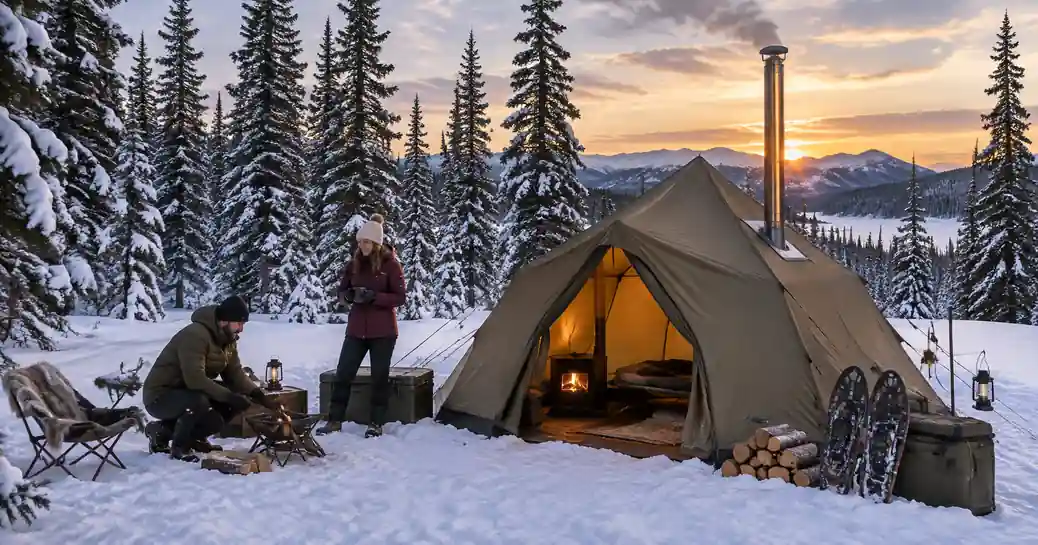
Hot Tent Camping: Beginner Gear, Setup and Safety Guide
Hot tent camping adds a properly vented wood stove to a shelter specifically designed to accommodate one. That can make cold-weather camp more comfortable, but it also introduces fire, burn, chimney, and carbon monoxide hazards that do not exist in the same way with an ordinary unheated tent.
For a beginner, the safest way to think about the system is simple: your sleeping bag, insulated pad, clothing, and trip plan must keep you protected when the stove is not running. The stove adds comfort; it should not be your only defense against the cold.
This guide covers the basic gear, buying decisions, setup sequence, ventilation, stove safety, and first-trip planning you should understand before using a tent stove.
Table of Contents
What Is Hot Tent Camping?
Hot tent camping uses a shelter specifically designed for an appropriate vented stove system. A typical setup includes a stove-compatible tent, stove jack, tent stove, chimney components, ventilation, and a separate cold-weather sleep system. It is not the same as putting an ordinary heater, cooking stove, or wood stove inside a regular camping tent.
The U.S. Consumer Product Safety Commission warns that fuel-burning camping equipment can generate carbon monoxide and should not be used inside tents unless the equipment is specifically designed for enclosed-space use and includes instructions for that application.
Hot Tent vs. Regular Winter Tent Camping
Both approaches require genuine cold-weather equipment.
| Factor | Hot Tent | Unheated Winter Tent |
|---|---|---|
| Heat while awake | Compatible stove when safely operated | Body heat and sleep/clothing system |
| Stove jack | Required for wood-stove setup | Usually absent |
| Fire and CO complexity | Higher | Lower |
| Equipment weight | Usually higher | Usually lower |
| Cold-weather sleep system | Still required | Required |
| Setup complexity | Higher | Lower |
A hot tent is not automatically the better winter shelter. It makes the most sense when the extra warmth and drying space are worth the additional equipment, fuel, setup time, and safety procedures.
Is Hot Tent Camping Good for Beginners?
It can be, but a beginner should keep the first trip conservative.
A good first trip usually has:
- Easy road or campground access.
- A legal campsite where the intended stove is permitted.
- Manageable winter temperatures rather than extreme cold.
- A stable weather forecast.
- Plenty of daylight for setup.
- A tested tent-and-stove system.
- A straightforward way to leave if equipment or weather creates a problem.
Avoid combining several new challenges at once. Your first time operating an unfamiliar tent stove should not also be your first winter camping trip, first remote navigation experience, and first night in extreme cold.
Practice the complete shelter and stove setup before the trip.
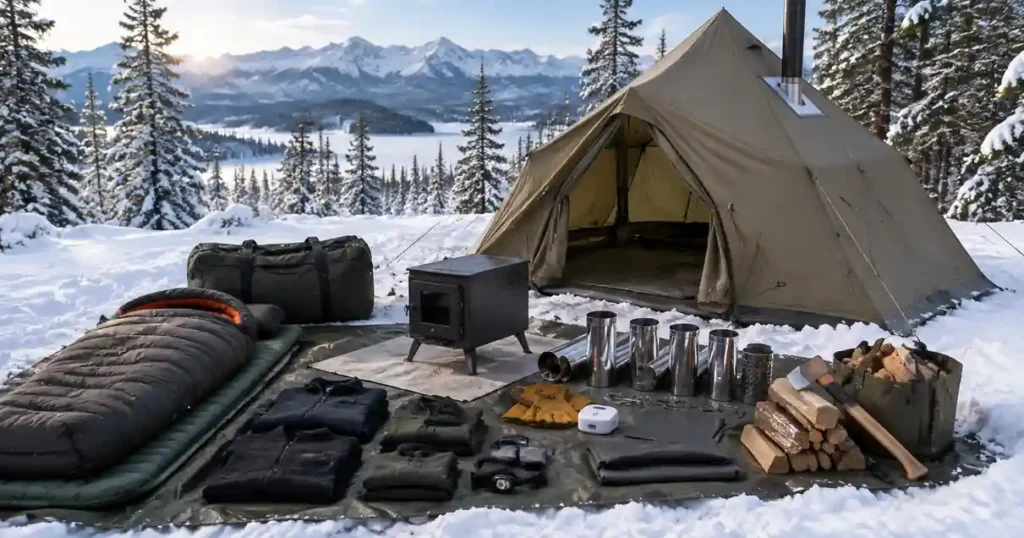
Beginner Hot Tent Camping Gear Checklist
Your equipment needs to work as a system. Choosing a tent first and then buying unrelated stove components because they happen to fit through the stove jack is not a good beginner strategy.
1. A Purpose-Built Hot Tent
Start with a shelter whose manufacturer explicitly supports the type of stove installation you intend to use.
Look for:
- A manufacturer-approved stove jack.
- Clear ventilation instructions.
- Enough usable interior room for the stove and sleeping area.
- Published stove or chimney compatibility information.
- Instructions for floor protection when required.
- Weather suitability for your intended trips.
- A packed weight that fits your transportation method.
Do not assume that an ordinary three-season or four-season tent becomes suitable for a wood stove simply because an aftermarket stove jack can be purchased.
2. A Compatible Tent Stove
Choose the stove in relation to the shelter rather than treating it as a separate purchase.
Review:
- Tent manufacturer compatibility guidance.
- Stove dimensions.
- Chimney or pipe requirements.
- Required clearances.
- Recommended heat protection.
- Stability.
- Intended application.
- Replacement-part availability.
Do not substitute a household heater, charcoal device, or ordinary camp-cooking stove for equipment designed for the shelter application. CPSC warns that fuel-burning camping equipment can produce dangerous carbon monoxide in tents and other enclosed spaces.
3. The Correct Stove Pipe and Chimney Components
The complete system may include several pipe sections or a roll-up chimney, depending on the manufacturer.
Check that:
- Pipe diameter matches the stove.
- The chimney matches the stove jack.
- Joints assemble as designed.
- The pipe can be supported as instructed.
- Any manufacturer-required spark-control component is present.
- Nothing has been substituted with an improvised part.
There is no useful universal chimney height or tent-wall clearance that applies to every setup. Follow the manuals for your exact tent, stove, and chimney.
4. A Carbon Monoxide Alarm
A suitable battery-powered carbon monoxide alarm can add another layer of warning, but it does not make an unsafe stove setup safe.
CPSC states that a CO alarm provides added protection but is not a substitute for proper appliance use and maintenance.
For cold-weather use, check the alarm manufacturer’s published operating-temperature range before depending on it. A detector designed for a heated home may have operating limitations that matter in a freezing shelter.
Test the alarm before leaving home and bring appropriate spare batteries when recommended by its manufacturer.
5. Heat and Fire Protection
Your shelter or stove manufacturer may call for specific protection around or beneath the stove.
Depending on the system, relevant gear can include:
- Manufacturer-approved floor or stove protection.
- Heat-resistant gloves.
- Appropriate ash-handling equipment.
- Fire-control equipment suitable for the campsite.
- Secure chimney-support components.
Do not improvise heat shields or floor protection from unknown materials.
6. Winter Sleeping Bag and Insulated Pad
This is not optional just because you have a stove.
The National Park Service recommends sleeping equipment appropriate to expected winter conditions, including an appropriate sleeping bag and sleeping pad. Yellowstone’s winter backcountry guidance also emphasizes carrying suitable cold-weather shelter, sleeping equipment, extra layers, and emergency gear.
Choose your sleep system for the temperatures you may actually encounter—not for the temperature you hope the stove maintains.
7. Winter Clothing and Dry Sleep Layers
Your clothing system should function without tent heat.
For most cold-weather camping, that means planning layers such as:
- Moisture-managing base layers.
- Insulating midlayers.
- Weather-resistant outer layers.
- Warm hat.
- Gloves or mittens.
- Appropriate winter footwear.
- Dry clothing reserved for sleeping.
NPS winter guidance specifically emphasizes extra layers, gloves, hats, and preparation for changing cold-weather conditions.
8. Lighting, Navigation, and Emergency Basics
Do not let the tent stove become the only part of the trip you plan carefully.
Depending on the campsite, useful essentials can include:
- Headlamp and spare power.
- Map or offline navigation.
- First-aid supplies.
- Weather information.
- Emergency communication appropriate to the location.
- Extra food.
- Backup water or a reliable water plan.
Winter setup and travel usually take longer than the same tasks in mild weather.
How to Choose a Hot Tent
The safest buying process starts with the shelter’s intended design.
Confirm Stove Compatibility First
Look for explicit manufacturer documentation saying that the shelter supports stove use.
Do not rely on:
- A marketplace photo showing a stove.
- A third-party review.
- A generic aftermarket stove jack.
- A forum comment.
- Similar-looking fabric on another hot tent.
The tent manufacturer should be the primary source for compatibility and setup instructions.
Size the Tent for People Plus the Stove
Tent capacity ratings can be misleading once a stove enters the shelter.
A stove and its required clearance occupy usable floor space. You also need room for:
- Sleeping bags.
- Pads.
- Winter clothing.
- Boots.
- Safe movement around the stove.
- Gear that must remain away from heat.
A shelter advertised for several sleepers may become much less comfortable when used as a wood stove tent.
Canvas vs. Lightweight Hot Tents
Neither construction style is automatically better.
Heavier canvas-style shelters may suit vehicle-accessed base camps where packed size and weight matter less. They can provide generous interior space, but transportation and drying can require more work.
Lightweight purpose-built shelters may suit campers moving equipment by backpack or sled, but lower weight can come with less interior room and different setup considerations.
Do not describe any tent fabric as fireproof unless the manufacturer explicitly supports that claim.
Floor vs. Floorless Designs
Some hot tents have a full floor, some use partial flooring, and others are floorless.
The important question is not which design is universally safest. It is how the manufacturer expects the stove to be installed and what protection is required beneath and around it.
Match Packed Weight to the Trip
Think about how the system reaches camp:
- Car or truck.
- Snowmobile where legal.
- Pulk or sled.
- Backpack.
A heavy canvas shelter and steel stove may make sense beside a vehicle but be unrealistic for a long human-powered approach.
How to Choose a Hot Tent Stove
Buying the smallest or lightest stove is not automatically the best decision.
Start With the Tent Manufacturer’s Requirements
Before comparing stove materials or prices, establish:
- Which stove types the shelter supports.
- Which chimney dimensions are compatible.
- Required clearances.
- Required heat protection.
- Any manufacturer-specific installation components.
Only then compare suitable stoves.
Steel vs. Titanium
Common trade-offs include weight, durability, packed size, heat behavior, and price.
A titanium stove may appeal to campers carrying equipment farther from a vehicle because weight matters. A heavier steel stove may suit base-camp use where durability and portability are balanced differently.
Those are broad material considerations—not a reason to choose a stove without first confirming compatibility.
Check the Whole Stove System
Do not evaluate only the stove box.
Check what the system requires for:
- Legs or supports.
- Pipe sections or roll-up chimney.
- Pipe connection.
- Stove-jack compatibility.
- Air or draft controls included in the design.
- Manufacturer-required spark-control components.
- Storage case.
- Replacement components.
The least expensive stove can become inconvenient if essential compatible parts are difficult to replace.
Hot Tent Setup: A Beginner-Safe Sequence
A careful setup begins before you reach a snowy campsite.
Practice the Complete Setup Before the Trip
Assemble the actual tent, stove, chimney, floor protection, guyline system, and CO alarm in a legal and controlled setting before relying on them in winter.
This lets you discover:
- Missing chimney pieces.
- Difficult stove-jack fit.
- Guyline problems.
- Missing tools.
- Unstable stove legs.
- Unfamiliar vents.
- Equipment that does not actually work together.
Practice in daylight rather than learning the system for the first time after sunset in freezing conditions.
Choose the Campsite Carefully
Before pitching the shelter, check for hazards such as:
- Damaged or dead overhead branches.
- Unstable terrain.
- Areas that may collect water.
- Dangerous wind exposure.
- Deep snow hiding obstacles.
- A location where stove use is prohibited.
Also check current weather and fire restrictions.
Pitch and Guy Out the Tent First
Set up the shelter according to its instructions and stabilize it before installing stove equipment.
Winter wind and snow can place additional demands on a shelter. Use the manufacturer-specified guy points and anchors appropriate to the conditions instead of simply pulling every line as tight as possible.
If you need more practice with adjustable guylines and shelter setup, our basic camping knots for tent guylines guide covers useful beginner knots.
Install Only the Approved Stove System
Once the shelter is stable:
- Position the stove according to its manual.
- Install the required floor protection.
- Keep required clearance around the stove.
- Assemble the correct chimney.
- Route it through the intended stove jack.
- Stabilize the chimney exactly as directed.
- Move sleeping bags, clothing, and other combustible gear away from the stove area.
Do not replace manufacturer specifications with a generic internet clearance measurement.
Confirm Ventilation Before Lighting
A chimney does not remove the need for fresh air.
Set the shelter vents and openings according to the tent and stove instructions before lighting the stove. Do not seal vents simply because more retained heat feels comfortable.
Begin With a Small, Supervised Fire
The first fire should be an opportunity to confirm that the system operates normally.
Watch for:
- Smoke entering the shelter.
- Poor draft.
- Unstable pipe joints.
- Shifting stove legs.
- Excessive heating near tent material.
- Sparks or abnormal chimney behavior.
If something appears wrong, stop using the stove and correct the setup rather than trying to operate through the problem.
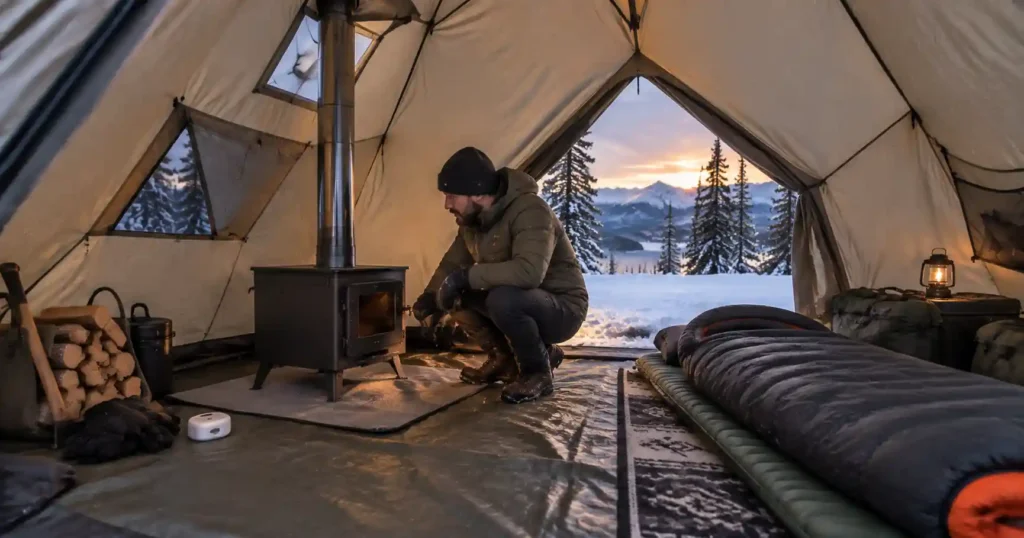
Hot Tent Ventilation and Carbon Monoxide Safety
Carbon monoxide is especially dangerous because you cannot reliably see or smell it.
CPSC lists symptoms of CO exposure including headache, dizziness, weakness, nausea, vomiting, sleepiness, and confusion. Severe exposure can cause loss of consciousness and death.
The basic precautions are straightforward:
- Use only equipment intended for the enclosure and application.
- Follow the tent and stove manufacturers’ ventilation instructions.
- Keep ventilation openings unobstructed.
- Keep the chimney system correctly assembled and maintained.
- Do not seal the tent to trap heat.
- Use an appropriate working CO alarm as an added warning layer.
- Never assume a detector compensates for incorrect stove operation.
Yellowstone’s winter-camping guidance also emphasizes shelter ventilation to reduce carbon monoxide buildup.
If you suspect CO exposure, get everyone into fresh air immediately and seek appropriate emergency medical help. Do not remain inside trying to identify the source while symptoms continue.
Tent Stove Safety: Fire, Burns, and Chimney Risks
Carbon monoxide is not the only issue. A hot metal stove and chimney can ignite or damage nearby gear and cause serious burns.
Keep Combustible Gear Away From the Stove
Sleeping bags, jackets, gloves, packs, firewood, and drying clothing can shift while people move around the tent.
Maintain the clearances required for your exact equipment throughout the evening—not just immediately after setup.
Protect the Floor as Directed
If your system requires a stove mat or heat-resistant floor area, use material approved or specified for that purpose.
Do not assume snow beneath a tent provides adequate protection.
Keep the Chimney Stable
Wind and shelter movement can affect a chimney.
Inspect its joints, support, and stove-jack position after setup and periodically while the stove is operating.
If strong weather threatens the stability of the stove or chimney, stop using it.
Never Leave a Burning Stove Unattended
Someone should be awake and actively supervising a burning tent stove.
Do not leave camp with a fire burning inside the shelter.
Do Not Depend on an Overnight Fire
For a beginner, plan to let the stove burn down rather than making an all-night fire necessary for staying warm.
CPSC specifically warns against operating fuel-burning portable heaters or lanterns while sleeping in enclosed tents, campers, or vehicles. Because a purpose-built wood-stove tent system is a different equipment category, follow its manufacturer’s instructions—but do not assume that being in a “hot tent” makes unattended overnight combustion safe.
Your sleeping bag and pad should protect you when the fire is out.
Never Burn Charcoal in the Tent
CPSC advises never burning charcoal inside a tent because of carbon monoxide poisoning risk.
A charcoal grill or brazier is not a substitute for an approved tent-stove system.
The Stove Does Not Replace Winter Camping Gear
A warm shelter can make it easy to underestimate the environment outside.
Stove heat can disappear because:
- Fuel runs out.
- The fire is intentionally extinguished.
- Draft changes.
- Equipment malfunctions.
- Fire restrictions change.
- The stove cannot be operated safely.
Your sleeping system should remain appropriate for expected conditions without supplemental heat.
NPS recommends sleeping bags matched to location and weather conditions and notes the importance of a sleeping pad for reducing heat loss to the ground.
Yellowstone winter guidance likewise includes a sub-zero-rated sleeping bag and sleeping pad on its suggested winter backcountry list, while Rocky Mountain National Park advises a sleeping bag and pad appropriate to the season. Those park-specific lists are not universal temperature prescriptions, but they illustrate the same planning principle: choose the sleep system for the environment, not for a heated tent.
Check Fire Rules Before Every Hot Tent Trip
A campsite being open does not automatically mean you can operate a wood-burning stove there.
Fire restrictions vary by land manager, location, season, and current conditions. Forest Service guidance advises visitors to check current fire restrictions and area closures before trips because temporary restrictions can prohibit fires during high wildfire danger.
Before every trip, verify:
- Whether wood-burning stove use is currently allowed.
- Whether a permit is required.
- Whether fire restrictions apply to stove fires.
- Whether you may collect dead wood.
- Whether you must bring your own firewood.
- Whether moving firewood into the area is restricted.
- Whether your campground has additional rules.
Do not assume that rules for propane stoves are identical to rules for wood-burning tent stoves.
For a broader pre-trip process, our road trip camping planning guide explains how to check campsite rules, weather, route conditions, fire restrictions, and backup overnight options before leaving home.
Plan Your First Hot Tent Trip Conservatively
A good first trip is designed to make mistakes easy to correct.
Use this sequence:
- Choose an accessible legal campsite. Avoid making a remote winter backcountry destination your first test.
- Check stove and fire rules. Verify them with the responsible land manager shortly before departure.
- Choose manageable weather. Do not deliberately seek extreme cold to “test” new equipment.
- Practice everything first. Pitch the tent, install the stove, and learn the vents before the trip.
- Arrive in daylight. Give yourself time to evaluate the site and equipment.
- Set up the cold-weather sleep system first. Make sure you can get warm without the stove.
- Operate the stove only while actively supervising it.
- Have an exit plan. Know what you will do if the weather deteriorates or the stove system cannot be used.
NPS winter guidance emphasizes checking weather, carrying appropriate gear, testing stoves and other equipment in cold conditions, and preparing for changing conditions.
Common Hot Tent Camping Mistakes
Putting a Stove in an Ordinary Tent
A tent being large enough to physically fit a stove does not make the combination appropriate.
Use a shelter designed and documented for the stove application.
Installing an Improvised Stove Jack
Cutting into a tent can affect fabric performance, structure, waterproofing, and fire exposure.
Do not improvise a conversion unless the tent manufacturer provides an approved system and instructions for doing so.
Buying the Tent and Stove Without Checking Compatibility
A stove jack diameter, chimney, tent dimensions, and required clearances all have to work together.
Treat the purchase as one system.
Following Generic Clearance Numbers
The correct clearance is the one specified for your equipment.
Do not replace the manual with a measurement found in a video, forum, or unrelated tent review.
Closing the Vents to Keep More Heat
Reducing ventilation to retain heat can increase risk from combustion gases and moisture.
Follow the shelter and stove manufacturers’ ventilation requirements.
Using an Ordinary Cooking Stove for Heat
A camp cooking stove is not automatically designed to heat an enclosed tent. CPSC warns against using fuel-burning camping equipment in enclosed spaces unless specifically designed and instructed for that use.
Relying on the Stove Instead of the Sleep System
The fire will eventually go out.
Your sleeping bag, insulated pad, and clothing need to handle the expected overnight environment.
Letting Gear Drift Toward the Stove
Sleeping bags and loose clothing can move as people shift around the shelter.
Keep the stove zone organized and check clearances throughout the evening.
Assuming Canvas Means Fireproof
Tent material alone does not establish that a shelter is safe for a stove.
Follow the actual manufacturer’s stove-use instructions.
Forgetting Fire Restrictions
A perfectly compatible stove system can still be illegal to operate when local restrictions prohibit its use.
Check immediately before departure.
Testing Everything for the First Time in Extreme Cold
A winter emergency is a poor time to discover that your chimney does not fit or that you do not understand the ventilation system.
Practice first.
Beginner Hot Tent Camping Checklist
Before Buying
- Tent is explicitly designed for the intended stove use.
- Tent and stove compatibility is confirmed.
- Stove jack and chimney system match.
- Manufacturer clearance information is available.
- Required stove or floor protection is identified.
- Replacement components are available.
- Sleeping bag and pad will work without stove heat.
Before Leaving Home
- Complete setup practiced.
- Tent and stove manuals reviewed.
- Stove and chimney inspected.
- CO alarm tested and suitable for expected conditions.
- Weather forecast checked.
- Campground or public-land rules checked.
- Current fire restrictions checked.
- Firewood rules checked.
- Backup campsite or exit plan prepared.
- Cold-weather clothing packed.
Before Lighting the Stove
- Shelter is fully pitched and stable.
- Guyline system is secure.
- Stove is stable.
- Required floor protection is installed.
- Manufacturer clearances are maintained.
- Sleeping gear and clothing are away from the stove.
- Chimney is properly assembled and secured.
- Required ventilation is open.
- CO alarm is operating.
- Someone is awake and supervising.
Frequently Asked Questions
Is hot tent camping safe for beginners?
Hot tent camping can be appropriate for a prepared beginner who uses a purpose-built, manufacturer-compatible tent-and-stove system, maintains required ventilation and clearances, carries a suitable cold-weather sleep system, checks fire restrictions, and starts in manageable conditions. It adds fire and carbon monoxide risks, so it requires more preparation than ordinary tent camping.
Can you put a wood stove in any tent?
No. Do not assume an ordinary tent can safely accept a wood stove. Use a shelter whose manufacturer specifically supports the intended stove application, and follow the published requirements for the stove jack, chimney, ventilation, clearances, and heat protection.
Do you need a carbon monoxide detector for hot tent camping?
A suitable CO alarm is a sensible additional warning layer, but it does not replace correct equipment, ventilation, maintenance, or supervision. Check the alarm manufacturer’s operating-temperature range before using it in cold conditions. CPSC says CO alarms provide added protection but are not substitutes for proper use of combustion appliances.
Can you sleep with a hot tent stove burning?
For a beginner, do not make a burning stove necessary for staying warm while sleeping. Use a sleep system appropriate to the expected temperature and allow the stove to burn down according to its operating instructions. Follow the exact tent and stove manufacturers’ guidance rather than assuming an unattended overnight burn is acceptable.
Is a canvas hot tent better than a lightweight hot tent?
Not automatically. A heavier canvas shelter may suit vehicle-accessed base camping, while a lightweight purpose-built model can make more sense for human-powered travel. Compare stove compatibility, usable space, weather suitability, packed weight, ventilation, setup requirements, and manufacturer support rather than choosing only by fabric.
Conclusion
A successful hot tent camping setup starts with equipment that can keep you warm without a fire: a suitable sleeping bag, insulated pad, winter clothing, and a realistic weather plan. Add a manufacturer-supported stove-compatible shelter and matching stove system only after that foundation is in place.
Before buying individual components, confirm that the tent, stove, chimney, stove jack, ventilation requirements, and heat protection are intended to work together. Practice the full setup before winter, then check weather and current fire rules before every trip.
References:
- U.S. Consumer Product Safety Commission — Portable Heaters & Camping Equipment
CPSC Portable Heaters & Camping Equipment - U.S. Consumer Product Safety Commission — Carbon Monoxide Fact Sheet
CPSC Carbon Monoxide Fact Sheet - National Park Service — Winter Backcountry Camping, Yellowstone National Park
NPS Winter Backcountry Camping - National Park Service — What to Bring: Camping
NPS Camping Gear Guidance - National Park Service — Winter Backpacking Gear Checklist, Rocky Mountain National Park
NPS Winter Backpacking Gear Checklist - U.S. Forest Service — Know Current Fire Restrictions and Closures
Forest Service Trip and Fire Planning Guidance