
Lazy Camping Food: 25 Easy Meals With Minimal Prep
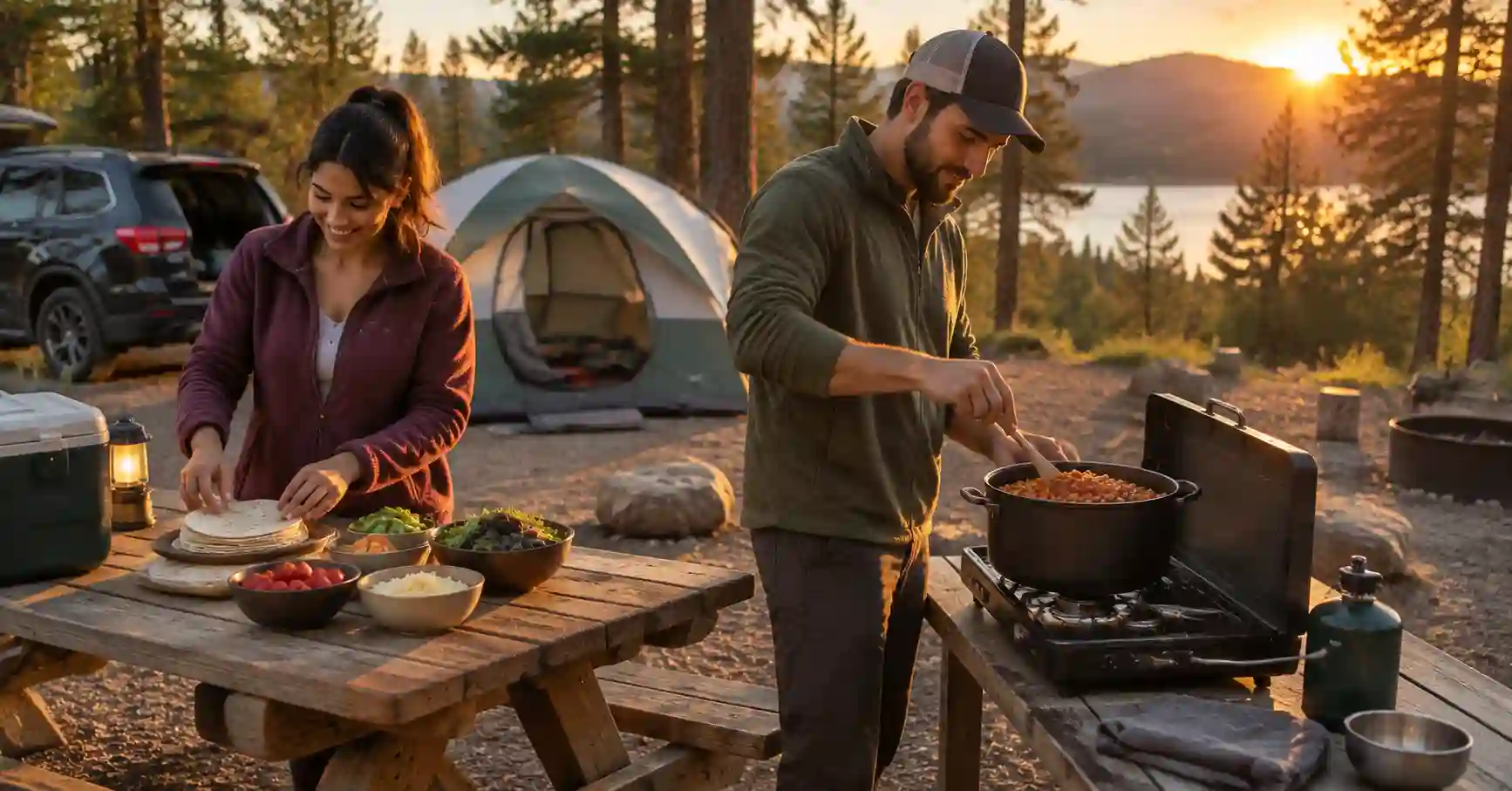
Lazy camping food is not about eating poorly or ignoring food safety. It means choosing meals that need little chopping, few ingredients, minimal cookware, and almost no cleanup when you would rather spend your time hiking, relaxing, or exploring.
The 25 ideas below are designed mainly for car and frontcountry camping, where you may have a cooler and portable stove. You will find no-cook meals, make-ahead options, heat-and-eat foods, and simple one-pot dinners.
Table of Contents
What Makes Good Lazy Camping Food?
The easiest campsite meals usually fit at least one of these categories:
| Meal Style | Work at Camp | Typical Equipment |
|---|---|---|
| No-cook | Very low | Basic utensils |
| Make-ahead | Assemble or reheat | Cooler, sometimes a stove |
| Heat-and-eat | Very low | One burner and one pot |
| One-pot | Low | One pot or skillet |
A practical low-effort meal should also avoid unnecessary ingredients and dishes.
Look for meals with:
- Few ingredients.
- Little or no chopping at camp.
- Ingredients that work in more than one meal.
- One pot, skillet, or no cookware at all.
- Simple storage requirements.
- Easy substitutions.
- No dependence on a campfire.
That last point matters. Campfires may be restricted, unavailable, or impractical, so your essential meals should work with a legal camp stove or without cooking.
25 Lazy Camping Food Ideas
These meals are organized by how you are most likely to use them: quick breakfasts, no-cook lunches, heat-and-eat options, one-pot dinners, and make-ahead meals.
Easy Camping Breakfasts
1. Instant Oatmeal With Nut Butter and Dried Fruit
Instant oatmeal is one of the simplest hot breakfasts you can make at camp. Heat water, stir it into the oats, then add nut butter, dried fruit, or both.
You only need a small pot or kettle, bowl, and spoon. Individual oatmeal portions can also be measured at home so you do not have to bring bulky packaging.
2. Bagels With Nut Butter and Banana
Bagels, peanut or seed butter, and bananas require no stove and almost no cleanup.
This works especially well on departure morning when you want to eat quickly and start packing camp instead of cooking.
3. Yogurt, Granola and Fruit Cups
Keep yogurt safely chilled, then add granola and fruit when you are ready to eat.
You can pre-portion granola into reusable containers before leaving home. Keep it separate until breakfast so it stays crunchy.
4. Make-Ahead Breakfast Burritos
Cook and assemble breakfast burritos at home, cool them properly, and transport them cold.
At camp, you only need to reheat them. USDA guidance recommends reheating cooked leftovers to 165°F (74°C).
This is particularly useful when your group wants a filling hot breakfast without cooking eggs and other ingredients from scratch at the campsite.
5. Peanut Butter and Banana Tortilla Roll-Ups
Spread peanut butter on a tortilla, add banana, and roll it up.
There is no pan to clean, and tortillas generally pack more easily than a loaf of bread.
6. Make-Ahead Breakfast Sandwiches
Prepare breakfast sandwiches before your trip using ingredients that can be safely chilled and reheated.
At camp, warm the sandwiches rather than cooking every component separately. Use a food thermometer when needed and reheat cooked leftovers thoroughly.
No-Cook Camping Meals for Lunch
7. Tuna Pouch Tortilla Wraps
Open a shelf-stable tuna pouch when you are ready to eat, add it to a tortilla, and include simple toppings that match your cooler setup.
An unopened shelf-stable pouch is convenient because it does not occupy cooler space. Follow package directions after opening.
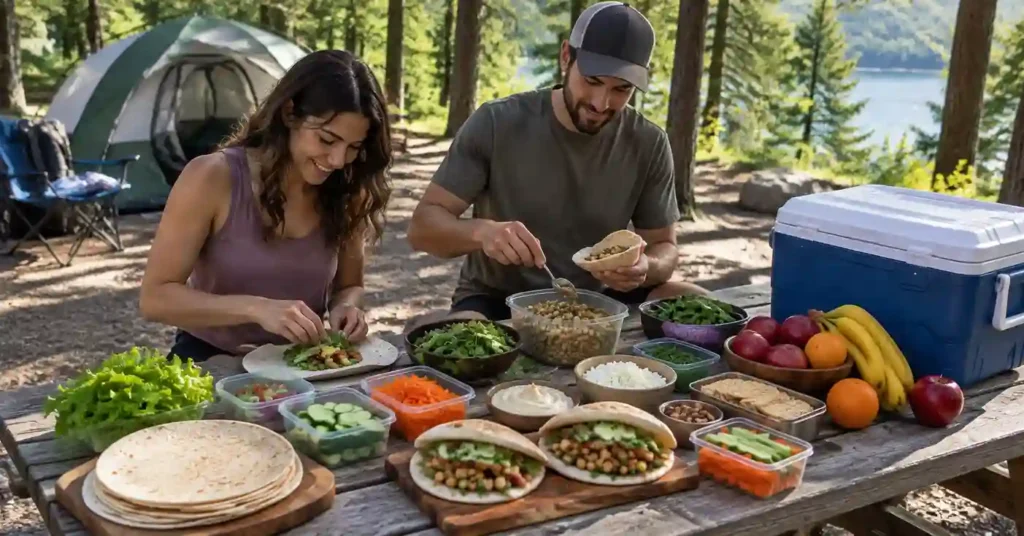
8. Hummus and Vegetable Wraps
Spread hummus on a tortilla and add pre-cut vegetables such as carrots, cucumber, or bell pepper.
Do the washing and chopping at home. Hummus and cut vegetables that require refrigeration must stay properly chilled.
9. Peanut Butter and Jelly Tortilla Roll-Ups
This is one of the simplest backup camping meals.
Use shelf-stable ingredients according to their labels, spread them on a tortilla, and roll it up. It works for lunch, a snack, or a meal when cooking plans fall apart.
10. Crackers, Tuna and Whole-Fruit Lunch Plate
Combine crackers, an unopened tuna pouch or another suitable shelf-stable protein, and whole fruit.
There is virtually no preparation and very little cleanup. Add other ingredients only if they fit your food-storage setup.
11. Make-Ahead Pasta Salad
Prepare pasta salad completely at home, chill it promptly, and transport it in the cooler.
At camp, portion what you plan to eat and return the rest to cold storage rather than leaving the entire container on the picnic table.
12. Chickpea Pita Pockets
Prepare a simple chickpea filling at home and pack it with pita bread and vegetables.
Depending on the ingredients in your filling, refrigeration may be necessary. Keep preparation simple so the meal remains a quick assembly lunch rather than another campsite cooking project.
Heat-and-Eat Camping Meals
13. Canned Chili With Tortillas
Open a can of chili, heat it in one pot, and serve it with tortillas.
There is little chopping, no complicated recipe, and only one cooking vessel to clean.
Check the product label for storage instructions after opening.
14. Tomato Soup and Grilled Cheese
Heat tomato soup in a small pot while preparing grilled cheese in a skillet.
It requires slightly more cleanup than a no-cook meal but uses familiar ingredients and does not require extensive preparation.
15. Precooked Sausage and Peppers
Using fully cooked sausage reduces the amount of raw-meat handling at camp.
Pre-slice peppers at home, keep perishable ingredients cold, then heat everything thoroughly in one skillet according to package and food-safety instructions.
16. Instant Rice, Beans and Salsa Bowls
Prepare instant rice and mix it with drained canned beans and salsa.
Optional cheese, avocado, or other toppings can be added if your cooler setup supports them.
The basic version requires little more than heating water or rice and opening a can.
17. Couscous With Chickpeas and Seasoning
Many couscous products cook by absorbing hot water, making them useful when you want to minimize stove time.
Add drained chickpeas, olive oil, and simple seasoning. Check package directions because cooking methods differ among products.
18. Instant Noodles With Simple Add-Ins
Prepare instant noodles and add one or two uncomplicated ingredients.
Instead of packing a long list of toppings, use something simple such as vegetables prepared at home or another ingredient you are already using elsewhere.
One-Pot and One-Pan Camping Dinners
19. One-Pot Tomato and Bean Pasta
Cook pasta with tomato sauce, canned beans, and simple seasonings using a campsite-friendly method appropriate to your cookware.
The beans eliminate the need to handle raw meat, while one-pot preparation keeps cleanup manageable.
20. Bean and Cheese Quesadillas
Place beans and cheese between tortillas and heat them in a skillet.
Use salsa from another planned meal so you are not bringing ingredients that serve only one purpose.
Keep cheese and other perishable toppings appropriately chilled.
21. One-Pot Mac and Cheese With an Easy Add-In
A familiar boxed mac and cheese can become a simple camping dinner.
Add something easy such as canned beans or properly stored vegetables rather than turning it into a complicated recipe.
Follow the package directions and storage requirements for the specific ingredients you choose.
22. Skillet Nachos
Add tortilla chips, beans, cheese, and a small amount of salsa to a skillet and heat until ready.
This is useful when you have ingredients left from tacos, burrito bowls, or quesadillas.
If you do not want to cook, you can also serve the ingredients separately as a snack-style meal.
23. One-Pot Rice and Bean Taco Bowls
Combine quick-cooking rice with canned beans and taco-style seasonings.
Add salsa and safely stored toppings after cooking.
Using quick rice and canned ingredients keeps both preparation time and dishwashing low.
Make-Ahead Camping Dinners
24. Make-Ahead Chili
Cook chili at home, cool it promptly, refrigerate it, and transport it cold.
At camp, reheat the portion you need to 165°F (74°C) rather than cooking dinner from scratch.
This can be particularly helpful on your first night after driving, checking in, and setting up camp.
25. Make-Ahead Burrito Bowls
Prepare components such as cooked rice and beans at home, cool and store them safely, then assemble or reheat them at camp.
Pack toppings separately so each person can build a simple bowl without creating several pans of food.
How to Make Easy Camping Meals Even Easier
Choosing uncomplicated recipes helps, but a few planning decisions can reduce campsite work even further.
Do the Annoying Prep at Home
A home kitchen is usually a better place for washing, chopping, portioning, and measuring.
Before leaving, you can:
- Wash whole produce.
- Chop ingredients you will use early in the trip.
- Measure dry ingredients.
- Portion seasonings.
- Cook make-ahead meals.
- Chill perishable food before loading the cooler.
Avoid partially cooking meat with the intention of finishing it later. Keep preparation methods consistent with safe food-handling guidance.
Reuse Ingredients Across Several Meals
Ingredient reuse means less shopping, less packing, and fewer leftovers.
For example:
- Tortillas: roll-ups, tuna wraps, quesadillas, burrito bowls.
- Beans: chili, rice bowls, pasta, nachos.
- Salsa: quesadillas, nachos, rice bowls.
- Whole fruit: breakfast, lunch sides, snacks.
- Nut butter: oatmeal, bagels, tortilla roll-ups.
Try to avoid packing an ingredient for only one meal unless you really want it.
Choose One Main Cooking Method
You usually do not need a full outdoor kitchen for minimal prep camping meals.
A portable stove plus one skillet or pot can handle many breakfasts and dinners. Combine that with several no-cook meals and you can keep your setup compact.
Check current rules at your campground or land-management area before using a stove or any flame.
Keep One No-Cook Backup Meal
Plans change.
A no-cook shelf-stable meal can help when:
- You arrive late.
- The weather changes.
- Your stove fails.
- Cooking restrictions affect your plan.
- Everyone is too tired to cook.
Peanut butter tortillas, crackers with shelf-stable protein, or another simple meal can prevent an inconvenient evening.
Plan the Number of Meals Before Shopping
Count how many breakfasts, lunches, dinners, and snacks you will actually eat at camp before making a grocery list.
This prevents you from packing ingredients for meals you will never cook.
If you want to turn these individual ideas into a complete trip menu, use our 3-day camping meal plan to organize breakfast, lunch, dinner, snacks, and your grocery list.
No-Cook Does Not Always Mean No Cooler
A meal can require zero cooking and still contain food that must be kept cold.
Examples can include:
- Yogurt.
- Hummus.
- Cheese.
- Deli ingredients.
- Cooked leftovers.
- Prepared pasta salad.
- Some cut produce.
- Opened products that require refrigeration.
USDA guidance says cold perishable food should be held at 40°F (4°C) or below. Perishable food should generally not remain in the 40°F to 140°F danger zone for more than two hours, or more than one hour when the outside temperature is above 90°F (32°C).
Use ice, frozen gel packs, or another reliable cold source, and check food labels for storage instructions.
For trips where keeping food cold is difficult, USDA recommends considering shelf-stable foods such as peanut butter, dried fruit and nuts, canned meats, dried noodles, soups, and dehydrated foods.
Simple Food Safety for Low-Effort Camping Meals
Keeping meals simple should not mean being casual about temperature control or cross-contamination.
Keep Perishable Food Cold
Chill or freeze appropriate food before leaving home.
Keep perishables at or below 40°F (4°C) in a properly packed cooler and minimize unnecessary opening.
If you are uncertain whether a perishable food has been held safely, do not rely on smell or appearance alone.
Keep Raw Food Separate
This list intentionally uses few raw-meat meals, which simplifies campsite food handling.
If you bring raw meat or poultry for other meals:
- Keep it separated from ready-to-eat food.
- Prevent juices from leaking onto other ingredients.
- Wash hands and utensils appropriately.
- Never put cooked food back on an unwashed surface that held raw food.
Reheat Make-Ahead Food Safely
Cooked food that has been cooled and stored for later should be reheated thoroughly.
USDA recommends heating leftovers to at least 165°F (74°C) and checking the temperature with a food thermometer.
For campsite meals such as make-ahead chili or breakfast burritos, this gives you a clear safety target instead of relying only on whether the food feels warm.
Do Not Judge Food Safety by Smell
Food can become unsafe without developing an obvious bad smell or appearance.
Time and temperature are better guides. USDA’s danger-zone guidance says perishable food should not remain between 40°F and 140°F for longer than the recommended limits.
When in doubt about temperature control, discard questionable perishable food rather than tasting it.
Wash Hands and Keep Preparation Surfaces Clean
Wash hands before preparing or eating food and after handling raw ingredients.
Keep utensils and preparation surfaces clean, especially when switching between raw ingredients and ready-to-eat food.
Lazy Camping Food Mistakes That Create More Work
The easiest way to make campsite cooking difficult is to plan meals as though you were still in your home kitchen.
Avoid these common mistakes.
Choosing Recipes With Too Many Ingredients
Every extra ingredient means another item to buy, transport, organize, and potentially keep cold.
Favor meals in which most ingredients appear somewhere else in the trip.
Bringing an Entire Kitchen
If your meals use one pot and one skillet, you probably do not need several pans and specialized cooking tools.
Choose the meals first, then pack the cooking equipment they actually require.
Depending on a Campfire
A fire may be restricted, unavailable, difficult to light, or unsuitable for the meal you planned.
Use a permitted camp stove when appropriate and always keep at least one option that needs no cooking.
Shopping Before Planning Meals
Buying “camping food” without knowing what you will eat often creates too much food and missing ingredients at the same time.
Choose the meals first. Build the grocery list afterward.
Packing Ingredients Used Only Once
A half-used ingredient takes up cooler or pantry space for the rest of the trip.
Tortillas, beans, salsa, fruit, rice, and similar versatile foods can work across several meals.
Forgetting a Backup Meal
Even a carefully planned dinner may become inconvenient after a late arrival or bad weather.
Keep at least one simple shelf-stable meal available.
Assuming No-Cook Means Shelf-Stable
Yogurt does not stop requiring refrigeration because you eat it cold.
The same principle applies to other perishable foods. Plan cold storage based on the ingredient, not the cooking method.
Overfilling a Small Cooler With Perishables
Limited cooler space is a reason to use more shelf-stable ingredients.
Save cold storage for foods that genuinely need it.
Making Arrival-Night Dinner Complicated
Your first evening often includes driving, finding the site, parking, unloading, and setting up shelter.
Make-ahead chili, wraps, or another low-effort dinner makes more sense than an elaborate campsite recipe.
Creating Several Dirty Pans for One Meal
One-pot meals, wraps, bowls, and skillet dinners help reduce washing.
A meal is not truly low-effort if cleanup takes longer than cooking.
A Simple Formula for Building Your Own Easy Camping Meal
You do not need a separate recipe for every meal.
Use this basic structure:
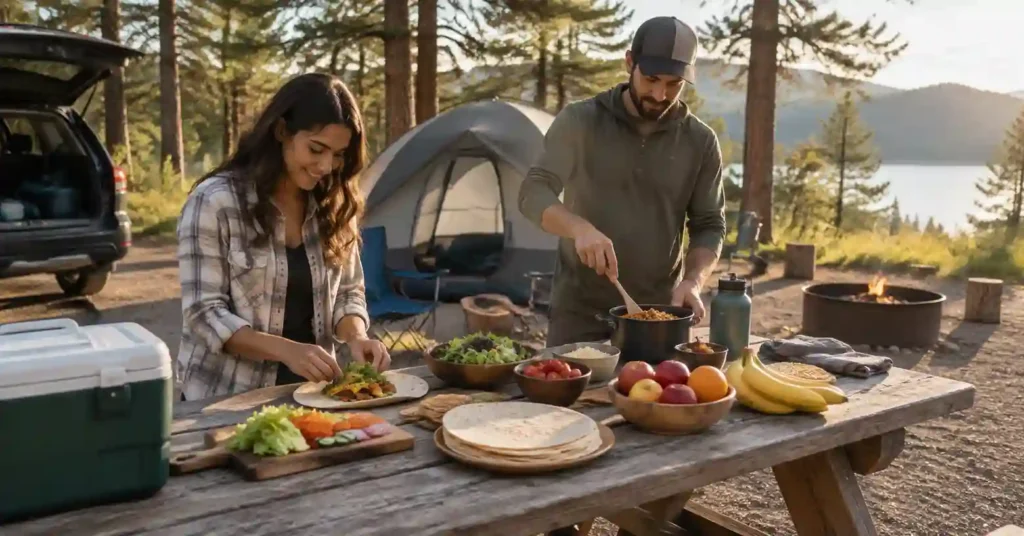
Base + easy protein + simple flavor or topping + fruit or vegetable
For example:
- Tortilla + beans + salsa + vegetables.
- Quick rice + chickpeas + seasoning + vegetables.
- Bagel + nut butter + banana.
- Crackers + tuna pouch + whole fruit.
- Couscous + chickpeas + simple seasoning + vegetables.
Choose ingredients that match your cooler space, cooking equipment, dietary needs, and storage conditions.
This approach also makes last-minute substitutions easier when a grocery store does not have exactly what you planned.
Frequently Asked Questions
What is the easiest food to make while camping?
The easiest options require either no cooking or one simple heating step. Bagels with nut butter, tortilla roll-ups, tuna wraps, instant oatmeal, canned chili, couscous, bean quesadillas, and rice-and-bean bowls are all practical examples. Choose meals that match the cooler and cooking equipment you already plan to bring.
What lazy camping food does not require cooking?
Lazy camping food that needs no cooking can include peanut butter tortilla roll-ups, tuna-pouch wraps, crackers with shelf-stable protein, bagels, whole fruit, and other shelf-stable combinations. Hummus wraps, yogurt, prepared salads, and similar no-cook foods can also work, but they still require proper refrigeration when their ingredients are perishable.
What camping meals can I prepare before leaving home?
Breakfast burritos, breakfast sandwiches, chili, pasta salad, cooked rice or bean components, and burrito-bowl ingredients can all be prepared ahead. Cool cooked food promptly, keep perishables at or below 40°F (4°C), and reheat leftovers to 165°F (74°C) when reheating is required.
What easy camping food can I make with one burner?
One burner can handle instant oatmeal, canned chili, soup, couscous, instant rice bowls, noodles, one-pot pasta, mac and cheese, and many skillet meals. Choose recipes that use similar ingredients so you do not need several pots, repeated washing, or a large campsite kitchen.
How can I reduce dishes when cooking at camp?
Use one-pot meals, tortillas instead of plates when practical, pre-portion ingredients at home, and prepare chopping or mixing before your trip. Choose meals that can be assembled in the container or bowl you will eat from, and avoid recipes requiring separate pans for multiple components.
Conclusion
Good lazy camping food reduces the amount of time you spend preparing, cooking, and washing dishes without ignoring safe food storage.
Choose a mix of no-cook meals, make-ahead foods, and one-pot dinners, reuse ingredients across several meals, and keep one simple backup option available. Once you have selected the meals, build your grocery list around what you will actually eat and the cooler and cooking equipment you can realistically manage.
References:
- U.S. Department of Agriculture, Food Safety and Inspection Service — What methods of reheating food are safe?
USDA FSIS reheating guidance - U.S. Department of Agriculture, Food Safety and Inspection Service — What is the Danger Zone?
USDA FSIS Danger Zone guidance - U.S. Department of Agriculture, Food Safety and Inspection Service — What foods should I pack for hiking or camping?
USDA FSIS camping food guidance