
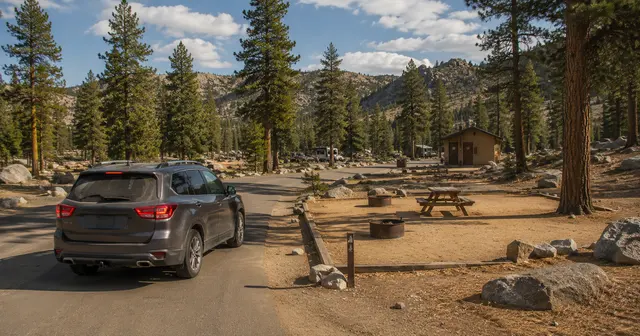
Road Trip Camping: How to Plan Your Route and Campsites
A good road trip camping plan does more than connect scenic places on a map. It gives you realistic driving days, legal places to sleep, enough time to set up camp before dark, and backup options if weather, closures, or availability change.
The simplest approach is to choose a few priority destinations, divide the route into manageable travel days, search for campgrounds within each overnight area, reserve the least-flexible nights first, and recheck road, weather, fire, and campground conditions shortly before departure. That structure keeps the trip organized without making every hour rigid.
Table of Contents
Start With Your Trip Limits Before Choosing the Route
Before building a route, decide what the trip can realistically hold.
Start with the number of nights you have and the amount of time you want to spend driving. A seven-night trip with six major destinations may look possible on a map, but repeated long driving days can leave little time for hiking, cooking, campsite setup, or rest.
Also decide what kind of camping you expect to use most often:
- Developed campgrounds: Usually have designated sites and may provide facilities such as restrooms, water, picnic tables, or fire rings. Amenities vary by campground.
- Dispersed camping: Camping outside a developed campground on land where it is legally allowed. Facilities are usually limited or absent, and local restrictions matter.
- Tent camping: Requires a site that permits tents and has suitable space for your shelter.
- RV or trailer camping: Adds questions about site length, hookups, road access, turning space, generator rules, and vehicle restrictions.
National Park Service guidance recommends checking each campground’s facilities, reservation system, campfire rules, group limits, food-storage requirements, and other regulations before arriving. Those details can differ significantly from one location to another.
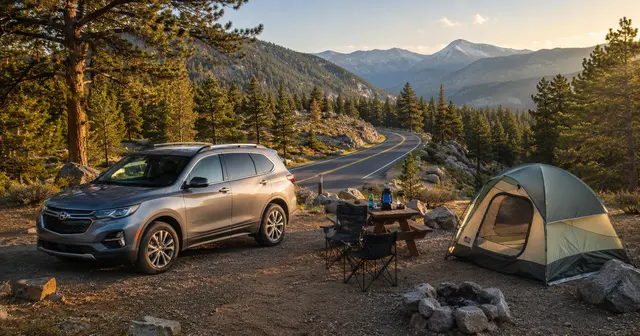
Set a Realistic Driving Pace
Map apps show estimated driving time, not the full travel day. Fuel stops, groceries, meals, construction, scenic stops, campground access roads, and unexpected delays all add time.
Instead of deciding that every day must cover a certain mileage, work backward from the experience you want. If you want a morning hike and an early campsite arrival, that day needs a shorter drive than a day devoted mainly to relocation.
Whenever possible, plan to reach unfamiliar campsites with daylight remaining. The National Park Service recommends making camp before dark so you can understand the terrain and identify campsite hazards more easily.
How to Plan a Road Trip Camping Route
Build the route in layers rather than choosing every campsite at once.
Choose a Few Anchor Destinations
Pick your starting point, final destination, and a small number of places that matter most. These may be national parks, state parks, trail areas, lakes, mountain regions, or other camping destinations.
Treat these as anchors. Everything between them should support the trip rather than create another obligation.
For example, if your main goal is to visit three parks over nine days, plan around those parks first. Then decide whether the travel sections between them need simple overnight stops or deserve an extra activity day.
Connect the Anchors With Realistic Travel Days
For each segment, look at:
- Estimated driving time
- Distance
- Road type
- Mountain or desert crossings
- Likely fuel and grocery locations
- Potential construction or seasonal road issues
- Time needed after arrival
Do not assume a scenic road will take the same time as an interstate route. Likewise, a campground that appears close to the highway may require a slow final approach on local or unpaved roads.
Pick an Overnight Zone Before a Specific Campground
One of the most useful road trip camping strategies is to decide approximately where you want to end the day before choosing the exact campground.
Suppose your ideal driving day ends somewhere within a 40-mile stretch of the route. Search for several campgrounds in that zone instead of locking yourself into one site too early. This gives you more options if a campground is full, seasonal, unsuitable for your vehicle, or farther from the main route than expected.
How to Find Campgrounds Along a Route
Use general map tools to understand geography, but confirm camping information with the organization that manages the land or campground.
For federal recreation sites participating in Recreation.gov, the platform can show campsite availability, location details, season information, and reservation options. Individual facilities set their own booking windows, fees, and rules, so the details on each facility page matter more than a nationwide assumption.
Other useful official sources include National Park Service park pages, U.S. Forest Service forest or district pages, Bureau of Land Management field offices, state park systems, county parks, and official campground websites.
Compare Campgrounds Using the Same Checklist
Before choosing between road trip campgrounds, compare:
- Distance from your main route
- Tent, car, RV, or trailer suitability
- Site and vehicle length restrictions
- Reservable versus first-come, first-served sites
- Operating season
- Potable water availability
- Restrooms and showers
- Food-storage rules
- Pet policies
- Fire rules or restrictions
- Road access
- Cell-service limitations
- Nightly fees and additional reservation charges
- Check-in or arrival instructions
A cheaper campground is not automatically the better choice. If it requires a long detour, extra fuel and lost time may erase the savings.
Understand Developed and Dispersed Camping
Dispersed camping can add flexibility, but it should not be treated as permission to camp on any empty-looking public land.
The Bureau of Land Management says most BLM lands allow dispersed camping unless an area is closed or restricted, but local rules can vary. Fire restrictions, stay limits, road-use rules, permits, and other requirements may be area-specific, so travelers should verify the details with the relevant BLM office.
When using undeveloped sites, favor previously used or durable surfaces rather than creating a new campsite. Leave No Trace guidance emphasizes concentrating use on durable surfaces to reduce damage.
Build a Camping Road Trip Itinerary That Has Room for Delays
A useful camping road trip itinerary should tell you where you need to be without scheduling every minute.
Create one row for each day with these fields:
| Day | Start | Overnight Area | Approx. Mileage | Drive Time | Main Activity | Planned Campground | Backup | Fuel/Supplies |
|---|---|---|---|---|---|---|---|---|
| 1 | Home | Region A | Estimate | Estimate | Travel/setup | Campground A | Campground B | Town A |
| 2 | Region A | Region B | Estimate | Estimate | Hike/scenic stop | Campground C | Campground D | Town B |
The goal is not to predict the day perfectly. It is to make sure each driving segment, activity, and campsite can reasonably fit together.
Leave margin around important reservations and fixed activities. If you have a timed tour or permit the next morning, staying relatively close the night before may be worth more than adding another attraction.
Avoid stacking multiple demanding days together. A long drive followed by a late campsite arrival, then an early hike and another long drive, can make the trip feel like transportation rather than camping.
Decide Which Campsites to Reserve and Where to Stay Flexible
You do not need the same reservation strategy for every night.
Reserve the Least-Flexible Nights First
Advance reservations are most valuable when a missed campsite would disrupt the rest of the trip. Consider reserving earlier when:
- The campground serves a high-demand destination.
- You are traveling on a holiday weekend.
- Legal alternatives nearby are limited.
- Your vehicle or RV needs a particular site size.
- The night is tied to a permit, tour, ferry, or other fixed plan.
Do not assume every campground uses the same reservation window. Recreation.gov states that booking windows are determined by individual facilities and may differ by location and activity.
Build Real Backup Options
A backup should be more than a pin saved on a map. Confirm that it is open during your trip, legal for your camping style, accessible by your vehicle, and available through the appropriate reservation or first-come system.
For critical nights, save at least one alternative within a practical distance of your main route.
Keep reservation numbers, campground directions, arrival instructions, cancellation terms, and contact details available offline. Recreation.gov’s mobile app also supports offline access to important reservation and trip information, which can be useful where cell coverage is limited.
How to Plan a Budget Camping Road Trip
A budget camping road trip is easier to control when you estimate the major costs separately instead of choosing a single total number.
Include:
- Fuel
- Campsite fees
- Reservation or service fees
- Park or recreation entrance fees
- Groceries
- Restaurant meals
- Ice, propane, firewood, or other consumables
- Tolls and parking
- Showers or laundry
- Emergency reserve
Estimate Fuel From Your Route
Use this basic formula:
Estimated fuel cost = total trip miles ÷ vehicle miles per gallon × expected fuel price per gallon
Then add some mileage for campground access, grocery runs, scenic detours, and rerouting.
For example, a campground that saves $10 per night but adds a lengthy round trip off your route may not reduce the total cost. Compare the campsite fee with the extra fuel and time required to reach it.
Avoid using a single “average campground price” in your plan. Fees vary widely by land manager, location, campsite type, and amenities, and they can change.
Road Trip Camping Checklist
Use this road trip camping checklist as a final planning tool rather than a substitute for a trip-specific gear list.
Route and Reservations
- Save the route for offline use.
- Download campsite confirmations.
- Record campground arrival instructions.
- Identify backup camping stops.
- Check entrance, permit, and reservation requirements.
- Save official contact details for important destinations.
Campsite and Sleep System
- Shelter suited to expected weather
- Sleeping bag or quilt appropriate to expected temperatures
- Sleeping pad
- Headlamp or other reliable lighting
- Camp chairs if useful
- Stakes, guylines, and repair items suited to your shelter
Food and Water
- Drinking-water plan
- Extra water where reliable sources are uncertain
- Food-storage system that meets local requirements
- Cooking equipment
- A cooking option that does not depend on a campfire
Campfire restrictions can change with conditions, so your meal plan should not require an open fire.
Vehicle Preparation
- Check tires, including the spare if equipped.
- Carry the tools required to use your spare or repair system.
- Plan fuel stops on remote sections.
- Carry charging cables and appropriate power options.
- Keep basic roadside supplies available.
- Download or carry navigation that does not depend entirely on cell service.
Safety and Communication
- First-aid supplies appropriate to the trip
- Weather information
- Emergency contacts
- Basic itinerary shared with someone you trust when appropriate
- A communication plan for areas with unreliable cell coverage
Check Weather, Roads, Closures, and Fire Restrictions
Conditions can change after you book your campsites, so the final planning stage should happen close to departure.
Check the Entire Route, Not Just the Campgrounds
A sunny campground forecast does not tell you what conditions will be like on a mountain pass several hours away.
The National Weather Service Transportation Decision Support page provides weather forecasts for highway and interstate segments and can help with route planning. NWS notes that these forecasts are for planning and directs travelers to state transportation departments or 511 systems for current road conditions.
Check the forecast for each major driving section and overnight stop, then review current road information before you drive.
Recheck Official Campground Alerts
Before departure, confirm:
- Operating status
- Road or entrance closures
- Water availability
- Fire restrictions
- Reservation changes
- Food-storage rules
- Weather-related advisories
Do this again if your trip lasts long enough for conditions to change substantially between stops.
Know Where You Would Shelter From Thunderstorms
A tent is not appropriate lightning shelter. National Weather Service guidance says the metal shell of a hard-topped vehicle with the windows closed can provide protection from lightning, although the vehicle itself may be damaged.
If thunderstorms are possible, know where you can reach a substantial building or suitable hard-topped vehicle. Do not plan to remain in a tent during a thunderstorm.
Flooding also matters on a camping road trip. Never drive through a flooded roadway or around a barricade. Water can hide a damaged or washed-out road, and conditions can change quickly.
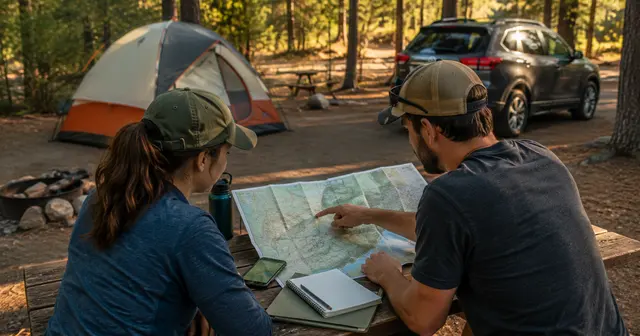
Common Road Trip Camping Mistakes to Avoid
Planning Too Many Miles Every Day
A route can be technically possible and still be unpleasant. Build days around what you want to do after the drive, not only around the maximum distance you can cover.
Arriving at Unfamiliar Campsites After Dark
Late arrivals make it harder to assess the site, find facilities, recognize hazards, and set up efficiently. Build arrival time into the driving plan.
Assuming a Site Fits Any Vehicle or Shelter
Check campsite dimensions, parking rules, RV limits, and access details before booking.
Depending on One Campground
Even with a reservation, closures or road problems can disrupt a plan. Keep alternatives for the nights that would be hardest to replace.
Treating Dispersed Camping as Unlimited Camping
Land ownership, vehicle access, fire restrictions, local closures, permits, and stay rules can vary. Verify the managing agency and current regulations before using a dispersed site.
Relying Completely on Cell Service
Download essential maps and reservation details before entering remote areas. Keep addresses or coordinates in a form you can access without data service.
Forgetting the Detour Cost
A campground 20 miles from the highway may add 40 miles to the trip. Consider distance, road speed, fuel, and time when comparing campsites.
Final 48-Hour Road Trip Camping Check
Within the last two days before leaving, run through this sequence:
- Reconfirm campground reservations. Review dates, site numbers, arrival instructions, and cancellation information.
- Check official campground alerts. Look for closures, water issues, restrictions, or access changes.
- Review weather for each route segment. Pay particular attention to severe storms, heat, cold, snow, high winds, and flood risk.
- Check current road conditions. Use the relevant state DOT or 511 service.
- Check fire restrictions. Do not assume a fire ring means fires are currently permitted.
- Download maps and confirmations. Make important information available offline.
- Confirm fuel, water, food, and equipment. Pay extra attention to remote sections.
- Share the basic itinerary. When appropriate, give a trusted contact your route, major stops, and expected return.
This final check catches the kinds of changes that a route planned weeks or months earlier cannot predict.
Frequently Asked Questions
How far should you drive each day on a camping road trip?
There is no single daily mileage that works for every trip. Base your limit on road type, weather, your comfort with driving, planned activities, and the time needed to reach and set up camp. A day with hiking or sightseeing should usually allow more non-driving time than a simple relocation day.
How do you find campgrounds along a road trip route?
First identify the general area where you want to stop for the night. Then search official park, forest, BLM, state park, county park, campground, and Recreation.gov sources for legal options near that area. Compare access, campsite type, amenities, fees, operating dates, restrictions, and reservation status before choosing.
Should you reserve every campsite on a camping road trip?
Not necessarily. Reserving high-demand or strategically important nights can protect the structure of your trip, while leaving some flexible nights can make rerouting easier. The right balance depends on season, destination demand, available alternatives, vehicle requirements, and your tolerance for uncertainty.
How can you keep a camping road trip affordable?
Control the largest costs first: fuel, campsite fees, entrance fees, and food. Build an efficient route, compare total detour cost rather than campsite price alone, cook more meals at camp, and avoid unnecessary backtracking. Keep an emergency reserve so a weather delay or route change does not break the budget.
What should you do if weather or a road closure disrupts your road trip camping itinerary?
Use your backup campground or reroute to a legal overnight option that does not require unsafe driving. Check official weather information, state DOT or 511 road conditions, campground alerts, and local restrictions before moving. If conditions make the route unsafe or inaccessible, shorten, delay, or change that segment rather than forcing the original plan.
Conclusion
The strongest road trip camping plans are structured but flexible. Choose a few priority destinations, keep driving days realistic, confirm the details of each campsite, reserve the nights that are hardest to replace, and prepare legal backup stops.
Before departure, recheck official campground alerts, weather, road conditions, and fire restrictions. A few final updates can turn a route that looked good on paper into a trip that works well on the road.
References:
- National Park Service — Finding and Setting Up a Campsite
https://www.nps.gov/subjects/camping/finding-and-setting-up-a-campsite.htm - Recreation.gov — Recreation.gov Mobile App
https://www.recreation.gov/mobile-app/ - Recreation.gov — Frequently Asked Questions
https://www.recreation.gov/faq - Bureau of Land Management — Camping on Public Lands
https://www.blm.gov/programs/recreation/camping - Leave No Trace — Travel and Camp on Durable Surfaces
https://lnt.org/wp-content/uploads/2018/10/Travel-and-Camp-on-Durable-Surfaces.pdf - National Weather Service — Transportation Decision Support
https://www.weather.gov/wrh/travel - National Weather Service — Lightning and Cars
https://www.weather.gov/safety/lightning-cars - National Weather Service — Basic Flood Safety Rules
https://www.weather.gov/pub/pnsfloodsafety